Quick Answer
The best Halloween DIY kit for beginners should match your experience level, available time, crafting style and display space. Start with a project that offers clear instructions, an enjoyable building process and a finished scene you will want to display.
Choosing Your First Halloween DIY Kit
First-time miniature buyers often ask the same sensible questions: Is it too difficult? How long will it take? Do I need crafting experience? Will I finish it? The answer is rarely found in the theme alone. A cute spooky house can still be detailed, while a smaller scene can still require patience with tiny parts.
Start by choosing a project you genuinely want to look at when it is finished, then check the current product page for published difficulty, assembly time, size, and instructions before buying.
Use the Halloween Inspiration Guide to decide whether your first scene should feel cute spooky, magical, or cozy. For a broader year-round framework, see how to choose a beginner-friendly miniature kit.
What Should Beginners Consider Before Choosing a Halloween DIY Kit?
| Factor | Why It Matters |
|---|---|
| Difficulty | A published difficulty level helps match the project to your experience, but it is only one part of the decision. |
| Build time | A longer project can be enjoyable if it fits your schedule; it can feel discouraging if you expected a single-evening craft. |
| Theme | A scene you are excited about gives you a reason to keep working through detailed steps. |
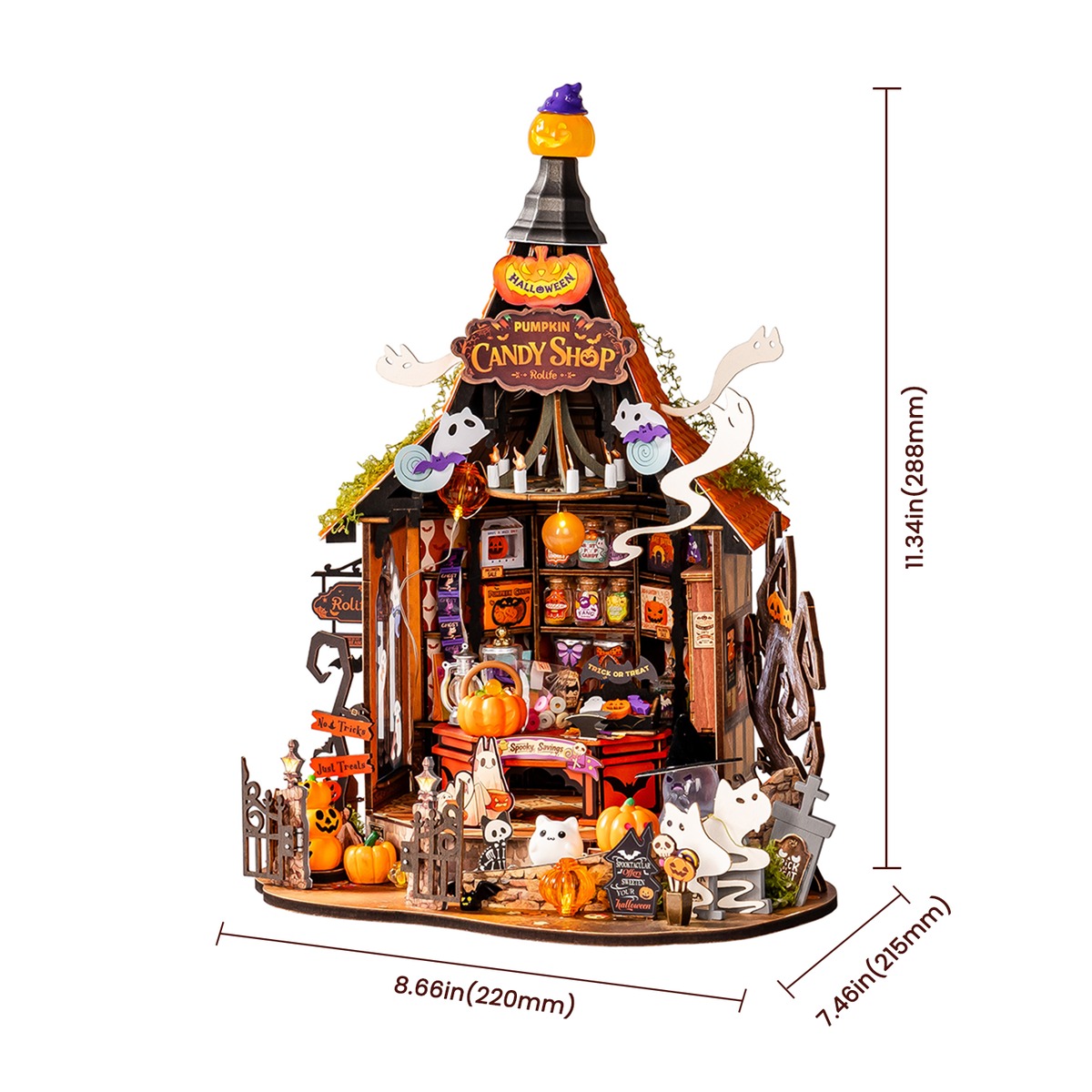
| Display space | Finished dimensions and placement determine whether the result has a natural home after the build. |
Choose Your Halloween DIY Kit Based on Your Experience
First-Time Makers
Look for a clear theme, an instruction style you feel comfortable following, and a project scope you can imagine completing. Do not use the word beginner as a promise that any detailed miniature will feel effortless; compare official difficulty, build time, and piece information first.
Makers Ready for More Detail
If you already enjoy crafts with small parts, layered props, or a longer build, a more detailed scene can be rewarding. This is a better fit when you want the project itself to be a significant part of the Halloween experience.
Creative Makers Who Want to Customize
If the recipient enjoys making a scene their own, look for formats that leave room for display choices, accessories, or future additions. Customization should feel optional, not like a requirement to make the kit look complete.
Choose a Halloween Kit Based on Your Style
Style can be more motivating than a generic difficulty label. Begin with a scene you like, then confirm whether its project commitment suits your first build.
Need help choosing a scene direction? Explore these Halloween miniature house ideas.
| Style | Recommended Kit | Feeling |
|---|---|---|
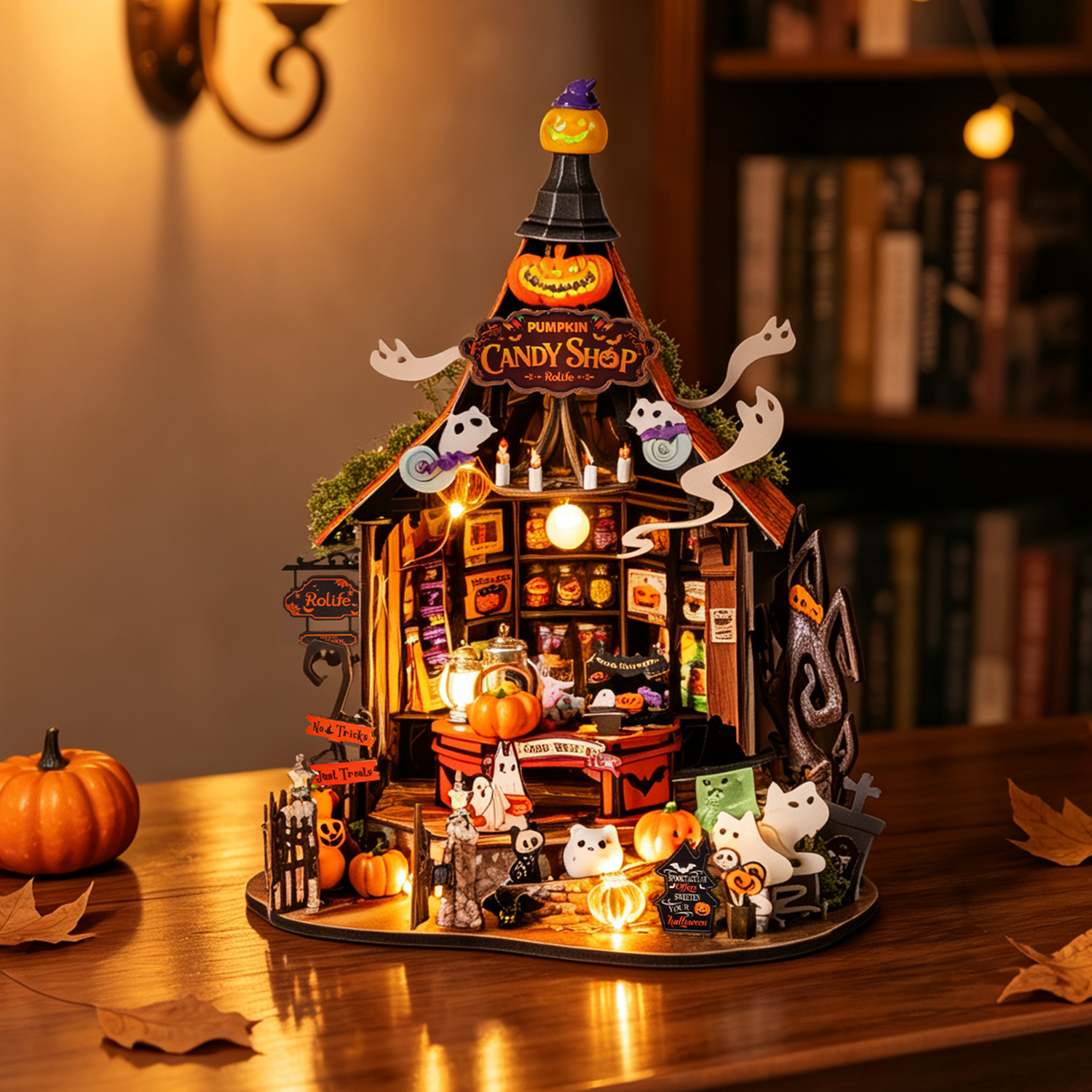
| Cute spooky | Haunted Candy House DG186 | Playful Halloween |
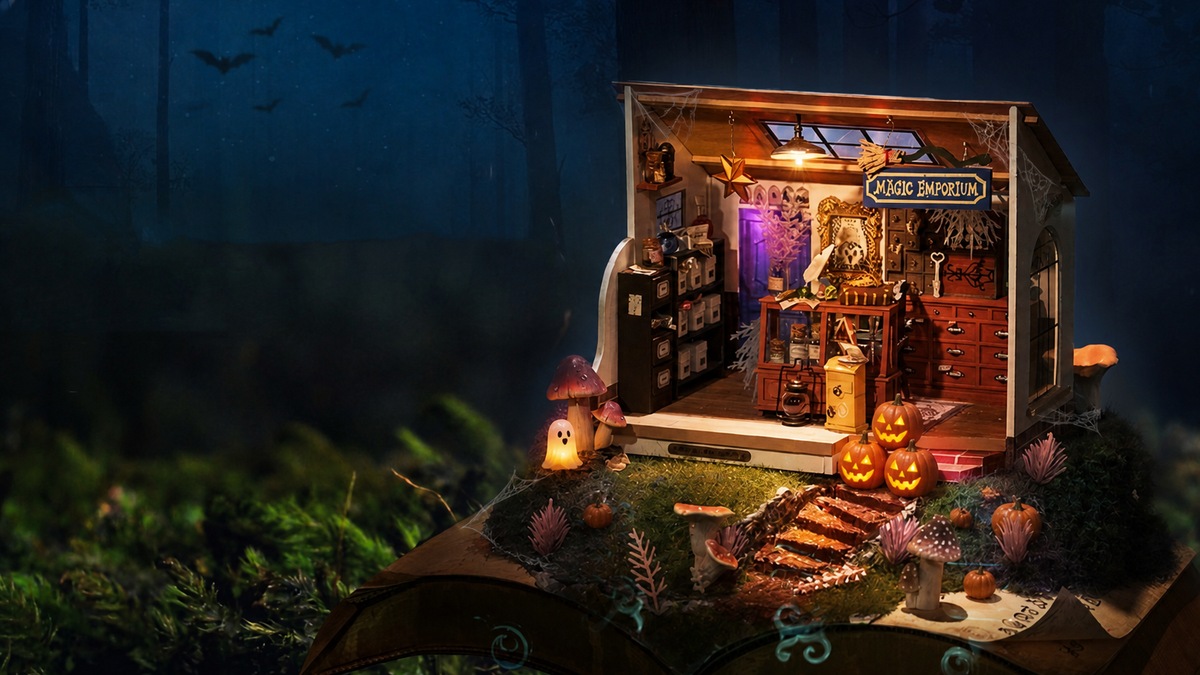
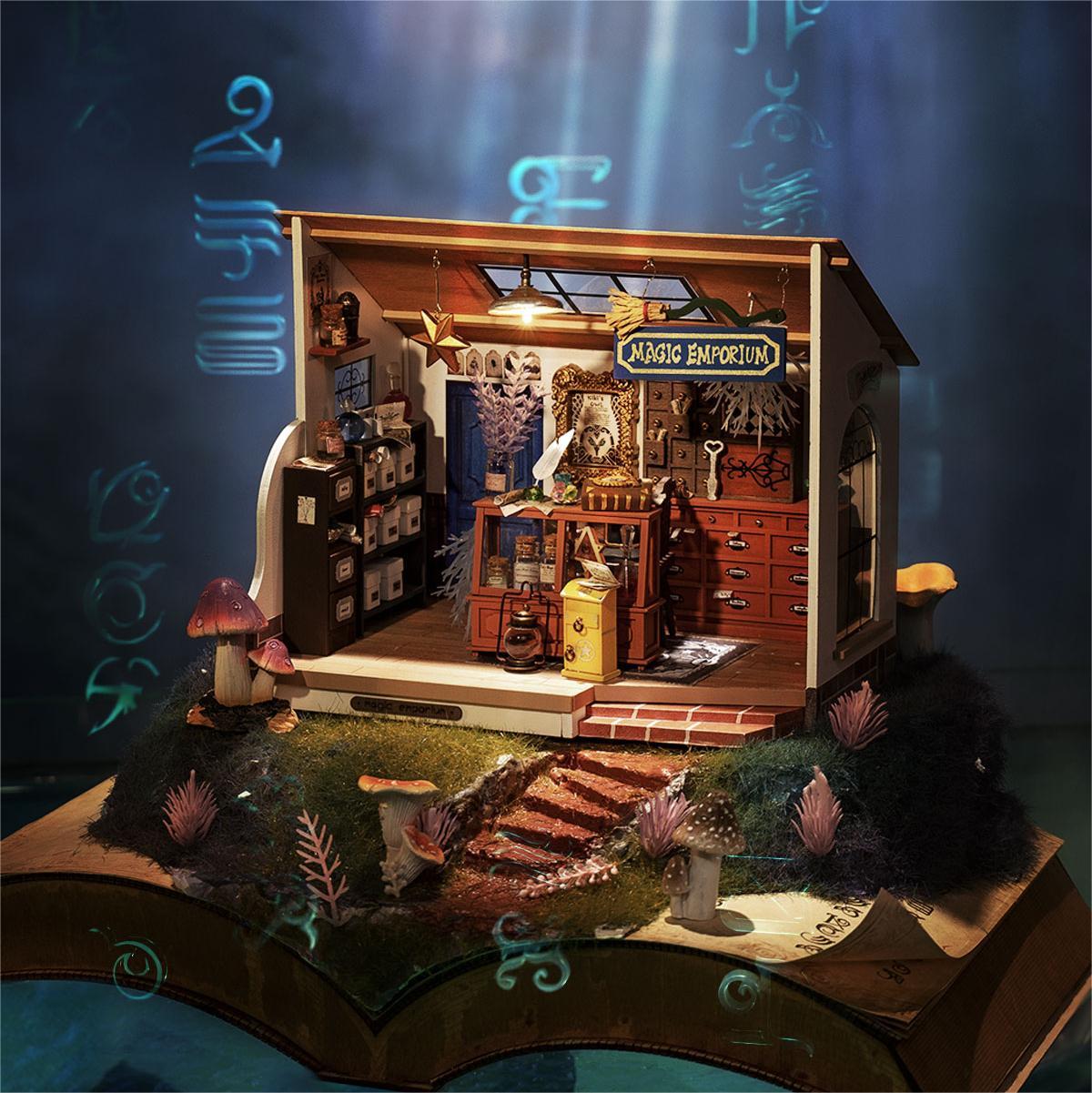
| Magical | Kiki's Magic Emporium DG155 | Fantasy world |
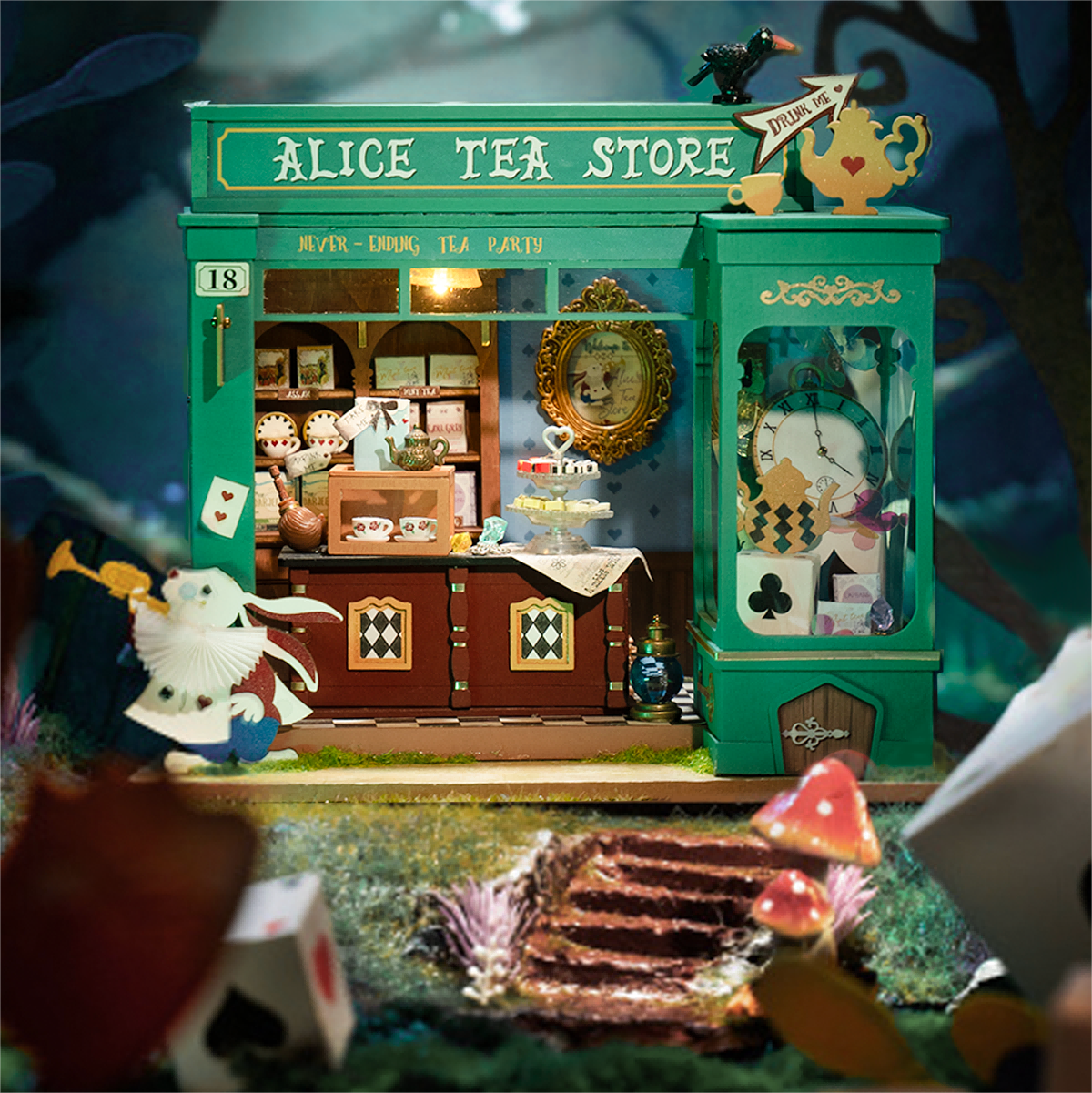
| Cozy | Alice's Tea Store DG156 | Warm home display |
| Creative | Super Creator | Personal creation |
How Long Does It Take to Build a Halloween DIY Kit?
Build time depends on more than the number of pieces. The level of detail, instruction steps, lighting or moving elements, your familiarity with miniature work, and any customization all affect the experience. A compact kit is not automatically a short project, and a longer project is not automatically too difficult.
Use the published assembly time as a planning tool, not a deadline. Set up a workspace where you can pause and resume safely, especially if the project contains many small parts.
What Tools Do Beginners Need?
Begin with the materials and instructions included with the kit, a clean flat workspace, good lighting, and a way to keep small parts organized. Some projects may have product-specific tool or battery requirements, so check the current product page and manual before starting rather than assuming all kits use the same setup.
Common Beginner Questions Before Starting
Is miniature crafting difficult?
Miniature crafting becomes easier when you choose a kit matching your experience and take time to enjoy the process. Expect some detailed steps; the goal is a satisfying project, not a race to finish.
Can adults enjoy beginner DIY kits?
Yes. Many adults choose miniature kits as relaxing hobbies and creative activities. A more approachable project can still be engaging when the theme and finished display suit the maker.
Miniature kits can also be thoughtful gifts for adults who enjoy creative hobbies. See Halloween Gift Ideas for recipient-led choices.
Which Halloween DIY kit is best for a first-time buyer?
For a first-time buyer, choose based on the style you love most, then confirm the difficulty, assembly time, dimensions and display space. Haunted Candy House DG186 is a good option for makers who want a clear Halloween theme, while other kits suit different styles.
Find Your First Halloween Miniature Kit
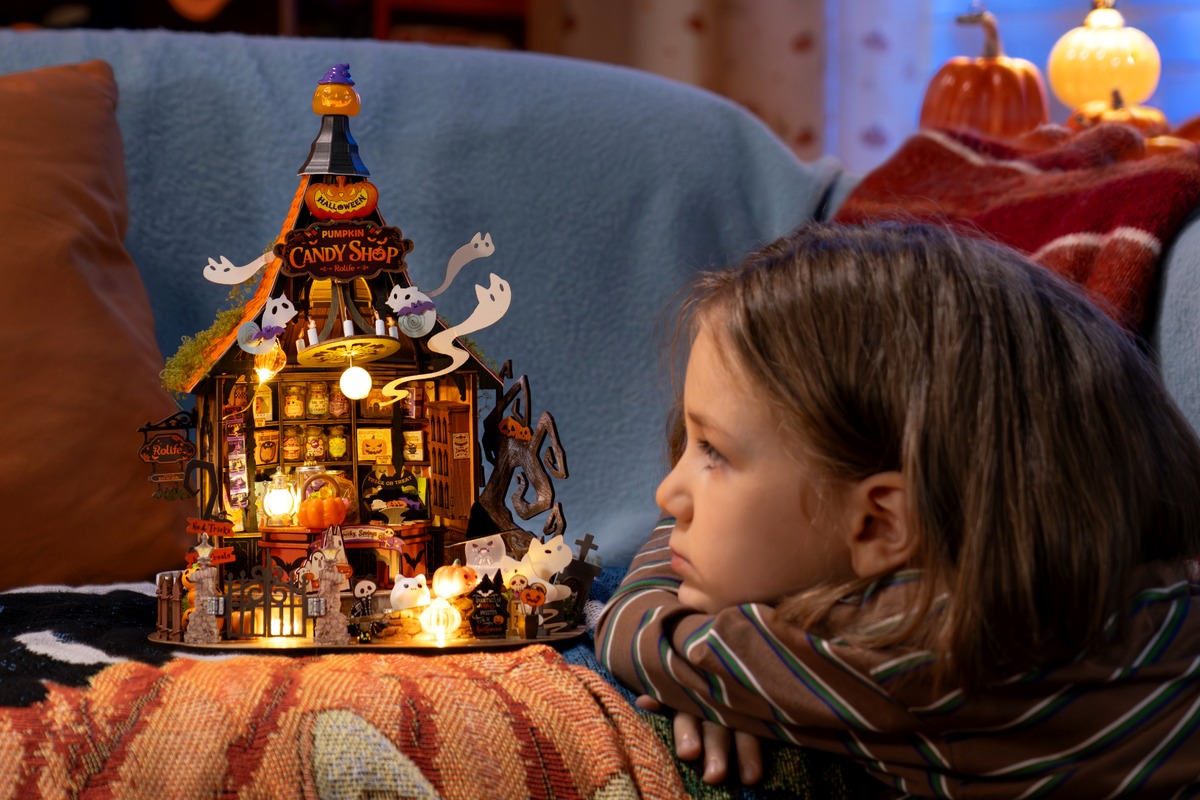
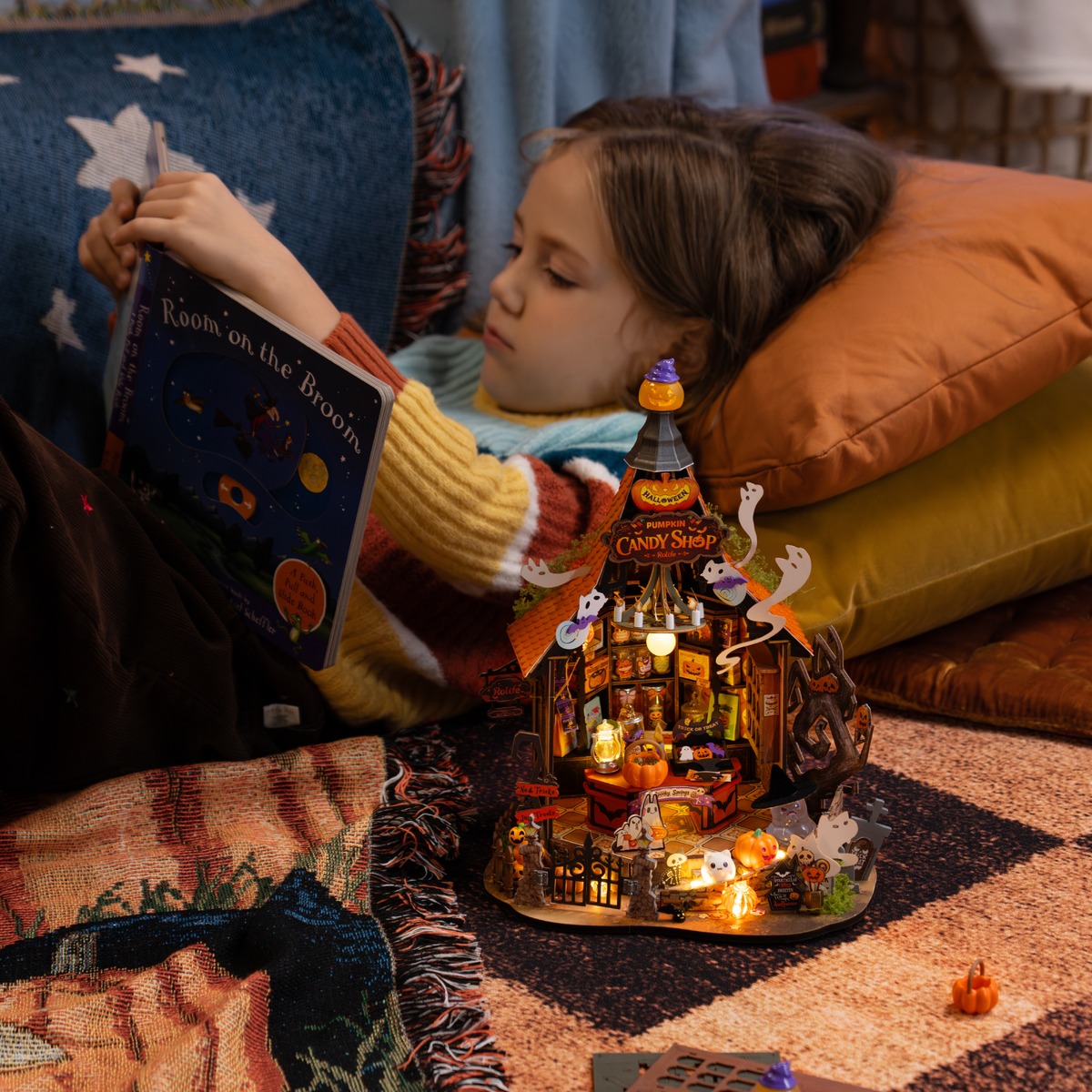
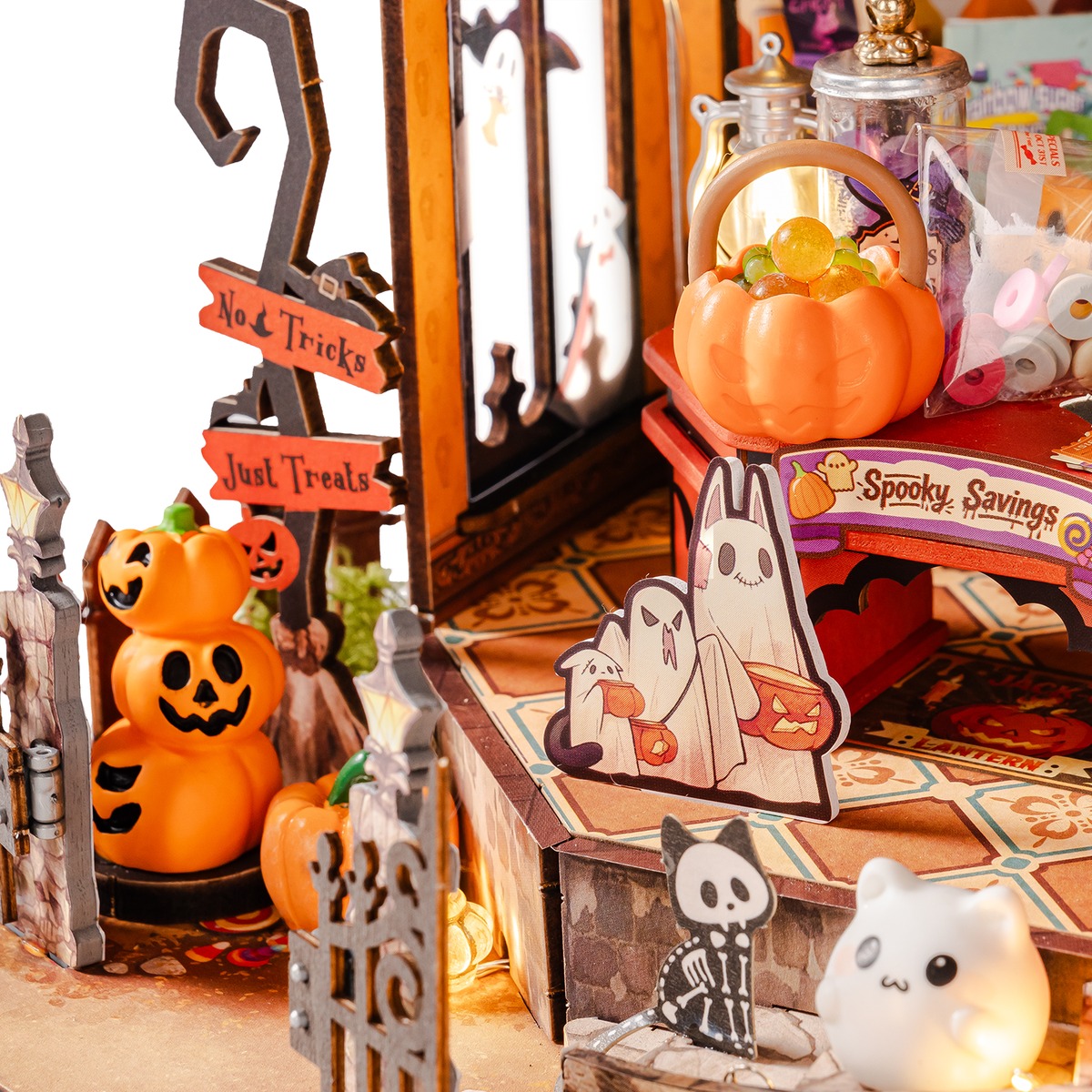
Haunted Candy House DG186
Best for a cute spooky Halloween direction with pumpkins, candy-shop details, and a clear seasonal story. Before choosing it as a first build, review the current product page for published difficulty and assembly guidance.
Alice's Tea Store DG156
Best for a cozy display direction with warm colors and a tea-shop setting. Check the current project commitment and finished dimensions to make sure it fits the time and space you have available.
Kiki's Magic Emporium DG155
Best for makers who love fantasy details and want a magical shop scene. The current product page lists a 10-hour assembly time and a five-star difficulty level, so treat it as a considered project rather than an automatic first-kit default.
Super Creator Series
Best for creative makers who enjoy customization and flexible scene building. The modular format allows makers to explore different layouts and personal ideas; choose it for creative freedom rather than as a default beginner option.
Compare more Halloween miniature kits by current theme and product details.
New Halloween Kits for Beginners and Beyond
The latest Rolife Halloween lineup makes it easier to choose by build style. Four compact Magic House scenes offer a quick first project, while Whisper Magic Shop and Phantom Waltz suit makers ready for a larger centerpiece.
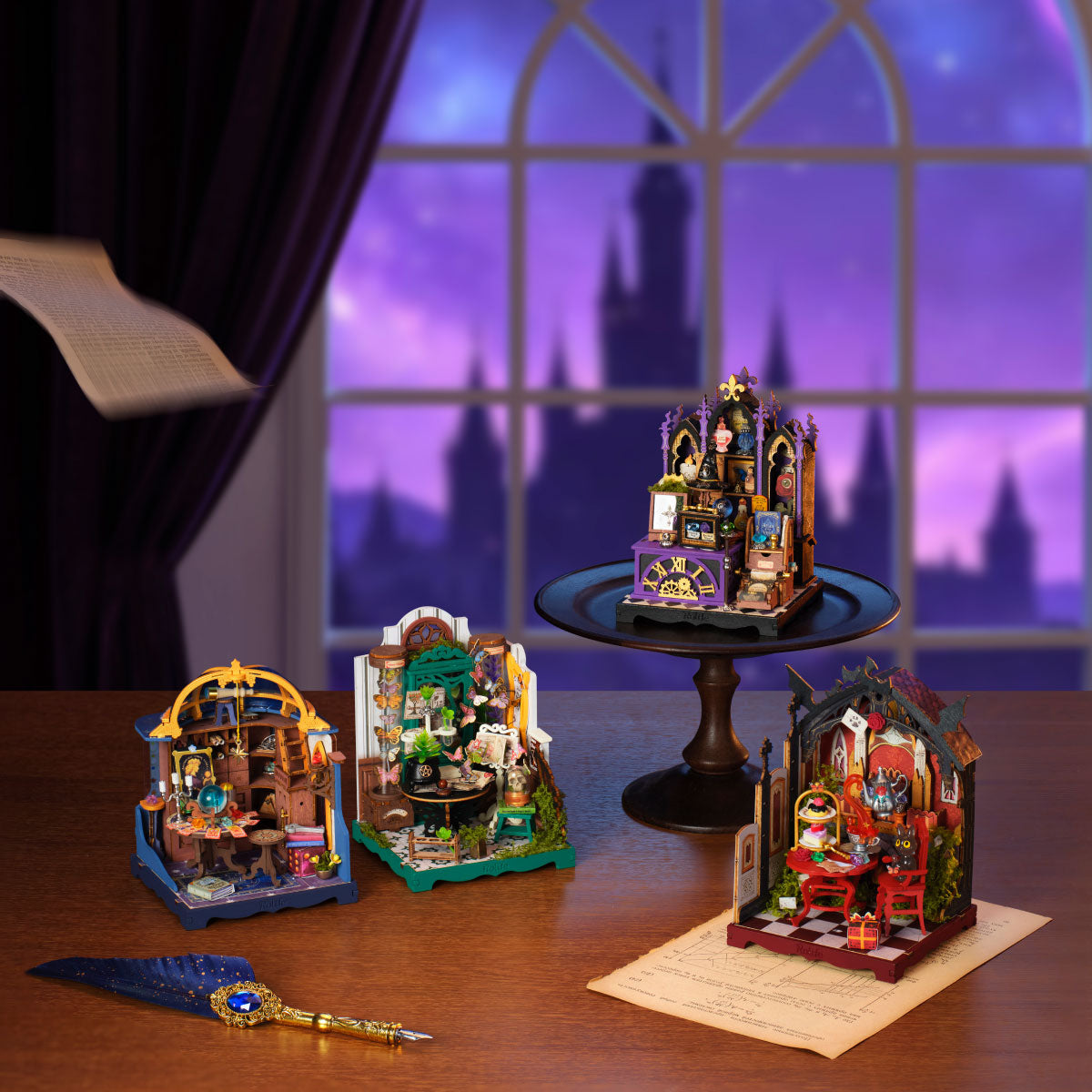
For a Short, Beginner-Friendly Build
Choose Astral Dome DS058 for a stargazing room, Potions Workshop DS057 for an apothecary mood, Curio Corner DS056 for a mysterious collectibles shop, or Rosa Salon DS055 for a magical beauty room. These compact scenes are designed as beginner-friendly builds and can be finished individually or collected as a four-kit set.
For a More Immersive Weekend Project
Whisper Magic Shop TGB22 is a two-story book nook with four lights and a hidden room, making it a stronger fit for builders who want more detail. Phantom Waltz AMS04 adds music, movement and two light modes to a Halloween carousel display.
Read the full introductions to the four Magic House miniatures, Whisper Magic Shop and Phantom Waltz before choosing your project.
Why Your First DIY Project Matters
A first project does not need to decide whether miniature crafting is "for you." It is simply a chance to learn what you enjoy: following instructions, working with small details, building a scene, or displaying the final result. Choosing a fit that feels inviting makes it easier to build confidence and decide what kind of project to try next.
For more hobby-focused project ideas, read Halloween crafts for adults.
Key Takeaway
Choose your first Halloween DIY kit by matching the project commitment to your time, style, and display space. The most suitable first build is not necessarily the smallest or most seasonal one; it is the one you will enjoy making and want to keep.
FAQ
What is the easiest Halloween DIY kit for beginners?
Beginner-friendly Halloween DIY kits usually have clear themes, manageable project commitments and satisfying finished displays. Check the current product page for published difficulty and assembly guidance before choosing.
Are miniature kits good for first-time crafters?
Many first-time crafters enjoy miniature kits because they provide a structured creative activity. Choose a scene that matches your available time, comfort with small details, and display space.
How do I choose my first miniature kit?
Consider difficulty, build time, theme, display space and the type of creative experience you enjoy.
Are Halloween DIY kits suitable for adults?
Yes. Many adults enjoy miniature kits as relaxing hobbies and creative projects. Pick based on your interest and the published project information, not age alone.
Continue Exploring Halloween Miniatures
Once you know the kind of scene you want to build, compare current products by theme, project commitment, and display style.
Explore Halloween Miniature Kits
Related Guides
Explore Halloween miniature house ideas for scene inspiration, or read Halloween crafts for adults for hobby-focused project ideas.
Sources and Further Reading
This beginner guide uses current product-page details for kit-specific statements. Use the product page itself as the final source for assembly time, difficulty, dimensions, included materials, and other product-specific information.