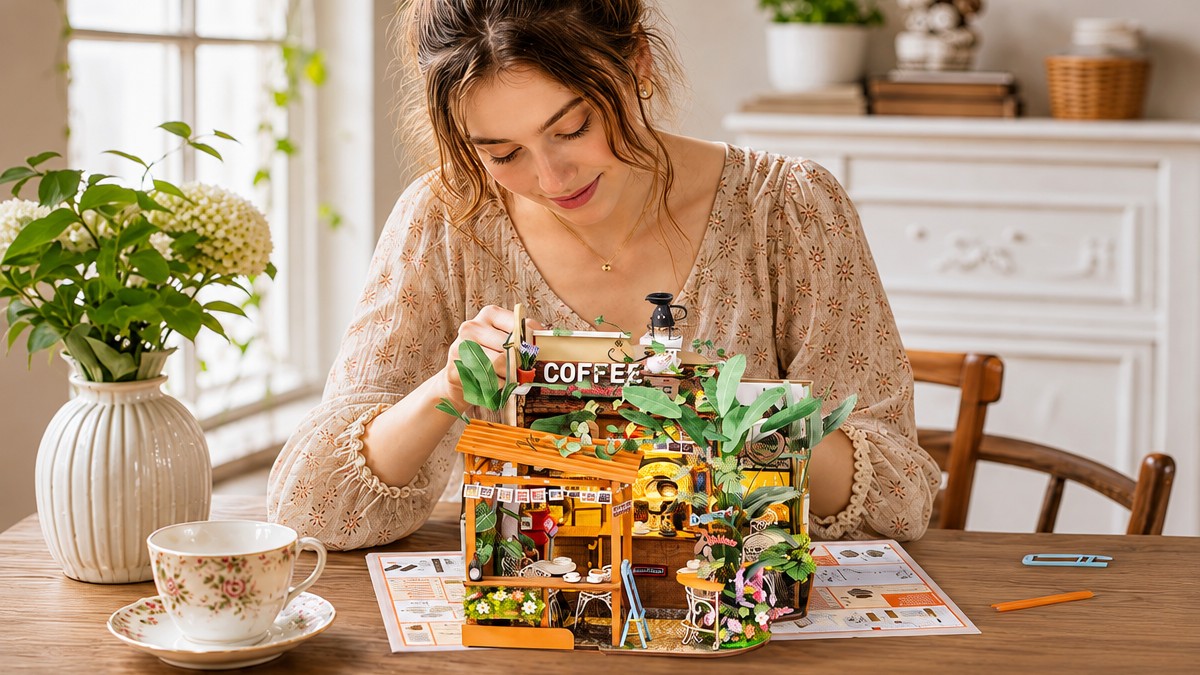


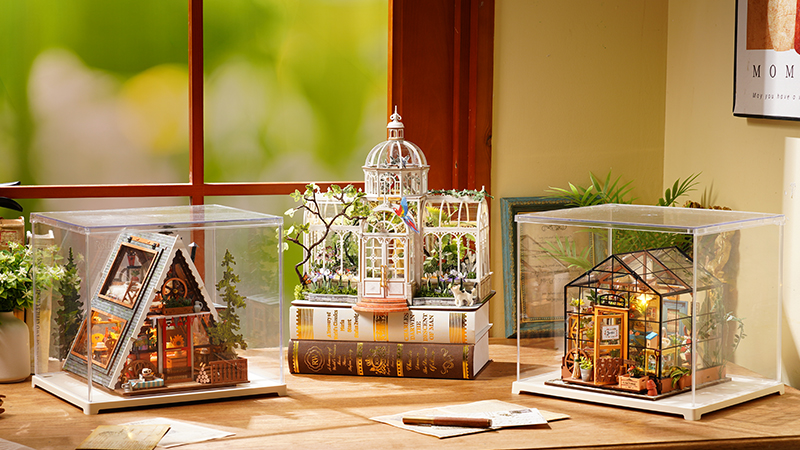

You finish a miniature café, put it on the shelf you had in mind, then step back. The roof looks lovely. The little cup you spent time on has disappeared behind a plant, and the counter is just below your line of sight. The model fits, but the scene you wanted to enjoy is hard to see.
That is the display question worth solving before you build Leafree Café DH201. Its finished size is 29 × 26 × 23 cm, but a good home for it also needs a clear view into the café and room to use the surrounding furniture. Start with a deep, stable surface, face the open scene toward your usual viewing position, and leave the coffee-making area free for everyday use.
The pleasure of this particular miniature is in moving between two scales: the leafy garden you notice across a room and the tiny signs of café life you discover close up. Planning for both makes the finished piece easier to live with and more rewarding to look at.
What makes the café worth looking into
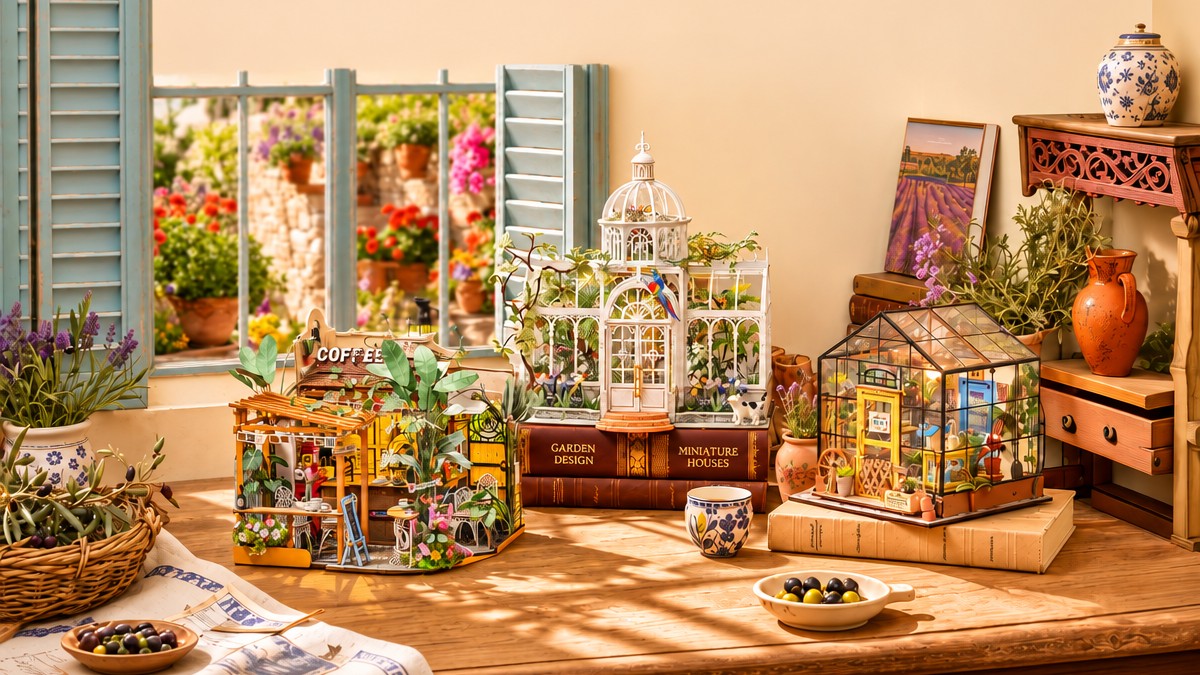
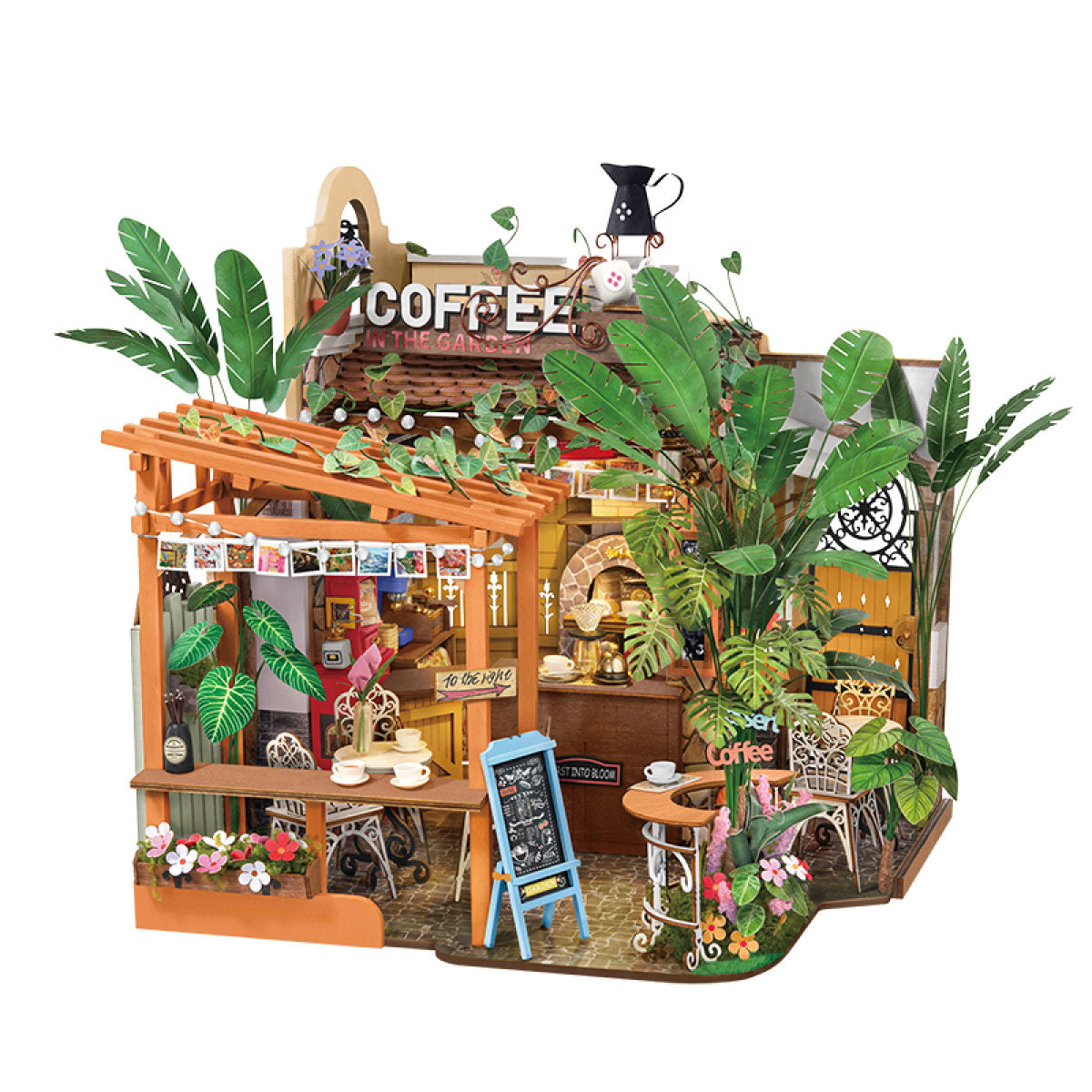
The pergola gives the scene a recognizable outline. Greenery rises around it and softens the structure, while the seating, counter and small coffee accessories give your eye somewhere to settle underneath. The open spaces matter as much as the filled ones: a glimpse of the path or a gap between leaves lets you look further into the café.
That changes how you might display it. If you mainly love the garden, a slight angle can reveal the layers of foliage against the pergola. If you are drawn to the coffee equipment and furniture, a clearer view through the front may be more satisfying. Neither view has to show everything. Choose the detail that first made you want to build the kit, then check that it remains visible from your usual seat or standing position.
Among Rolife DIY craft kits, Leafree Café is a scene that invites close viewing. A high shelf can preserve its garden silhouette while losing the objects that make it feel like a working café. A place you naturally pass at a comfortable viewing height gives those small objects a better chance to be noticed.

Measure the space the display will actually use
Begin with the usable surface, excluding a raised rim, wall bracket or the area already occupied by something that must stay. Make a 29 × 26 cm paper rectangle as an initial footprint check and mark the café’s intended front. Use a ruler to check the 23 cm height, allowing extra access above and around the model. Confirm the finished model’s orientation and any projecting details before settling on the position.
Now try the angle you want. A rectangular object needs more depth when you turn it, even if it looks less square to the room. As a planning example, a 29 × 26 cm rectangle rotated 15 degrees occupies roughly 35 × 33 cm. That is the geometry of a paper rectangle, not a new measurement for the kit; it explains why a 30 cm-deep shelf can pass a straight-on test and fail the angled one.
Do not solve that problem by letting a corner hang over the edge. Keep the base fully supported. On a shallow surface, a straight-on position may give a better result than the three-quarter view you liked in a photograph. If that hides your favorite features, test a deeper sideboard instead.
Leave the paper in place while you use the surrounding space. Reach for the mug beside it, open the cabinet below and clean the counter as you normally would. If your hand keeps crossing the paper, the proposed display occupies working space. A fit measured with a ruler can still be an awkward fit in everyday life.
Three places to try and the compromise each makes
The arrangements below are our editorial suggestions for your own home. Choose between them by how you use the room, rather than by which sounds most like a café.
A sideboard near the coffee station
This is a natural match when the sideboard has a dry area that does not serve as an extension of the coffee-making counter. Position the miniature where you can see it while waiting for a drink, with its open face turned toward you. Keep the machine’s steam and splashes, the water-tank removal route and the place where you set down a hot cup outside the display area.
For a narrow coffee station, resist filling the last open patch of worktop. That patch may be where you put the beans, refill a kettle or rest a tray. A nearby sideboard can keep the visual connection to coffee while giving the model a place where it need not be moved every morning. Test the arrangement with the equipment you actually use, including the less frequent refill and cleaning routines.
An open shelf in the living room
A shelf lets the garden café become a small destination within a larger collection. Depth is the first check; the second is whether the shelf above blocks your view or your access. Stand at the distance from which you would normally notice the model. If the pergola hides most of the café below it, try a different shelf height before adding extra lighting or props.
Books beside the model can give the display a quiet background, but tightly packing them around it turns the café into another rectangular object on the shelf. Leave a visible gap on the side you approach from. The open garden edge is part of the scene, and it needs room to read as an edge rather than disappear into neighboring objects.
A cabinet or side table seen from a reading chair
Sit down before deciding on this placement. A model that looks appealing while you stand over it can become a view of the base or roof once you settle into the chair. A cabinet a little further into your line of sight may reveal more than a table directly beside your elbow.
Keep the table’s everyday job in mind. If it is where you put a book, lamp and drink, fitting the miniature there may make the furniture less useful. A display that stays comfortably in place is easier to enjoy than one you have to rearrange whenever you sit down.
A closer look from the Rolife Community
In Leafree Cafe #8, Rolife Community maker NicoleNguyen (@ThaoNguyen) draws attention to the soft yellow light, green foliage, furniture, hanging photographs and tiny cups in her finished scene. Her close-up below makes one display choice particularly clear: the café rewards a view into the spaces between its details.

The white cup stands out on the curved wooden counter. Taller leaves sit behind it, and the stone-patterned path gives the eye a route through the foreground. Those relationships make the scene readable. A real plant placed directly in front of the model would interrupt that view, even if its greenery matched the theme.
Use this close-up to choose what you want to keep visible in your own arrangement. The image shows the miniature itself; the home layouts in this article are suggestions for placing your finished model.
Build the arrangement around the view you love
Once you have a workable position, begin with the café alone. Look from across the room, then come close enough to see the counter. From a distance, the pergola and foliage should form a clear outline. Up close, the seating and accessories need an unobstructed route into view. This gives you a useful test for anything you add around it.
A favorite ceramic mug beside the model can connect the miniature scene to your own coffee routine. Set it outside the base’s footprint and away from the view into the café. A real plant can echo the greenery, but place its pot to one side and keep trailing leaves clear of the miniature. Water it elsewhere so the display does not become the place where drips collect.
Try the café against the wall or shelf backing before adding a decorative print behind it. A busy pattern can make the fine leaves and pergola harder to distinguish. If the whole scene merges into a dark background, first try changing its position or the nearby objects. More decoration is not always what a detailed model needs.
Check it again in the evening with its lights on and your usual room lighting in use. The model’s glow can draw attention into the café, but the furniture around it should still be comfortable to use. Keep your reading or coffee-preparation lighting suited to those tasks.

Give the proposed spot one ordinary day
Before committing to the display, leave the footprint template in position for a normal day. Notice whether you reach across it, lose a useful patch of surface or only see it from an unhelpful angle. Adjust the location while moving it is still as easy as shifting a piece of paper.
If you want to examine more of the scene before choosing its place, browse our introduction to Leafree Café. Then return to the detail you most want to see: perhaps the pergola from your chair, or a tiny cup while your own coffee brews. Give that view a place in the room, with enough space left around it for real life.