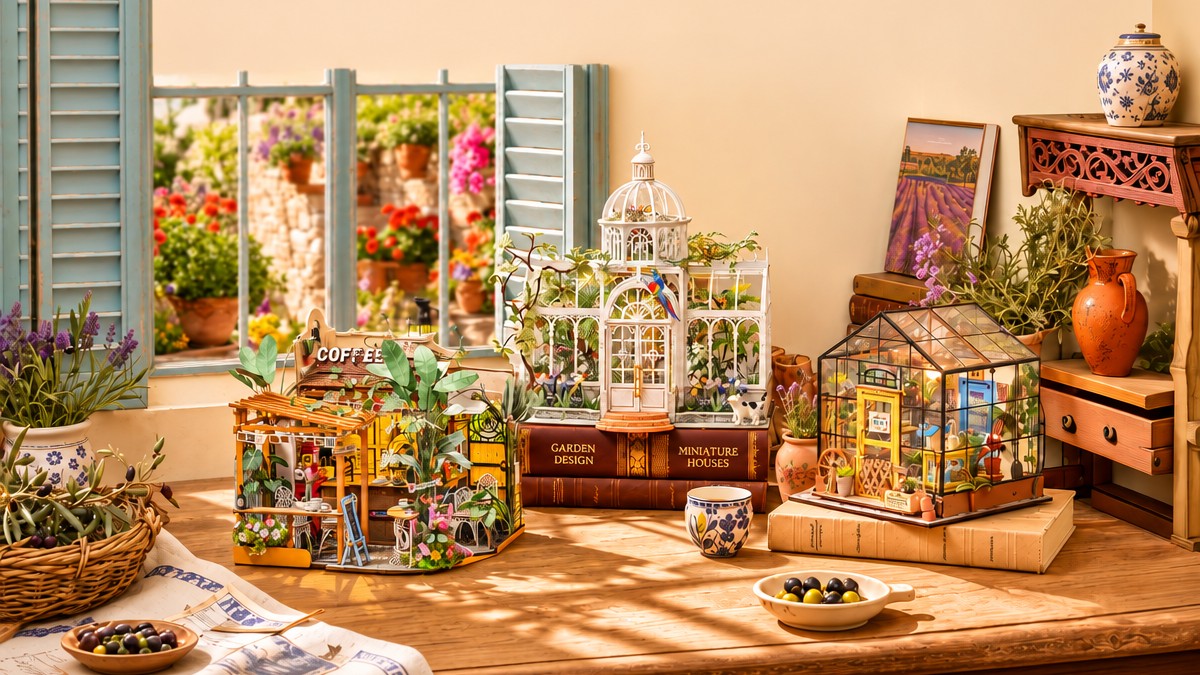



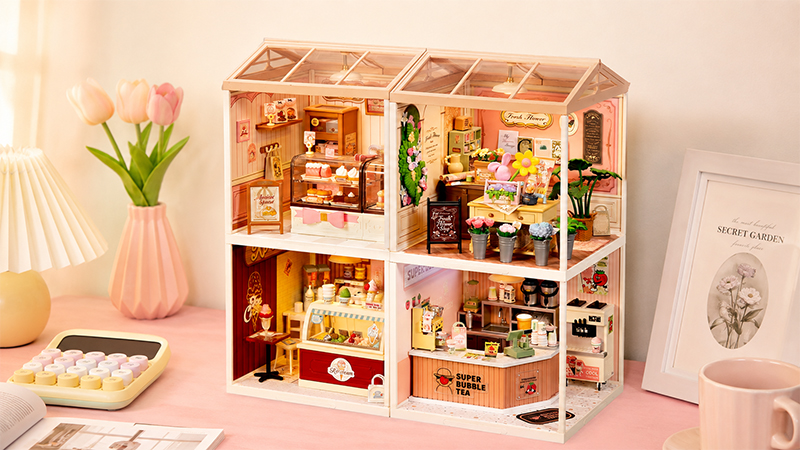
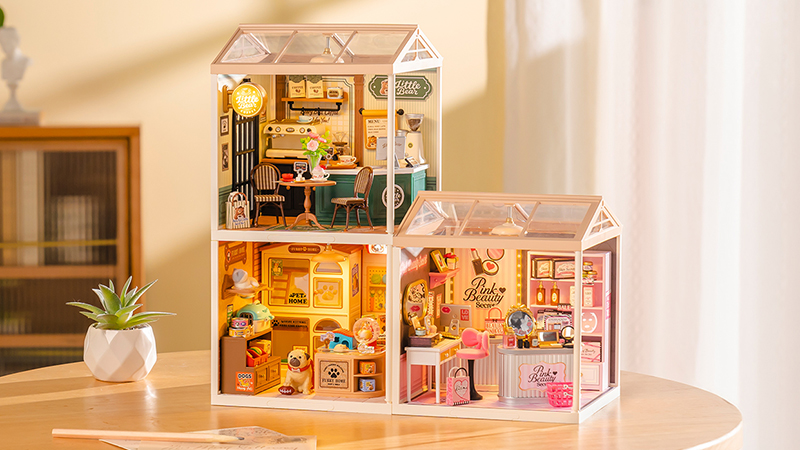

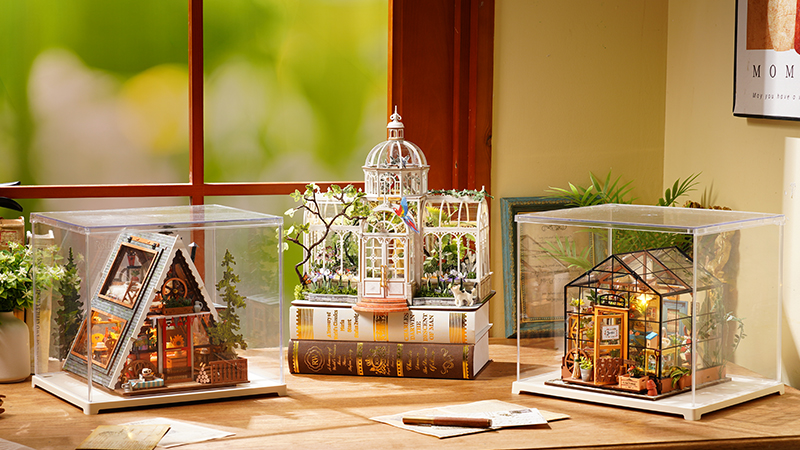

There is a particular kind of unfinished project that is still appealing every time you see it. You want to work on it. But when a free evening finally arrives, you cannot remember which tiny piece you were looking for or whether the last assembly was complete. By the time you have worked that out, starting feels like more effort than you expected.
For Leafree Café DH201, making time includes making the next start easier. The kit has 800 pieces and an estimated assembly time of about 32 hours, with individual pace varying. You can spread the work across sessions by choosing a manageable next step, stopping at a clear point and leaving enough information to continue after a gap.
You do not have to decide now which evening the café will be finished. A more useful first decision is what a comfortable session would look like in your actual week, including the time needed to put the work aside.

A long build needs more than an empty hour
An available hour and an hour you can use for careful making are sometimes different things. You may have time after work but little patience for deciphering a new diagram. On another day, you may feel ready for a detailed step but expect to be interrupted. The next task needs to fit both the time available and the attention you can give it.
That matters with a café made from many small assemblies. A component can look modest when it is finished yet involve careful reading, identifying pieces and several separate actions. Measuring a session only by how much the overall model changes can make useful work seem smaller than it was.
Treat the 32-hour estimate as an indication of the project’s scale. Dividing it into a fixed number of identical evenings creates a neat calendar, but it does not account for the steps you find absorbing, the ones you need to reread or the week when you simply do not build. Let your first few sessions teach you how you work before deciding on a pace.
Make the first session easy to follow into the second
Begin by opening the instructions and understanding the starting sequence. Find the relevant parts and look ahead far enough to see what the first assembly involves. This is also when to notice whether the next action can be left partway through or needs a more continuous stretch of attention. Follow the manual for the assembly order and any setting time it specifies.
Choose a goal you can recognize when it is done. “Work on the café” leaves almost any amount of work feeling incomplete. “Understand and complete the next small assembly in the manual” has a clearer boundary. If the available window is very short, locating the parts and understanding that assembly can be a useful goal on its own.
Before you begin, decide how you will recognize that it is time to stop. You may want to finish the current assembly, or you may need to stop before beginning the next attachment. Leave room at the end for checking your place and putting the work away. Using the entire window to build can leave you with a rushed stopping point that makes the next start harder.

Choose a task for the day you are actually having
The following are ways to plan a session, not prescribed stages in the DH201 instructions. Use whichever fits your current point in the manual.
- A short opening with likely interruptions: review the next diagram, identify its parts and resolve anything unclear. Stop before beginning work that needs uninterrupted attention. A prepared next step is a useful result.
- A clear stretch when you feel attentive: work through the next assembly, including time to compare it with the instructions. You can continue if there is a sensible next step and enough time to leave it securely.
- An evening when you keep losing your place: finish only what needs to be made stable, record the current state and stop. Repeatedly rereading the same line or misidentifying parts is a reason to shorten that session.
Avoid hopping to an appealing accessory purely because it looks quick. A tiny coffee detail can be a satisfying goal when you reach it in the sequence, but opening several unrelated assemblies creates more unfinished decisions to remember. Choose within the work that is ready to happen.
You can reserve an opportunity to build without promising to use all of it. If the next step turns out to be more involved than expected, spend the session understanding it and return when you can give it attention. That keeps your schedule responsive to the project instead of forcing the project to fit a daily quota.
Real stopping points from the Rolife Community
In Leafree Cafe #2, Rolife Community maker NicoleNguyen (@ThaoNguyen) describes spending more than two hours on a few small details before taking a break and planning to continue the next day. Her photograph shows a separate café component, still far from the completed garden scene.

The useful detail in that record is the mismatch between time spent and the size of the visible result. Several hours of careful work can leave you holding something small. Counting finished sections of the whole café would miss much of what happened in that session. The two hours were her time on those details, not a suggested session length.
Rolife Community maker Ana Voulminot (@ana_vlmt) offers another kind of stopping point in her first Leafree Café post. Interested in the garden café design, she made two elements and stopped when she felt exhausted. Ana received the kit through a collaboration with Robotime. This account describes the beginning of her build, before she could assess the finished project.

Neither maker waited for a large section of the café to be complete before stopping. Their records leave room for a session to end with a small result. You can choose that kind of boundary for yourself without copying either person’s timetable.
Leave yourself a useful note before you stop
A good restart note answers three questions: what is complete, what remains uncertain and what should happen next. Write it while the current step is still fresh. Include the manual page or step reference from your own instructions so you can return directly to it.
For example, an illustrative note might read: “Current small assembly complete and checked against the diagram. Next assembly not started. Before attaching anything, confirm which way the next illustrated piece faces.” Add the actual step number when you use it. This is a note format you can adapt, not a description of a particular DH201 step.
Separate a finished action from one you have only prepared. If you have identified the next parts but not attached them, say so. If a question stopped you, record the question precisely. “Not sure about this section” forces you to investigate the same uncertainty again; “check the orientation before the next attachment” tells you where to begin.
A quick reference photo can help you remember the arrangement, but keep the instructions as your guide to what belongs where. For protecting the model and organizing parts between sessions, use our guide to storing an unfinished Rolife kit. The note has a different job: preserving your place in the work.
Return after a week away without trying to catch up
On the first session back, read your note and compare the last completed assembly with the relevant diagram. Check what is actually attached and what is merely nearby. Loose parts placed beside a model can look like a plan you remember making, even when you no longer remember the reason for it.
If the note and the model do not agree, resolve that before continuing. Start at the last step you can identify with confidence and work forward through the instructions. You may spend the whole session reorienting yourself. That is useful if it gives the following session a reliable starting point.
For your first new action, choose a manageable next step in sequence. Avoid compensating for the time away by opening several tasks at once. The kit has no missed sessions to repay. What matters is restoring a clear connection between the instructions, the parts in front of you and the action you are about to take.
When the project starts to feel heavy
First work out what is making it difficult to return. If you still like the café but dread finding your place, improve the restart note and reduce the next goal. If the next step is confusing, identify that specific question and seek help before doing more. If setting up takes longer than the time you usually have, reconsider where the unfinished work can wait between sessions.
Those are different problems, so “make yourself do a little every day” will not address all of them. Nor does every pause need fixing. You can leave a project at a clear checkpoint and come back when you want to give it attention. A hobby does not need a streak to remain yours.
Keep an occasional photo of a finished component if you enjoy seeing progress. Over time, those images can show what a view of the unfinished whole misses: the objects you have made, checked and brought into the scene. A tiny piece of furniture can be a complete result for that evening.
If you are considering Rolife DIY craft kits for time of your own, Leafree Café offers a substantial project to return to. Before opening it, choose where the work will wait and one realistic opportunity to begin. At the end of that first session, leave yourself a clear next action. That is how the following session starts to feel inviting.