

Quick Answer
Choose a Christmas craft kit for adults by the kind of making you enjoy, the time you can give it, and where the finished piece will go. Paper crafts, stitching, wreath making, painting, and miniatures offer different experiences. A miniature kit suits someone who enjoys small details and wants a scene to display; a simpler-looking project may still require patience, tools, or drying time.
Which kind of Christmas craft would you enjoy making
Picture an ordinary evening in December. Would you rather stitch a felt ornament, paint a few wooden shapes, or work through the next section of a tiny house? Start with that choice. The photograph on the box shows the destination, but the steps inside determine how you will spend your time.
Use these categories to narrow your options before comparing individual kits.
| Craft type | Choose it if you enjoy | Check before buying |
|---|---|---|
| Paper crafts and cards | Folding, cutting, and arranging colors or messages | Required cutters and adhesives; how finished pieces will be stored |
| Embroidery and felt ornaments | Stitching and adding small decorative details | Stitches required; whether needles, thread, and filling are included |
| Wreath making | Arranging a larger seasonal display | Finished size, hanging method, and storage space |
| Painting and ornament decorating | Choosing colors and adding your own patterns | Included paints and brushes; drying time and surface protection |
| Miniature houses and wooden models | Following assembly steps and building a scene or structure | Small-part handling, tools, adhesives, and workspace |
These are starting points, not difficulty ratings. Two kits in the same category can involve very different techniques. Look for an instruction preview or clear process photographs, especially when trying a craft for the first time.
How much time can you realistically give the project
An assembly estimate is useful for planning, but it is not an appointment with a finished model. Reading the instructions, organizing materials, correcting a step, and clearing the table all take time. Some projects also need waiting time between stages.
If you have short sessions available, look for natural stopping points. Could you finish one ornament, one section of stitching, or one part of a miniature scene, then put everything away? A project becomes harder to return to when you have to reconstruct your place in the instructions every evening.
If you have just one evening, set a smaller goal: learn the technique or finish an early stage. For a shared session, a three-hour kit should be something you can start together and take home, not a promise that everyone will finish in three hours.
What makes a miniature kit a good fit
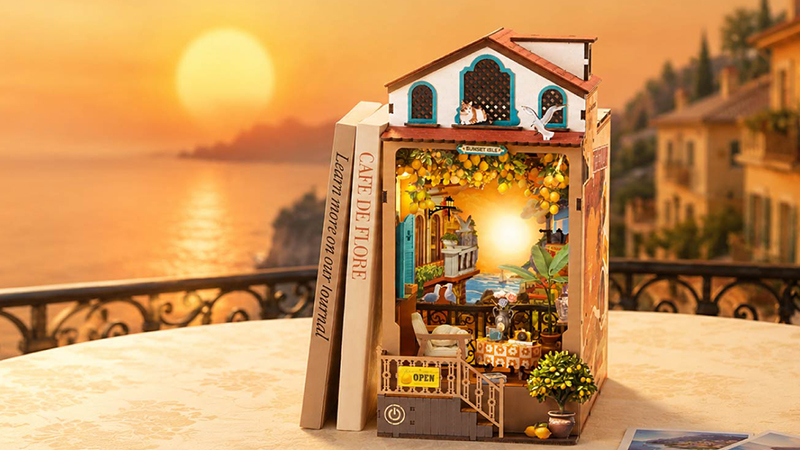
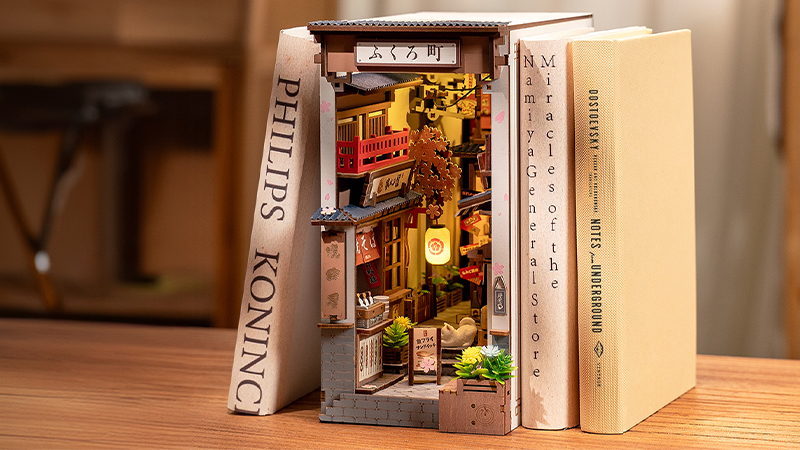
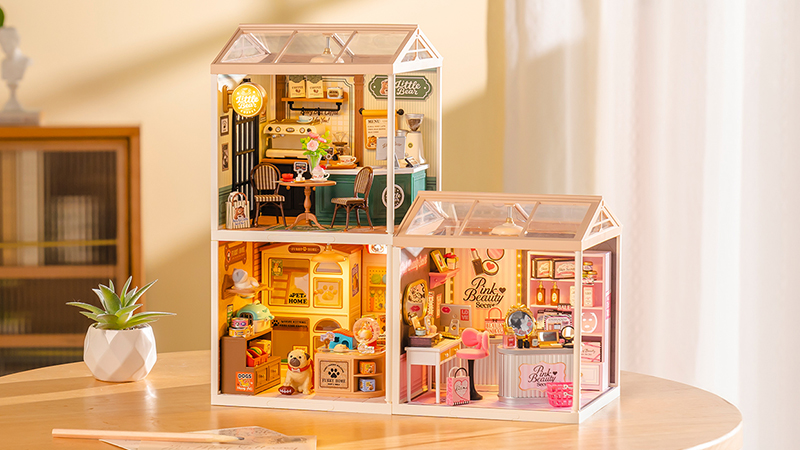
A miniature kit is worth considering when you enjoy working carefully with small pieces and want the finished project to stay on display. You follow a sequence, build up the scene, and gradually see how its parts relate to one another.
It may be a less comfortable choice if you dislike precise handling or need to clear every trace of the project immediately after each session. In that case, compare a craft with larger components or a format you already know. Familiarity with sewing, painting, or paper folding can matter more than a beginner label.
A compact Christmas scene
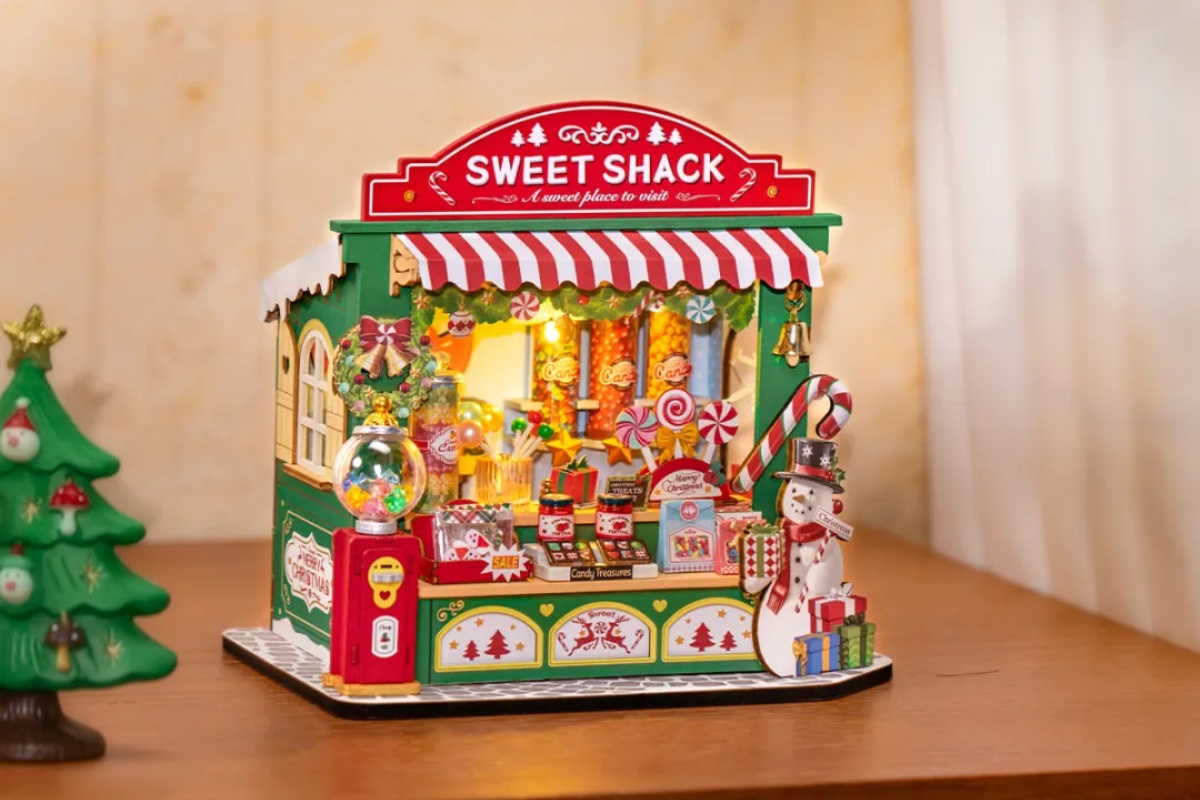
The Rolife Twinkling Christmas House DS036 is a seasonal miniature house for someone who wants the finished scene to feel distinctly Christmassy. It has 46 pieces, an estimated assembly time of three hours, and an assembled size of about 4.9 × 3.54 × 7.16 inches.
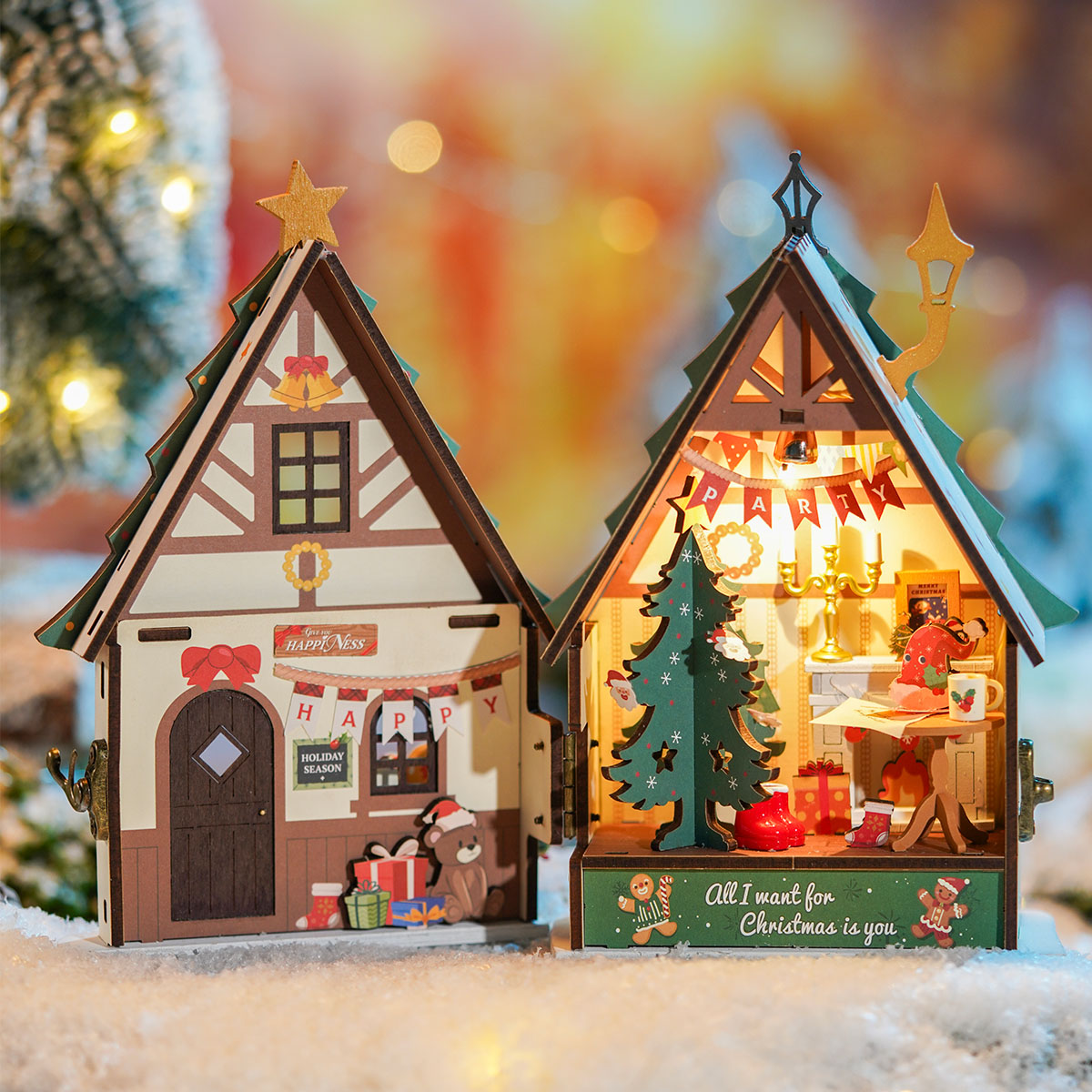
Use it as a compact holiday option to compare against your available display space. A modest piece count still leaves room for careful work, so give yourself time to understand the steps rather than treating 46 pieces as a guarantee of an easy evening.
A project to display beyond Christmas
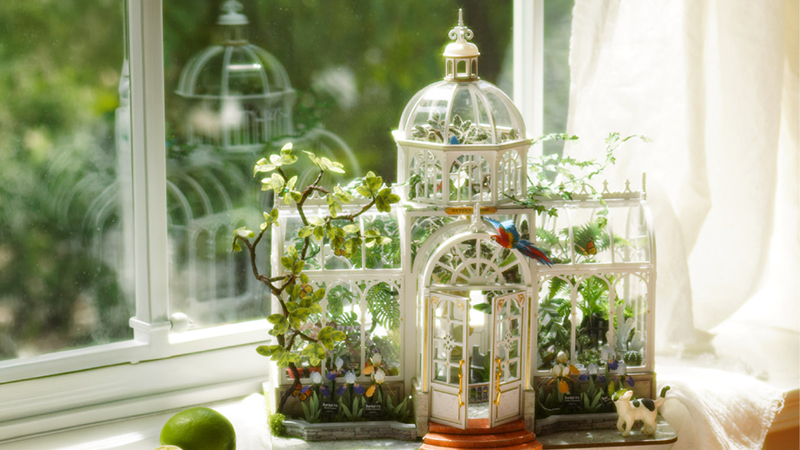
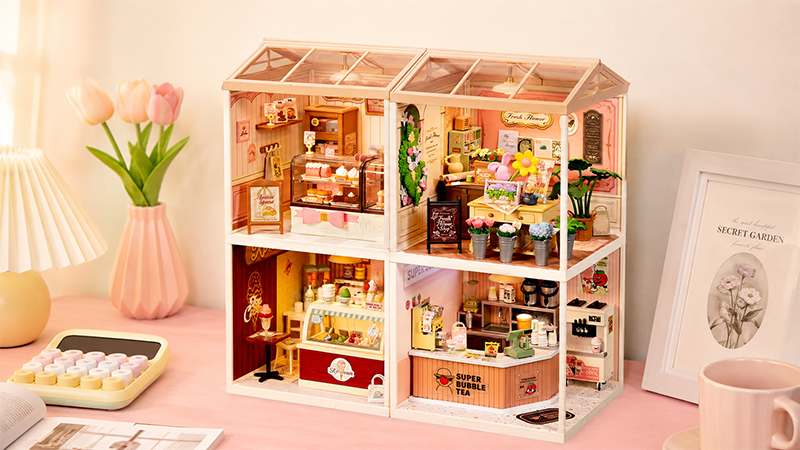
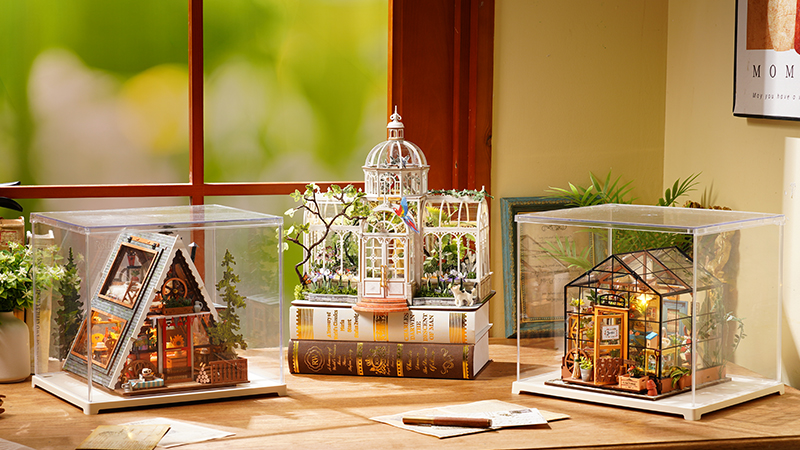
If you would rather make something for a shelf all year, Rolife Cathy's Flower House DG104 offers a greenhouse scene instead of a Christmas theme. Its detailed plant-filled setting makes it a different choice from a seasonal chalet.

Consider it when the flower-house theme appeals to you and you want a more involved project to return to across several sessions. It is not a Christmas edition. The reason to choose it for holiday crafting is that you want to make and keep that particular scene, even after the decorations come down.
Will it fit your workspace and your home
Measure two places: where you will make the kit and where you will display it. A model that fits on a shelf may need a much wider working area while the instructions, loose parts, and unfinished sections are spread out.
Before choosing, put a sheet of paper or a tray on your proposed work surface. Allow room beside it for instructions and parts you have not used yet. If that leaves no space to work comfortably, choose a different setup or a project that can be contained more easily.
For a miniature, check shelf depth and overhead clearance, not just width. If it includes lighting, plan access to its power controls or battery compartment. For seasonal decorations, also decide where the finished piece will live in January; a wreath and a delicate model have different storage needs.
What should you check before ordering
A kit can bring materials together without including every item you will need. Read the contents and requirements for the exact model, even if you have bought from the same brand before.
- Check the required techniques. Look for cutting, stitching, shaping, painting, or other operations you may not have tried.
- Confirm which tools and adhesives are included and which must be supplied separately. Do not assume that all kits in a series are glue-free.
- Check the materials and any handling instructions that affect your workspace.
- For a lighted project, confirm its power requirements and whether the necessary batteries or accessories are included.
- Read the age guidance for that kit. An adult project should not be assumed suitable for children who want to join in.
- Allow time for delivery, checking the contents, making the project, and any final packaging. Availability alone does not guarantee arrival before Christmas.
If a missing tool would prevent you from starting, resolve that before placing the order. It is much easier to plan a craft evening when the whole setup is ready.
Key Takeaway: Choose the making experience first, then check time, workspace, and the complete supply list. For a miniature, the right scene is one you want to build as well as display.
Frequently asked questions
Are fewer pieces always easier
No. Piece size, the kind of assembly, and the amount of handwork all affect the experience. A small set of delicate components may demand more care than a larger set of simple connections. Use piece count alongside instructions and difficulty guidance, not on its own.
Can a beginner choose a miniature house kit
Yes, if its operations suit the beginner. Check whether you are comfortable with the small parts and required techniques, and choose a project you are willing to complete gradually. Someone new to miniatures may already enjoy similar detailed work in another craft.
Does a holiday craft have to look like Christmas
No. A Christmas-themed kit makes sense if you want a decoration to bring out each year. A greenhouse, shop, or other everyday scene can suit holiday making when you prefer a finished piece that stays out year-round.
Should you choose a kit for one sitting or several sessions
Choose around the time you actually have. If completion in one sitting matters, inspect the steps and allow room for setup and cleanup as well as making. If you enjoy returning to a project, prioritize a scene you like and a practical way to store it between sessions.
Before you settle on a kit, choose your craft type, mark out a place to work, and decide where the finished piece will go. Those decisions will narrow your shortlist more usefully than a long list of festive products.