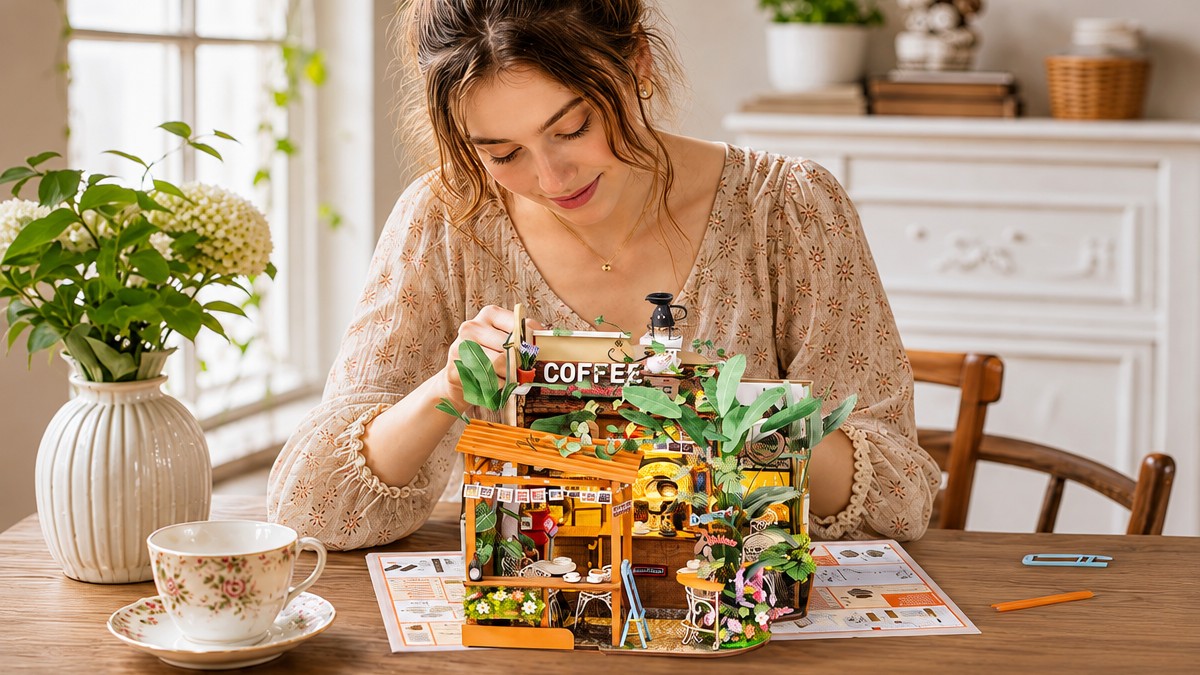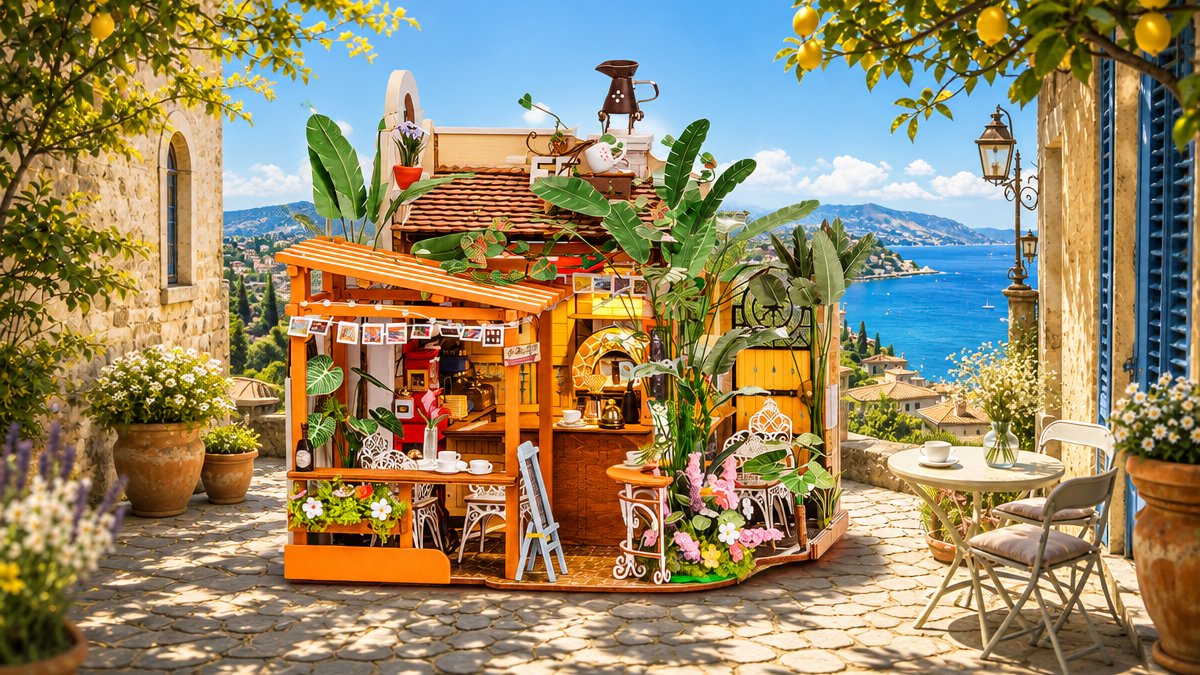


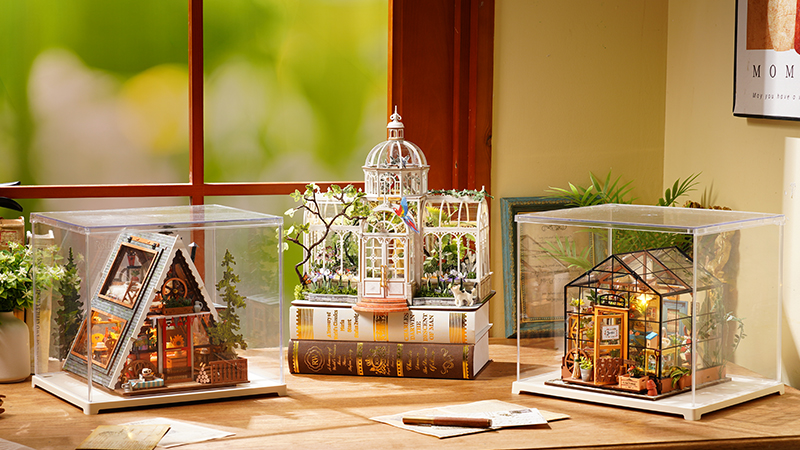
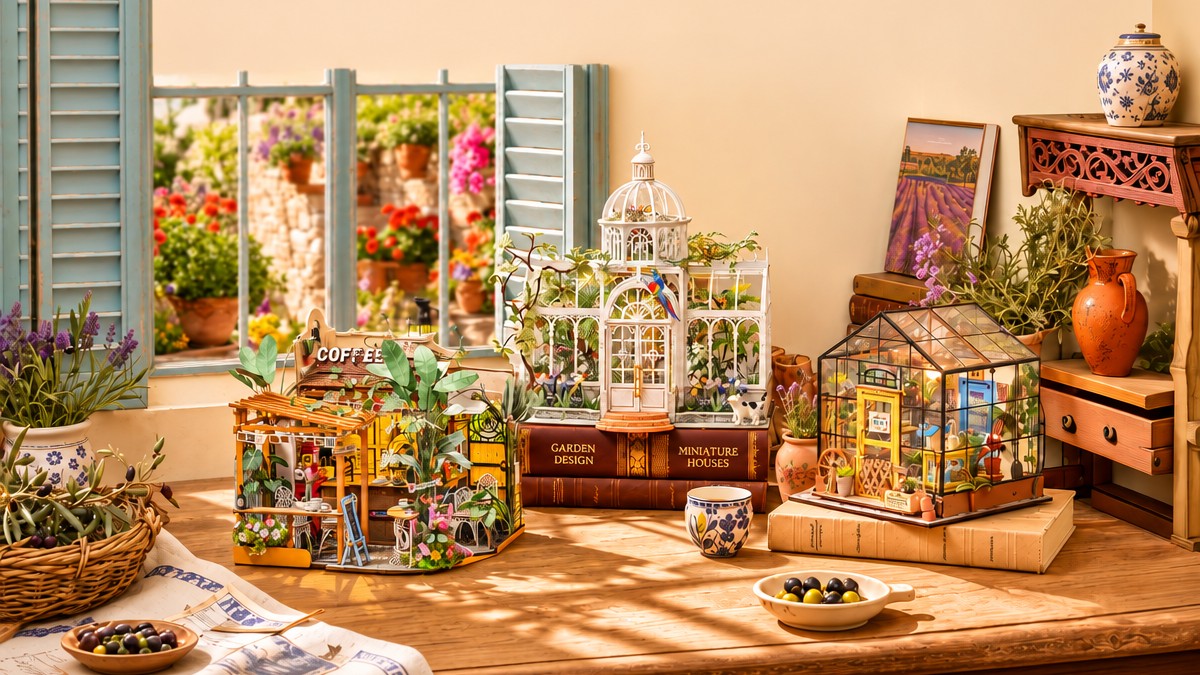
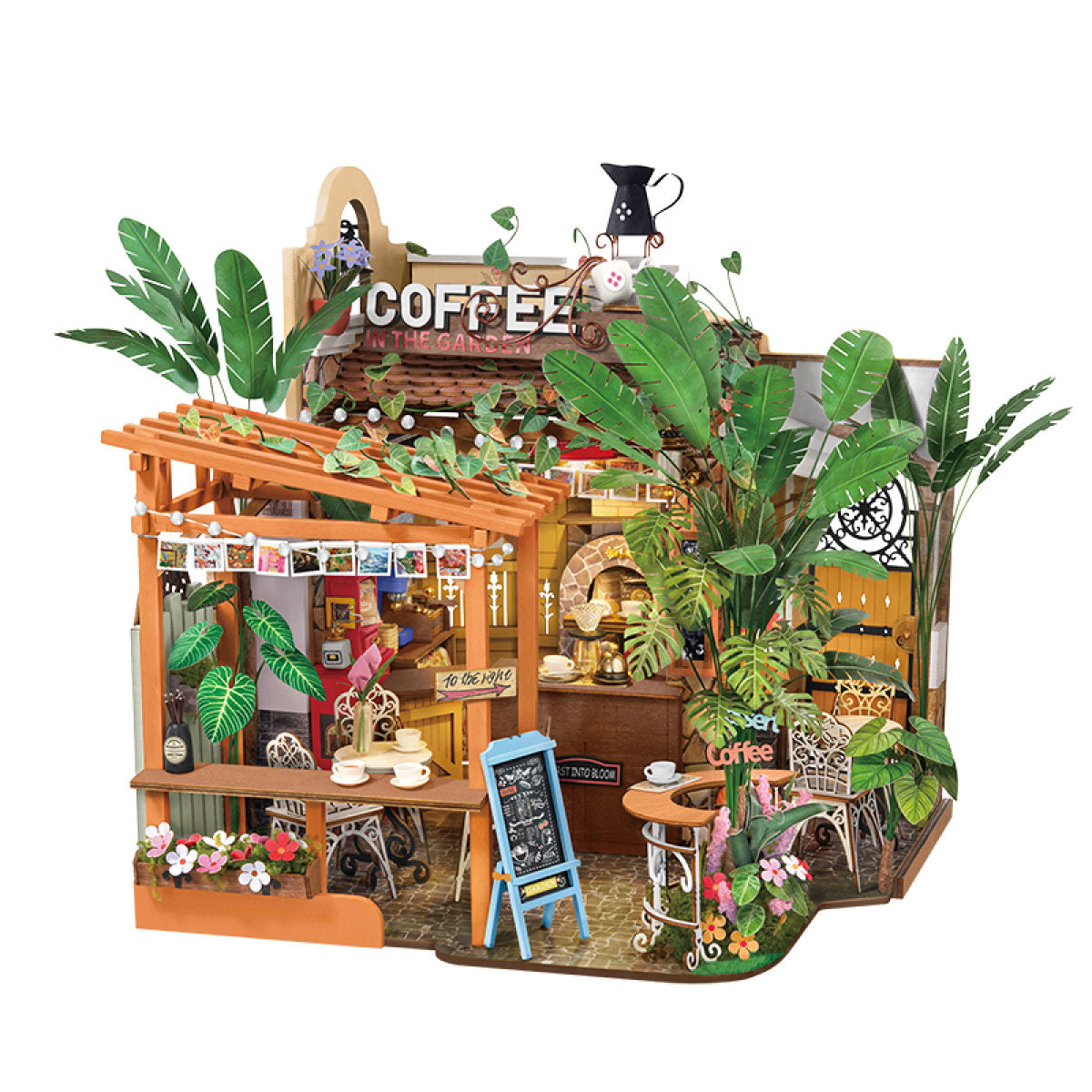
The finished Leafree Café makes its little world look settled: foliage around a pergola, cups waiting near the coffee equipment, furniture arranged for a quiet break. Before choosing the kit, it helps to look at the work hidden inside that finished view. Would you want to spend an evening making one of those small objects, even if the café as a whole barely changed?
Leafree Café DH201 has 800 pieces and an estimated assembly time of about 32 hours, with actual time varying. Those numbers describe the scale of the project. A better test of fit is whether you enjoy precise small work, can stay interested through repeated details and are willing to pause when a step is unclear.
If the tiny accessories and planting are part of what you want to make, this can be a rewarding direction to explore. If you mainly want the finished decoration quickly, the work deserves a closer look before you commit.
The piece count leaves out the kind of patience you need
Two tasks can use a similar number of pieces and feel quite different. One may give you a recognizable object quickly; another may ask you to repeat a small action several times before the overall scene changes. A readiness check needs to look at what you will be doing, not simply how many parts are in the box.
Leafree Café brings several kinds of detail into one scene. The coffee accessories offer small, recognizable objects. Flowers involve delicate components and wire. The vines and greenery help form the garden around the structure. You might enjoy one of those kinds of work more than another, and that difference matters when choosing your next project.
Look at close-ups with a maker’s question in mind: which of these details would I be interested in handling and assembling? Liking the appearance of a lush garden does not automatically tell you how you will feel about making its small parts. It is worth giving the flowers and leaves as much attention as the pergola that first caught your eye.
What the Rolife Community records reveal about the challenge
Rolife Community maker Ana Voulminot (@ana_vlmt) received Leafree Café through a collaboration with Robotime, which she disclosed in her opening post. Her progress and finished-build records show different sides of the work, including a difficulty she had not yet resolved when she posted about it.
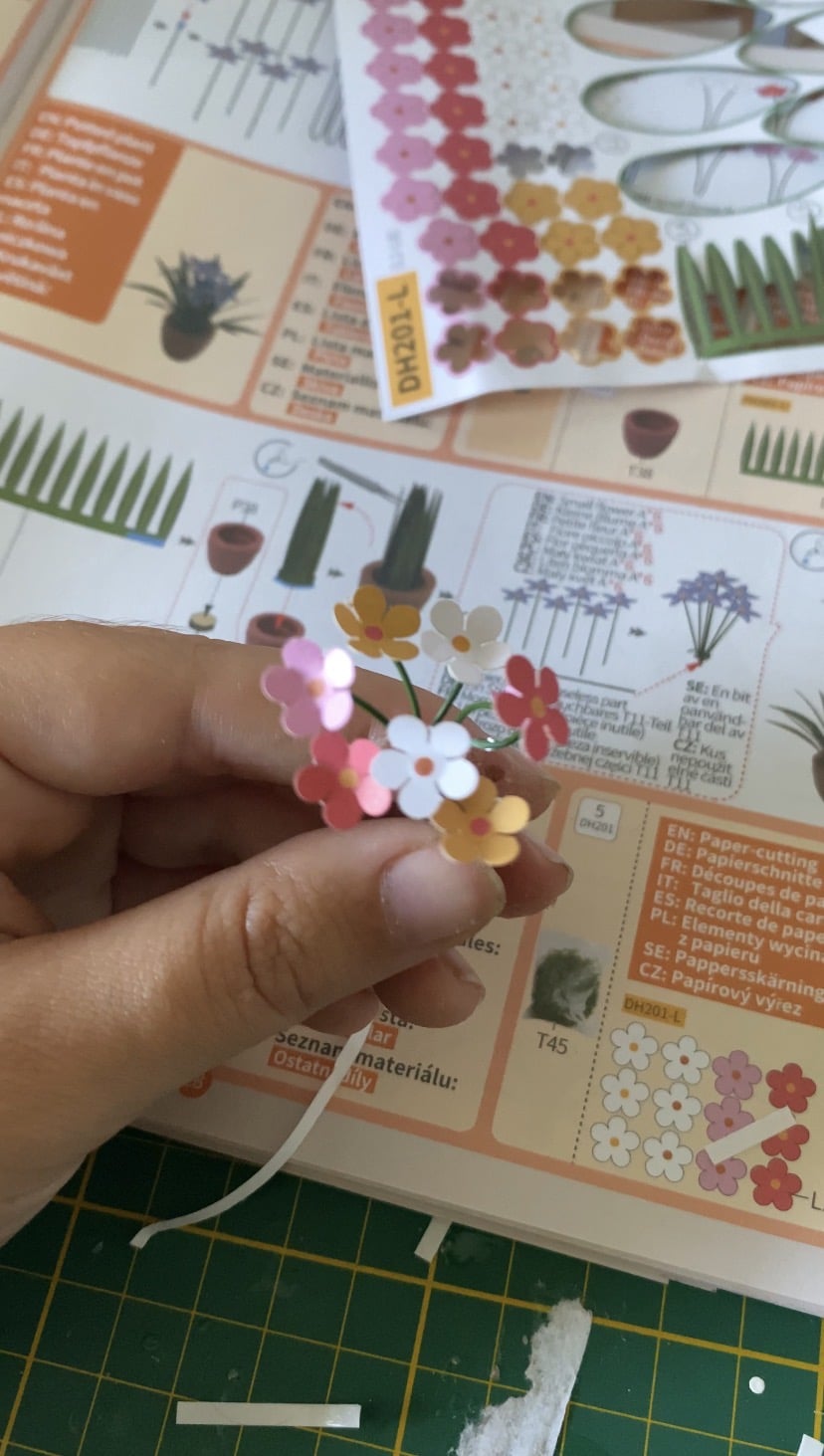
In her flowers progress post, she describes struggling to glue flowers onto wire and asks for advice. The photograph shows the small flowers in her hand above the instructions. It gives a useful sense of how little material can occupy a very deliberate piece of work. The post does not supply a tested solution to that attachment problem.
In her finished-build account, Ana identifies vines and greenery as the most challenging part for her. She took longer than the stated 32 hours because she preferred to work carefully on details. By the end, she felt more confident about making greenery, and the pergola was her favorite part of the model. Her version used fewer flowers and moved some details to suit her taste.
Rolife Community maker NicoleNguyen (@ThaoNguyen) highlights a different reward in Leafree Cafe #3: making the coffee makers and grinders by hand. She describes the time and effort involved alongside her satisfaction with how the small objects looked.
These two makers point to a useful distinction. Enjoying a detailed model can include both struggling with a particular material and taking pleasure in a tiny object that finally looks right. Their experiences do not set a completion time or a confidence outcome for you. They do help make the work behind the attractive finished scene more visible.
Three parts of the build to consider separately
Flowers and wire ask for careful handling
Small contact points can make an attachment feel demanding even when the component looks simple. With flowers and wire, consider whether you are comfortable working slowly enough to see what is happening and checking an uncertain result before moving on. Wanting the arrangement to look delicate means accepting that the work producing it may feel delicate too.
If this kind of task is new to you, give it room in your plan. Follow the instructions for the materials and sequence, and seek help for the exact step if needed. Before changing how you attach a piece, make sure you understand why the current attempt is not working. A clear question can save you from adding a second problem to the first.
Greenery asks you to stay interested beyond the first detail
The finished garden depends on many related elements. Consider how you feel once the novelty of making the first small detail has passed. Do you enjoy refining similar parts, or do you quickly want a completely different task? That preference can matter more than whether you have completed a large kit before.
The greenery also contributes to the whole scene. While following the assembly sequence, you will want to compare the work with the intended arrangement, rather than treating every small element as unrelated. Interest in the eventual garden can help make that repeated attention worthwhile, but it does not make the repeated work disappear.

Coffee accessories offer a small and recognizable result
A coffee maker or grinder has an identity you can recognize before the full café is finished. If you enjoy turning separate parts into an everyday object at miniature scale, these details may be a strong reason to choose the kit. They give you something specific to look at and say you made.
The small size should not be mistaken for a quick task. Consider whether you would still enjoy an evening devoted to one accessory when someone viewing the whole model might barely notice the change. Being interested in that close work is a better guide than wanting a large visible result from every session.

Use a past project to make the readiness check concrete
Choose a craft you actually remember doing, even if it was not a miniature house. Think about a moment when progress slowed. What did you do next? That example can tell you more than a general belief that you are a patient person.
- When a diagram was unclear: did you check the parts and orientation, or attach something to see whether it worked? For DH201, be prepared to settle those questions before a permanent attachment.
- When several details looked similar: did repeating them remain satisfying? If repetition usually wears you down, plan shorter goals and consider whether this garden interests you enough to return to that work.
- When a result was imperfect: could you judge what needed correcting, or did every visible difference lead to another round of adjustments? Deciding when to seek guidance can be more useful than repeatedly changing the same detail.
- When you had to stop: could you leave the work protected and remember your place? A detailed project needs a practical way to remain unfinished between sessions.
- When the project took longer than expected: did you still enjoy making it? Allow room beyond an estimate, especially if you are considering a fixed gift date.
There is no score to pass. These questions identify where preparation would help. An enthusiastic first-time miniature builder with a stable workspace and a willingness to reread instructions may have a better reason to try this particular scene than an experienced builder who dislikes making plants. Think about the work you want to do as well as the experience you already have.
Decide what needs attention before you begin
Make the work easy to see and the instructions easy to consult. Set out the tools and materials specified for your kit, with room to keep the current parts identifiable. Choose a position where you can sit comfortably for careful work and a protected place for the unfinished model. The finished dimensions of 29 × 26 × 23 cm do not include the additional workspace you will use for parts and instructions.
When something does not look right, first identify what kind of problem you have. A part in the wrong orientation or a connection that does not match the instructions calls for a check before continuing. A small aesthetic difference deserves a calmer assessment: is it affecting assembly, or are you comparing it with a photographed finish you hoped to match exactly? Follow the manual and ask for guidance where the distinction is unclear.
For a useful help request, include the manual step, the relevant parts, a clear close-up and what you expected to happen. Describe what you have already done. “This flower will not attach at this step” gives someone a starting point; “the plants are impossible” does not show where you are stuck.
Leave personal changes until you understand the supplied arrangement and what later steps depend on. A finished photograph can be inspiration, but it cannot tell you that moving a part earlier in the build will work. Following the intended layout is a complete creative project in its own right.
Choose the challenge you want to remember
Picture showing someone the finished café. Which detail would you want them to look at closely? The little equipment on the counter, the garden around the structure or the pergola with its hanging details? That is a useful clue to the work you are willing to spend time on.
If those details appeal but the timing or workspace is wrong, prepare those conditions before starting. If the close work itself sounds unrewarding, explore other detailed Rolife miniature projects for a theme and type of task that better match your interests. Choosing among Rolife DIY craft kits is partly choosing how you want to spend the hours of making.
Leafree Café is worth considering when its small tasks are part of the attraction. The completed scene gives those hours a place to remain visible: in an object you recognize, an arrangement you worked carefully on, or a section you once found difficult. Choose it because you want to make those details, and give yourself the time to learn how.