

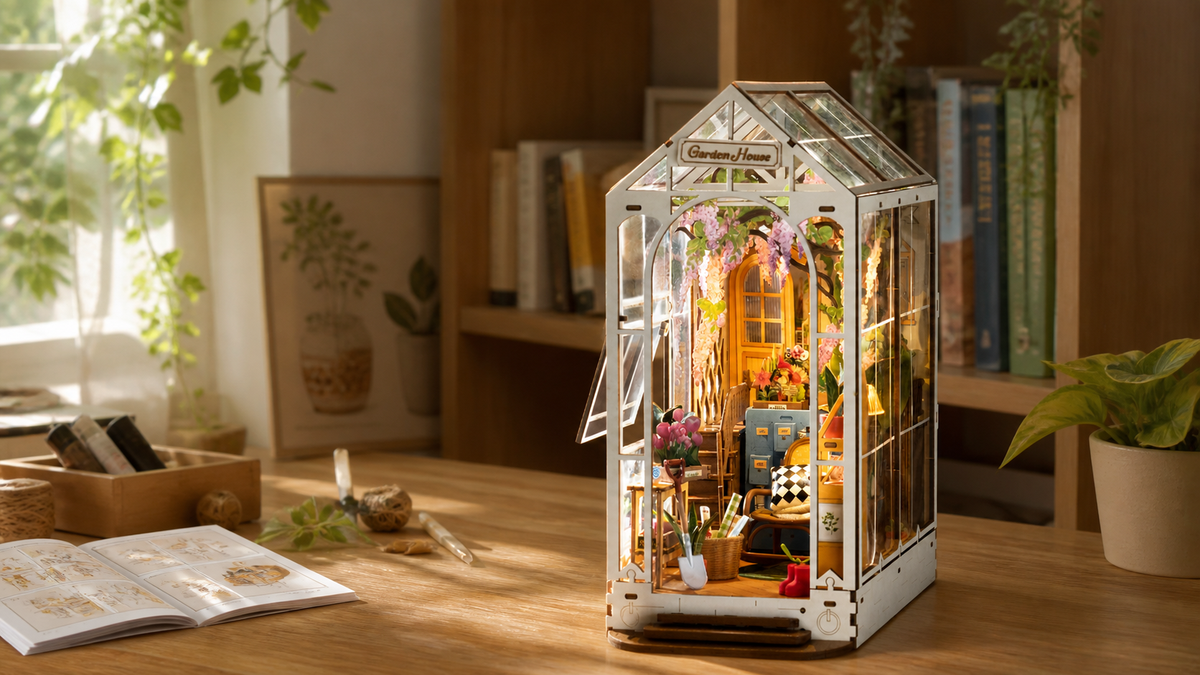
Quick Answer: Rolife Community builder Sandi_Herrmann received Holiday Garden House TGB06 for Christmas in 2024, but the detailed kit initially felt intimidating. A year later, she chose to begin, repaired broken pieces with craft glue, learned to test the lighting components before completing a kit, and found the personal challenge she had been looking for.
A creative gift can arrive before we feel ready for it. The box may hold something we genuinely want to make, yet the number of pieces, unfamiliar instructions, or fear of getting it wrong can make starting feel harder than finishing.
That was the beginning of Sandi_Herrmann's experience with Rolife Holiday Garden House TGB06. Her story is not about opening a kit and feeling instantly fearless. It is about letting the project wait, returning to it on her own terms, and finding meaning in the challenge itself.
How Did an Experienced Paper Crafter Find Book Nooks?
Sandi_Herrmann did not arrive at TGB06 without a creative history. Her DIY journey began with paper crafts and greeting cards. Cricut projects later expanded the materials she worked with to cardstock, vinyl, and other craft supplies, while junk journaling gave her a way to combine paper techniques with machine-cut elements.
Miniature houses and book nooks became her newest interest. That background did not make the first kit feel automatically easy, but it gave her useful habits: patience with small components, comfort with layered materials, and a willingness to repair and try again.
A Christmas Gift That Waited for the Right Moment
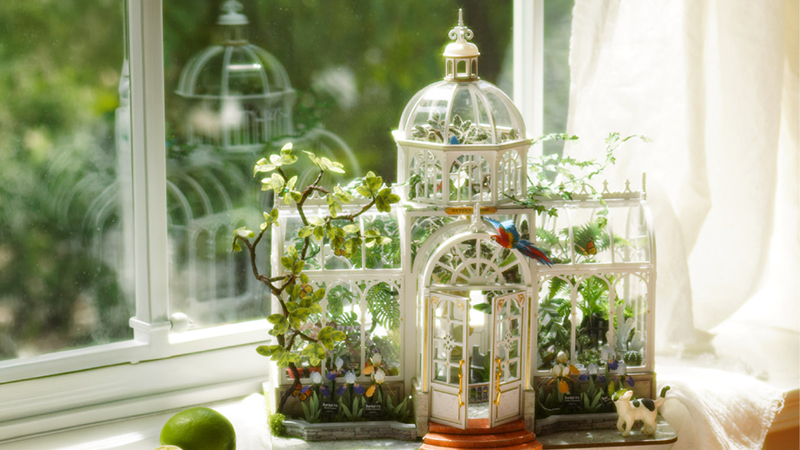
TGB06 came to Sandi_Herrmann as a Christmas gift in 2024. The finished scene promised a bright greenhouse between books, filled with flowers, vines, stairs, shelves, and warm light. Inside the box, however, that inviting miniature world first appeared as a detailed project waiting to be understood.
She felt intimidated, so she did not force herself to begin immediately. The kit remained unopened for about a year.
It would be easy to describe that pause as procrastination, but first projects often carry a quiet pressure. A new maker may worry about damaging a small part, misunderstanding a step, or discovering that the finished result will not match the picture. Setting the box aside can be a way of waiting until curiosity becomes stronger than fear.
Key Takeaway: A delayed start is not a failed start. The right moment may be the one when the builder is ready to treat the project as an experience rather than a test.
What Made the First Step Feel Worth Taking?
When Sandi_Herrmann returned to the kit, the detail that had once made it look intimidating began to represent something different: a challenge she could choose for herself.
“I immediately felt I had found the personal challenge I was looking for.”
That shift matters. The goal was no longer to prove that the build would be easy. It was to see what she could learn by beginning. Each completed stage offered a smaller, more manageable answer to the original uncertainty.
For a first-time builder, confidence rarely arrives before the first piece is placed. It grows through a series of concrete moments: recognizing how two parts connect, correcting a choice, seeing the structure stand, and finally switching on the light.
How Did Mistakes Become Part of the Journey?
Sandi_Herrmann learned from specific mistakes during the build. Some house pieces broke and needed craft glue repairs. The hanging flowers also required more than one attempt. Her story does not present the first build as flawless, and that is precisely what makes it useful to another hesitant maker.
A miniature project asks for attention, but it also gives the builder many chances to pause and recover. One imperfect step does not cancel the work already completed. It becomes information for the next step.
Her experience points to a practical first-build mindset:
- Work one stage at a time. Looking only at the current instruction keeps the whole kit from feeling like one enormous task.
- Check the kit before building. Sandi now confirms that the parts are present and the electrical components work before progressing too far.
- Test the fit before committing. A careful dry fit can reveal orientation or alignment issues while they are still easy to correct.
- Pause when frustration replaces focus. Returning with fresh attention is often more useful than forcing the next step.
- Let the first build teach you. The goal is not to erase every sign of learning; it is to understand the process well enough to keep going.
The lighting lesson was especially important: testing the electrical components before the surrounding structure is complete makes a problem easier to identify and address. Small parts still need patient handling, and builders should follow the supplied instructions. The larger lesson is that a mistake can be a moment inside the story rather than the end of it.
By the time Sandi shared her story in June 2026, she had completed five kits since December 2025 and had begun a sixth. The project that waited for a year did more than fill a shelf; it opened the door to a continuing miniature-building practice.
How Did TGB06 Change From a Box Into a Secret Garden?
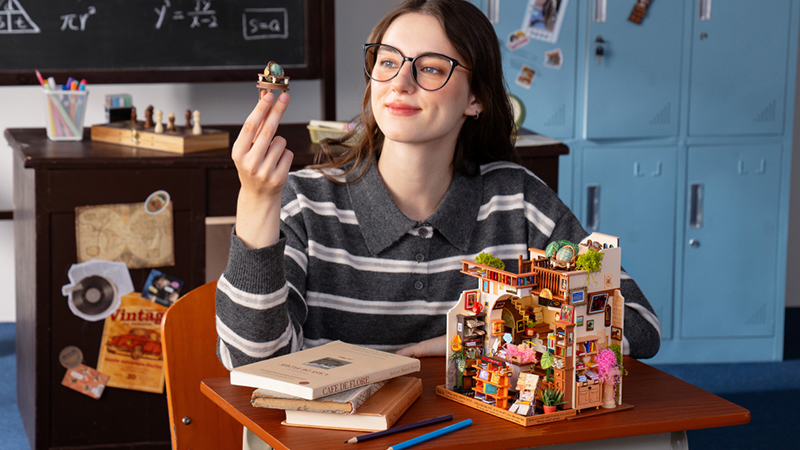
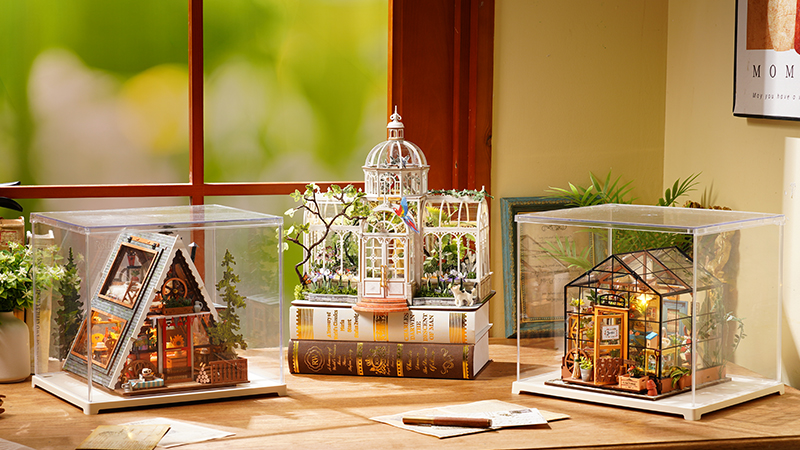
As the project came together, flat materials and individual details began to form the narrow architecture of a botanical book nook. The greenhouse-inspired frame established the shape. Flowers and vines softened the structure, while stairs and shelves suggested a world continuing beyond the front opening.
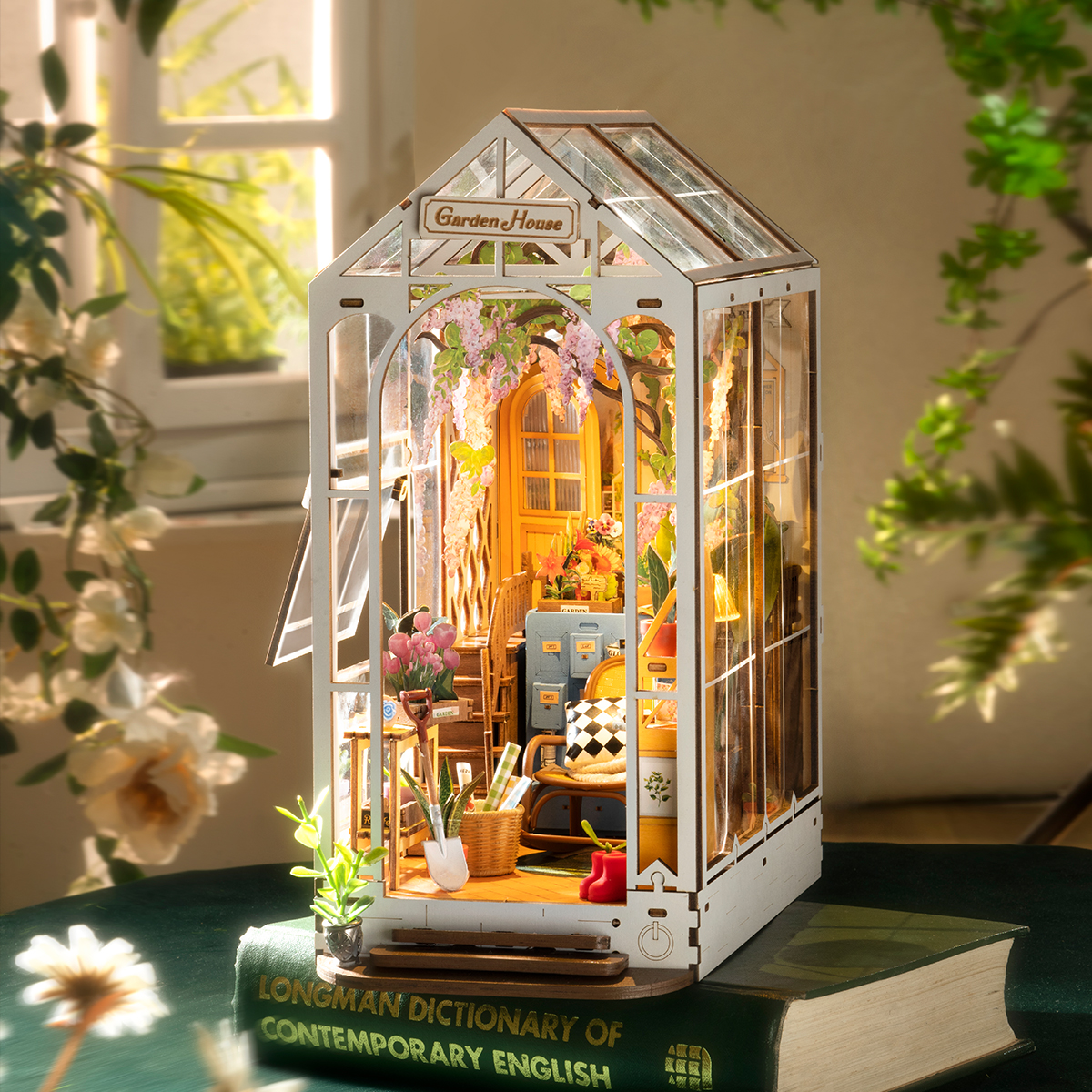
The project combines PET elements, injection-molded parts, cardstock, and wooden boards. Card-slot assembly reduces unnecessary glue use, while the floral and decorative details preserve the hands-on work that makes the finished scene feel earned. The estimated build time is about five hours, although a first build may take longer depending on pace and breaks.
Placed between books, the finished model becomes a secret garden passage rather than a separate tabletop ornament. For the design thinking behind that transformation, read the story behind Holiday Garden House TGB06.
For more inspiration on how miniature flowers, greenhouse architecture, furniture, and warm light create that effect, visit The Art of Botanical Book Nooks.
What Can First-Time Builders Take From Sandi's Journey?
Sandi_Herrmann's experience offers four reassuring lessons for anyone looking at a detailed kit and wondering whether to begin.
- Feeling intimidated is compatible with being interested. The project can matter to you and still feel unfamiliar.
- You are allowed to wait. A kit does not lose its value because it takes time to become the right project.
- The challenge can be the reason to start. Difficulty is not always a warning; sometimes it is the part that makes the work personally meaningful.
- Mistakes can become evidence of progress. They show where your understanding changed between the first step and the last.
For someone choosing a first book nook, the most useful question may not be “Can I make this perfectly?” A better question is “Am I willing to learn what this project asks me to do?”
How Is This Story Different From Other TGB06 Experiences?
Every builder notices a different part of the same miniature world. Sandi_Herrmann's story centers on the threshold before building: hesitation, the decision to begin, and the confidence that grows through trial and error.
Another Rolife Community story follows Sophie after completing the same garden house, when she imagined stepping inside the scene and exploring its flowers, chair, shelves, and warm light. Read Sophie's imaginative Holiday Garden House escape for that complementary perspective.
Together, the two stories show why a botanical book nook can hold more than one kind of meaning. The build can be a personal challenge, while the finished scene can become an invitation to imagine a hidden garden between books.
When Is the Right Time to Begin Your Own Garden House?
The right time is not necessarily the day the box arrives. It is the moment you can clear a little space, accept that the first build may include mistakes, and give your attention to one step instead of the whole project at once.
If that moment has arrived, explore Rolife Holiday Garden House TGB06. If you are thinking first about where the completed scene will live, the guide to creating a secret garden bookshelf offers practical display ideas.
First TGB06 Build FAQs
Is TGB06 a good first book nook?
TGB06 can suit a patient first-time builder who enjoys small botanical details and is comfortable treating the project as a focused challenge. Builders looking for the quickest possible first project may prefer to compare simpler kits before choosing.
How long does TGB06 take to build?
The estimated assembly time is about five hours. A first-time builder may take longer, especially when working in shorter sessions or spending more time on decorative details.
Do I need to finish a book nook in one sitting?
No. You can divide the build into smaller sessions. Keep loose parts organized, protect completed sections, and stop at a clear instruction step so it is easier to resume.
What should I do if I make a mistake while building?
Pause before forcing or removing parts, return to the relevant instruction, and check orientation and fit. If a part is damaged or missing, use Rolife's part replacement support rather than improvising a repair that could affect later steps.
When should I test the book nook lights?
Test the electrical components before the surrounding structure is complete, following the supplied instructions. This gives you time to identify a connection or component issue while the relevant parts are still accessible.
Is this article a product review?
No. It is a sourced builder story centered on Sandi_Herrmann's hesitation, decision to begin, and learning experience. Individual build experiences vary.