

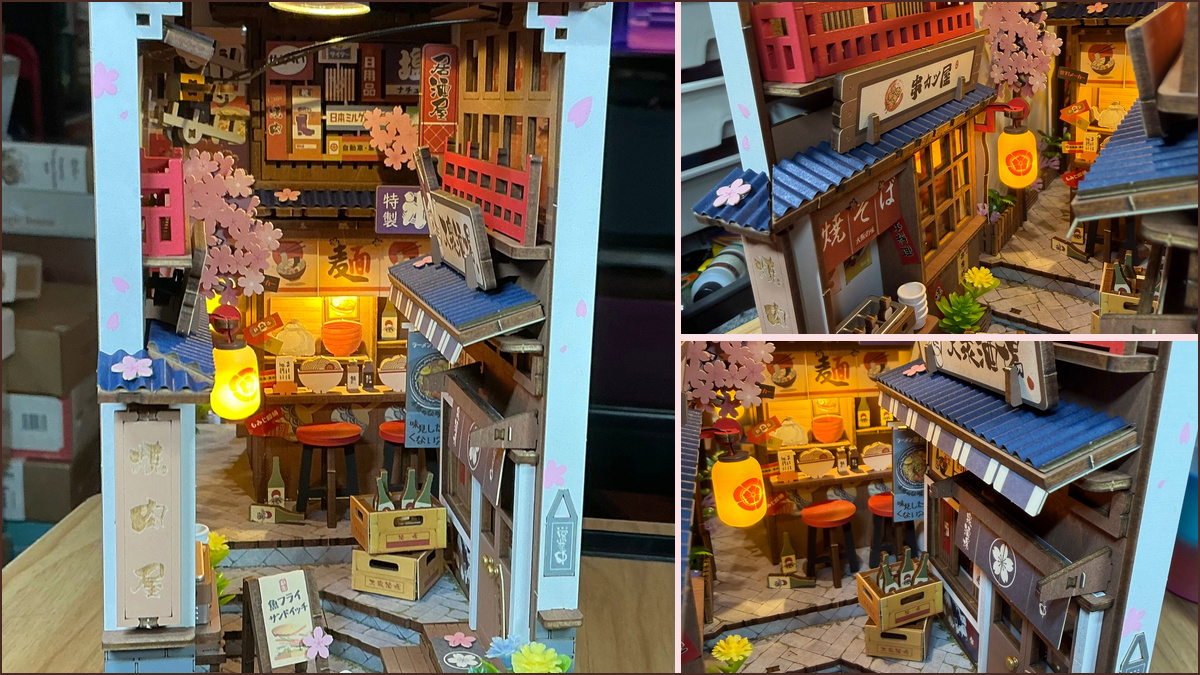
Quick answer: Rolife Sakura Wine Alley has been built and reviewed by Rolife Community makers who highlight its Japanese alley atmosphere, detailed storefronts, warm lighting, creative building process, and satisfying display result. Their experiences also show that patience with small parts, early wire planning, and careful alignment can make the build smoother.

A DIY book nook begins as sheets, wires, printed details, and small components. It becomes personal when a builder makes decisions, works through the delicate stages, and chooses how the finished miniature street scene will live on a shelf.
The three builds below are not identical versions of the same story. One maker lightly painted the scene and gave the cat a name. Another changed the cat's placement and planned a display box. A third shared the project while it was still taking shape. Together, they show how Japanese-inspired decor gains emotional value through the builder experience.
Why Do Builders Love Sakura Wine Alley?
Across the featured Rolife Community posts, builders repeatedly notice three qualities: the atmosphere of the alley, the density of small discoveries, and the way the completed scene holds attention as decor.
A Japanese Alley Atmosphere Built from Light and Closeness
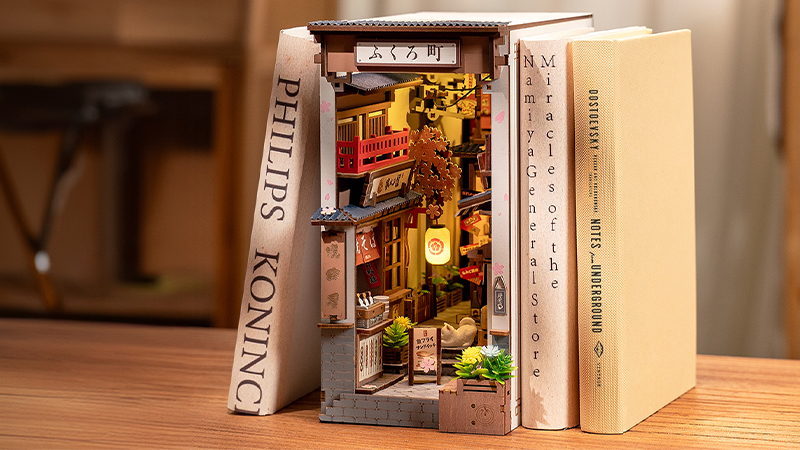
Warm lights sit inside a narrow arrangement of food shops, signs, rooflines, balconies, and passageways. Those close layers create the feeling of looking into a Japanese evening street rather than viewing a flat facade. This Japanese alley atmosphere draws on the closeness, food culture, signs, and everyday social character associated with Japanese alley culture; it is an imaginative expression, not a replica of one specific location. Explore more of the street-food culture and visual details behind Sakura Wine Alley.
Storytelling Details That Reward a Closer Look
The ramen counter, izakaya entrance, cherry blossoms, bottles, crates, lantern-like lighting, planters, signs, and cat figure give builders many small milestones. Several makers said the number of details became more apparent as the construction progressed.
A Finished Scene That Works Beyond the Worktable
After assembly, the DIY book nook can move into a bookshelf, reading corner, display cabinet, or protective display box. Its illuminated depth gives it a second life as a focal piece rather than leaving it as a completed craft stored away.
Rolife Community Voices: What Builders Notice Most
"There are way more details than you think!"
"Sometimes you just have to go with what feels right."
"It was a lovely experience."
These short observations point to three recurring themes in the full stories below: more detail than expected, room for personal choices, and enjoyment in watching the scene take shape.
Builder Story 1: From Pieces to a Finished Japanese Street
Rolife Community maker JeanneL described Sakura Wine Alley as an enjoyable build that took a little longer than expected. She made light paint changes without substantially redesigning the kit and introduced the finished scene with a new cat character named Snowflake.
"There are way more details than you think!"
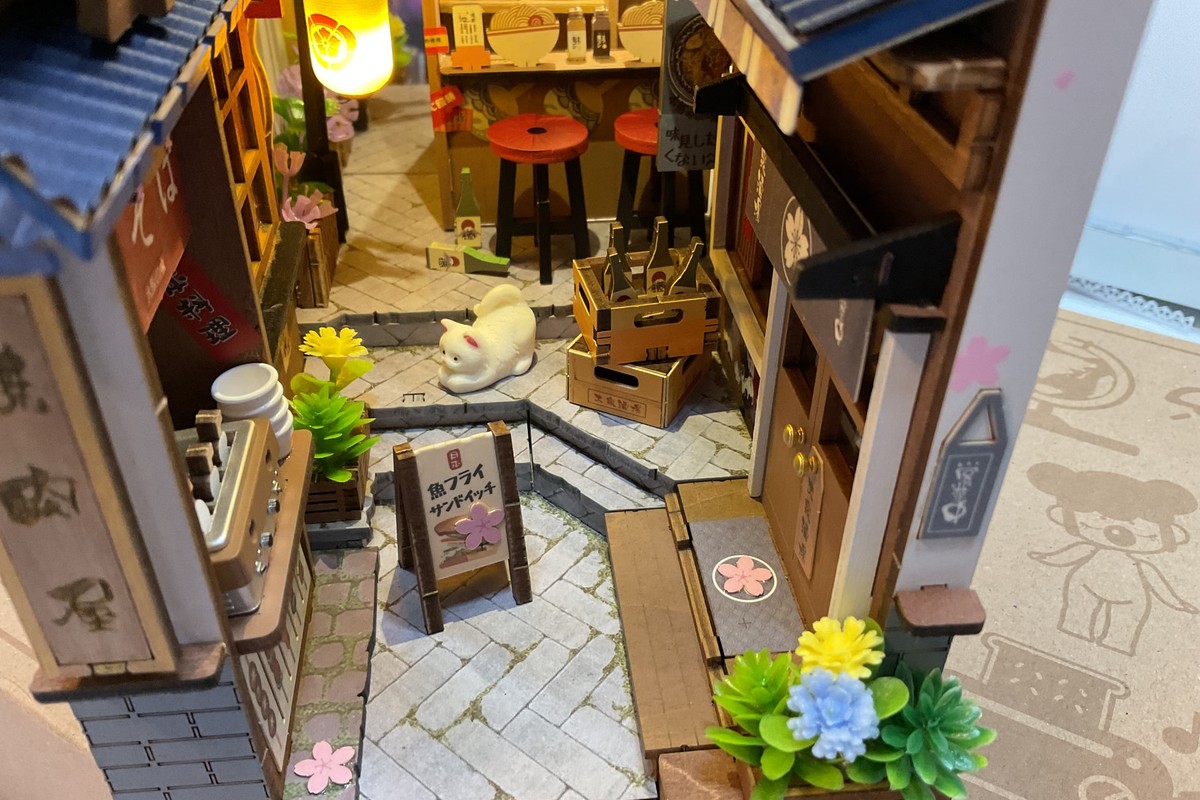
Her photos show why the build feels richer at the end than it may appear in separate stages: storefronts overlap, the glowing alley recedes behind the cat and street signs, and close-up views reveal food counters, roof textures, plants, crates, and scattered blossoms.

What New Builders Can Learn from JeanneL
- Track repeated parts carefully: pieces used for one wine carton may be needed again later.
- Check each illustrated step before closing a section; JeanneL was able to reopen the model and add a missed piece.
- Distinguish decorative black wire from the electrical wiring and compare lengths before fitting it.
- If a connection feels forced, stop and check whether light sanding or waxing is appropriate before pressing harder.
Rolife Community source: JeanneL's completed Sakura Wine Alley journey.
Builder Story 2: Discovering the Hidden Details
Rolife Community maker Kim Kieffer called the construction experience enjoyable from start to finish and focused on design choices that become obvious only when the builder is close to the model. Her favorite details included the cardboard treatment that resembles a corrugated metal roof, the restrained cherry blossoms, the illuminated bar, and the front planter that also houses the touch sensor.

Her review also offers a practical lighting lesson. The wires were manageable, but there was very little spare length. Kim recommends guiding available slack downward as the lighting is installed instead of waiting until the enclosure is nearly complete.
"Sometimes you just have to go with what feels right."
That line referred to moving the cat from its suggested position to the front. It is a small change, but it illustrates how a builder can personalize the visual story without rebuilding the whole design. Kim also planned to place the open-front model in a display box, connecting the assembly decision to its long-term presentation.


Rolife Community source: Kim Kieffer's Sakura Wine Alley project review.
Builder Story 3: Building the Alley Step by Step
Rolife Community maker Blue Angel shared Sakura Wine Alley after about three hours of work, while the base, paving, tree, stools, signs, flowers, crates, and cat were already taking shape. The in-progress photograph is useful because it shows the scene before the outer architecture hides some of the assembly layers.
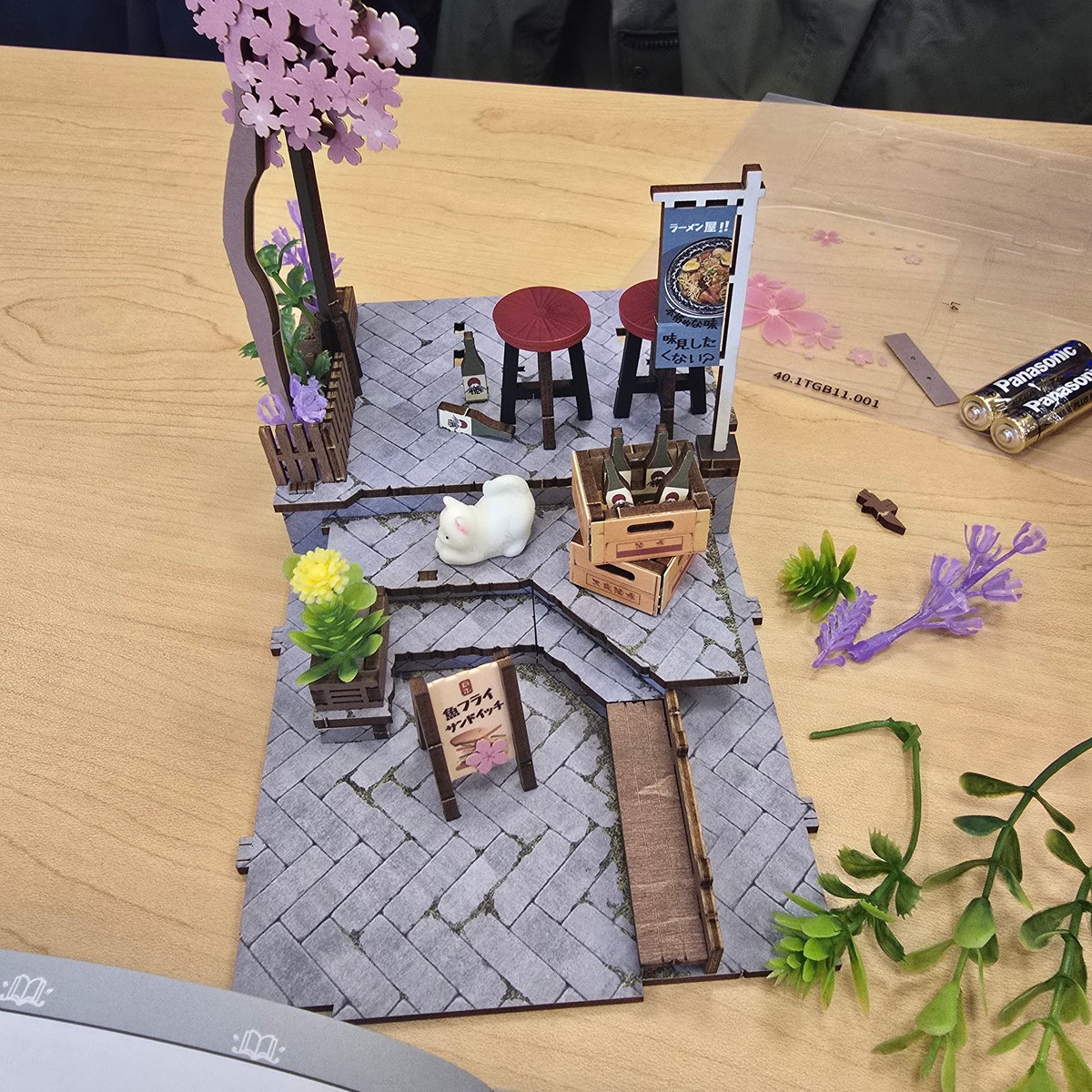
The maker appreciated the wood material, the lighting fixture, and the miniature figures. They also noted that repeatedly releasing small pieces could become uncomfortable for the fingers. Other Rolife Community makers suggested supporting parts from behind, using a craft tool or the back of a pen to apply controlled pressure, and considering finger-protection tape during longer sessions.
What this build shows: DIY creativity does not require a dramatic redesign. Choosing a careful pace, deciding where accessories will sit, and noticing how the scene develops are already forms of personal participation.
Rolife Community source: Blue Angel's Sakura Wine Alley build in progress.
Beginner Tips: What Should New Builders Know Before Starting Sakura Wine Alley?
Sakura Wine Alley has a three-out-of-five difficulty level. That makes it approachable for a patient beginner, but it is not a project to rush. The Rolife Community discussion around alignment and wall assembly adds several useful habits for first-time builders.
- Sort parts by sheet or step and keep visually similar pieces separated.
- Read several instruction steps ahead before installing wiring or closing a wall.
- Support small wooden pieces close to their connection points and release them gradually.
- Dry-fit major sections first. If a wall buckles or pulls away, check tabs, slots, neighboring parts, and possible warping before adding permanent adhesive.
- Use temporary support such as a clamp or rubber band only when it can hold the section without crushing details.
- Photograph the tabs and alignment if you need help; a clear image makes Rolife Community or customer-service guidance more specific.
- Keep the lighting switch and touch-sensor area accessible during testing and final display.
If a part appears damaged or the assembly still will not align after careful checking, contact customer service before attempting an irreversible fix. The goal is not to force the model into place, but to identify what is creating pressure.
Rolife Community source: Sakura Wine Alley beginner alignment discussion.
Which Details Do Builders Notice Most?
The details below combine recurring Rolife Community observations with the design elements visible in the finished miniature street scene.
| Detail | Why It Stands Out |
|---|---|
| Warm lighting | Creates the evening atmosphere and reveals depth between storefronts. |
| Ramen shop | Adds a bright food counter and a clear focal point inside the alley. |
| Izakaya entrance | Layers signs, bottles, doors, and roof textures into a compact scene. |
| Cherry blossoms | Soften the street architecture and connect the model to its spring theme. |
| Cat figure | Gives builders an easy way to personalize the story and composition. |
| Mirror and layered perspective | Extend the perceived depth of the narrow alley. |
| Planter touch-sensor housing | Turns a functional control into part of the finished decor. |
From Building a Kit to Creating a Personal Memory
A finished decoration can be selected and placed in a room in a few minutes. A DIY book nook carries the memory of how it came together: the first section that stood upright, the lighting test that finally worked, the small part that needed patience, and the moment the alley was switched on as a complete scene.
That is why the same Sakura Wine Alley can feel different in different homes. JeanneL's build includes Snowflake and subtle paint choices. Kim's cat welcomes viewers from the front and the model is headed for a display box. Blue Angel's photograph preserves the construction stage itself. The kit provides the design, but the builder creates the relationship with it.
For the design perspective, read the story behind Sakura Wine Alley. It explains how the Japanese-inspired alley atmosphere developed from early studies into the final book nook. For styling ideas, explore a Japanese-inspired reading corner with a book nook.
Frequently Asked Questions
Is Sakura Wine Alley Suitable for Beginners?
It can suit a careful beginner who is comfortable working with small parts and following a layered sequence. Its three-out-of-five difficulty level suggests some patience is needed. Sorting parts, planning the wires early, dry-fitting major sections, and asking for help with clear photos can reduce avoidable frustration. See the Rolife Community beginner discussion for the original alignment advice and support responses.
What Do Builders Like Most About Sakura Wine Alley?
The featured Rolife Community makers highlight the warm Japanese alley atmosphere, lighting, roof and storefront textures, cherry blossoms, small figures, food details, and the sense that more elements appear as the model comes together.
Can Sakura Wine Alley Be Customized?
Yes. Builders can make restrained changes such as repositioning the cat, adding light paint, adjusting accessory placement, or styling the completed book nook with surrounding books and decor. Test any permanent change before applying it.
How Do People Display Sakura Wine Alley After Building?
Common options include a bookshelf, reading-corner shelf, desk, display cabinet, or protective display box. Choose a location where the front details remain visible, the lighting control is easy to reach, and the open scene can be kept clean. It can also anchor a Japanese-inspired reading corner when paired with books, warm light, and restrained surrounding decor.
Bring Your Own Story to the Alley
These Rolife Community builds answer the most useful buying question: the finished result is not only what appears in the box image. It is also the hours of attention, the decisions made along the way, and the place the builder chooses for the completed scene.
Want to know why Sakura Wine Alley was designed this way? Read the story behind Sakura Wine Alley.
Want ideas for displaying your finished build? Explore Japanese-inspired reading corner ideas for bookshelves, desks, and cozy display spaces.
Ready to build your own alley? Explore the Rolife Sakura Wine Alley DIY Book Nook Kit.