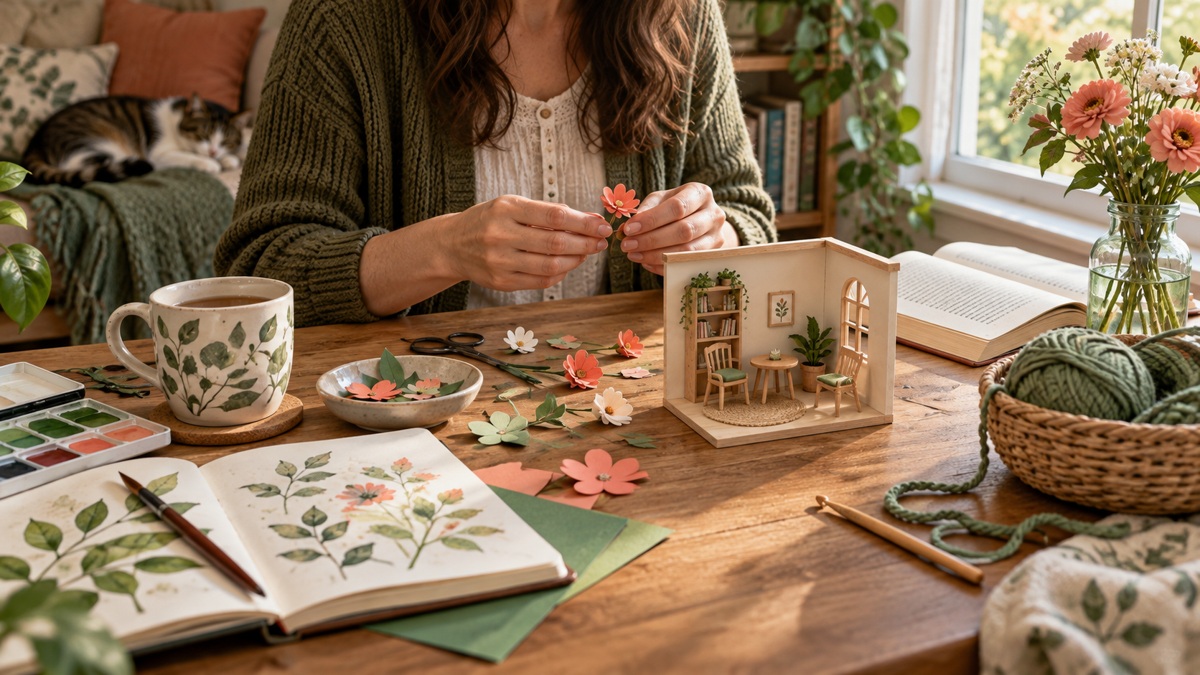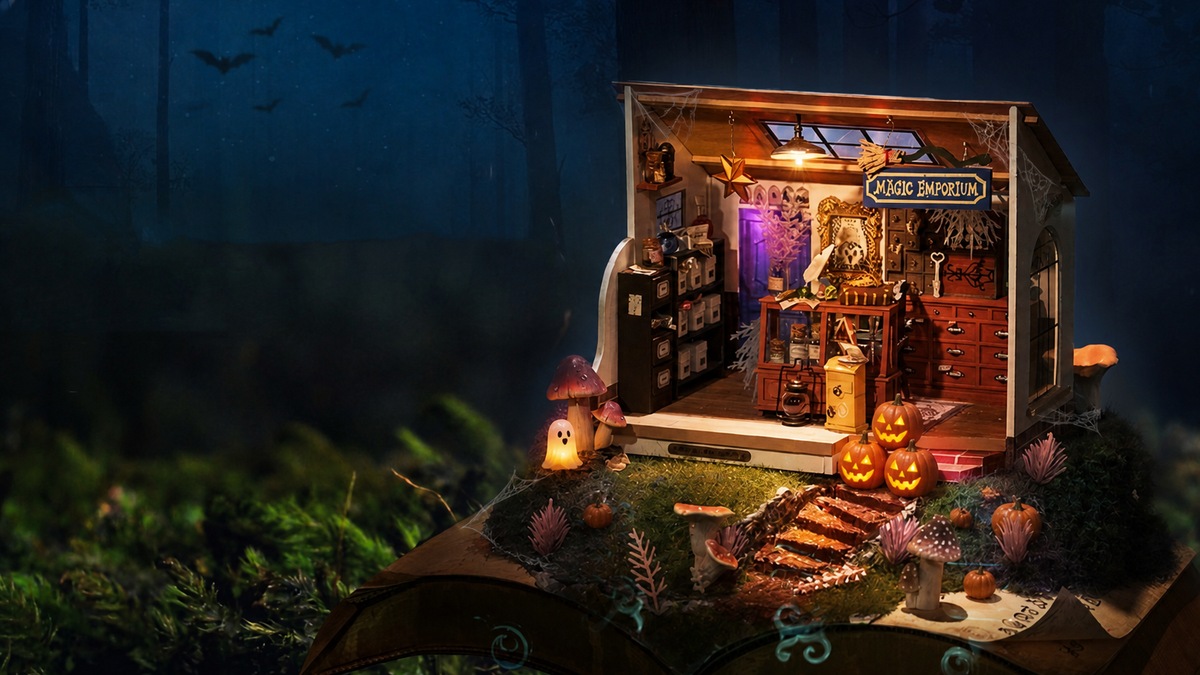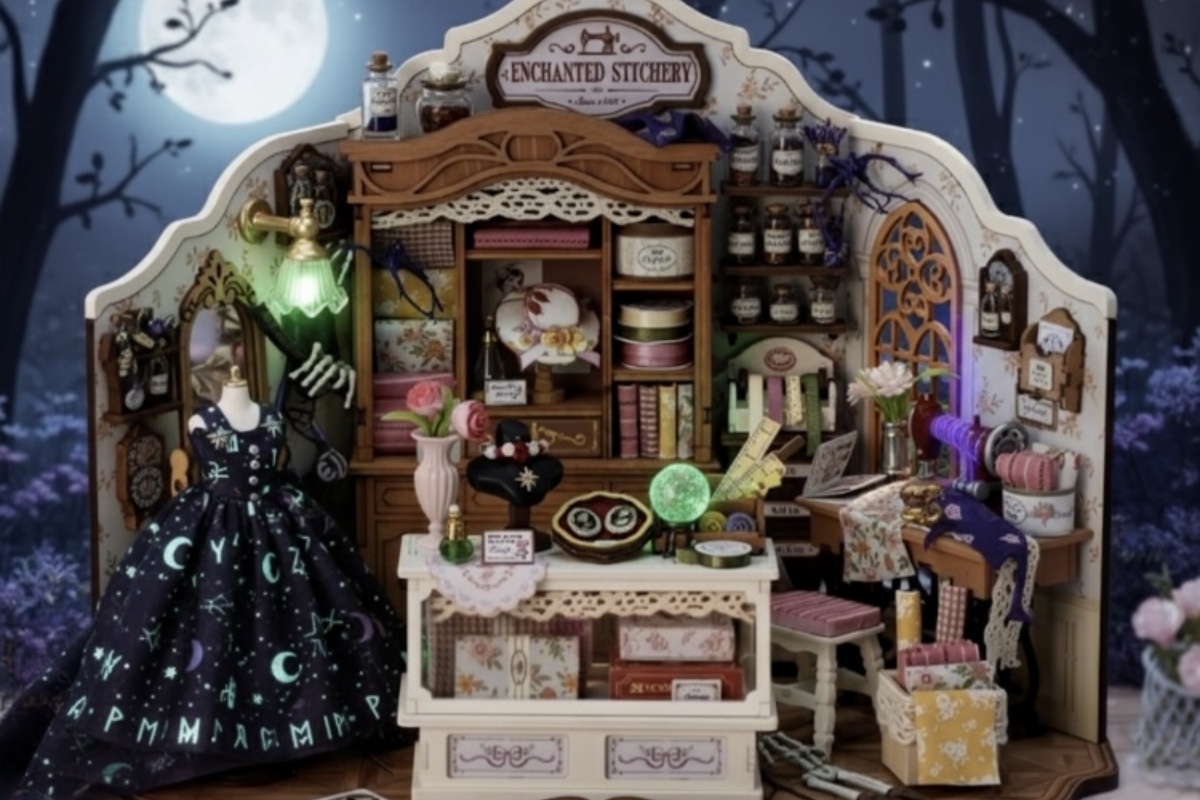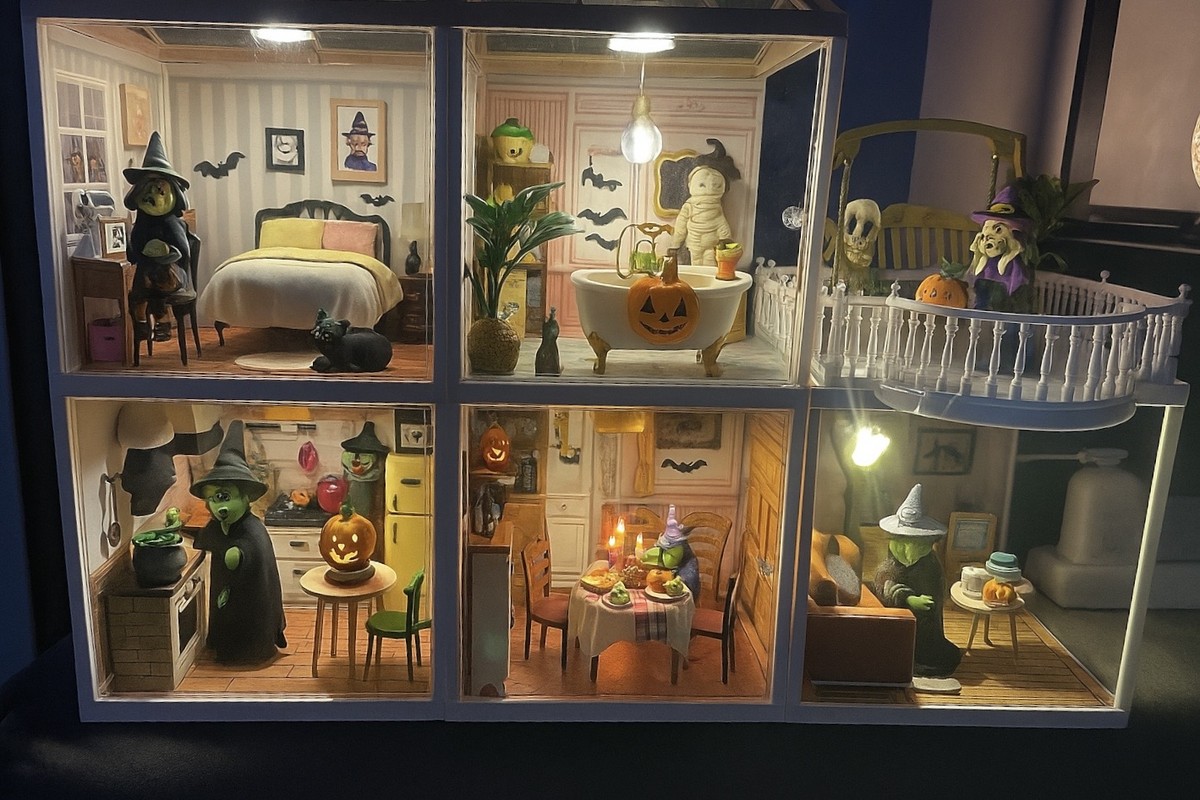



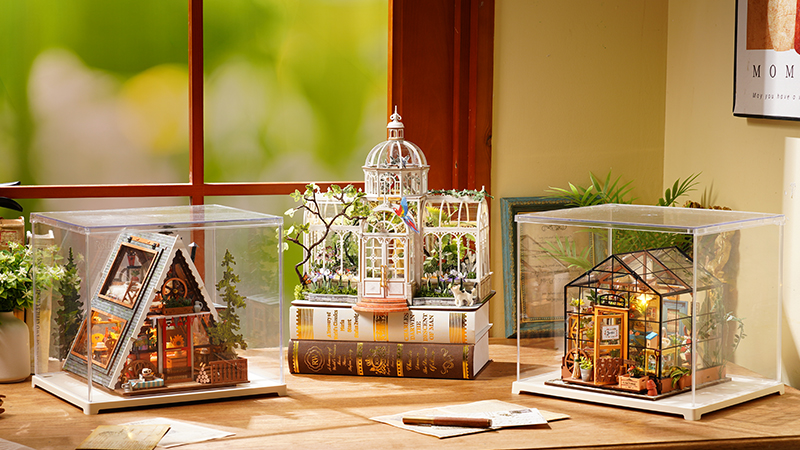
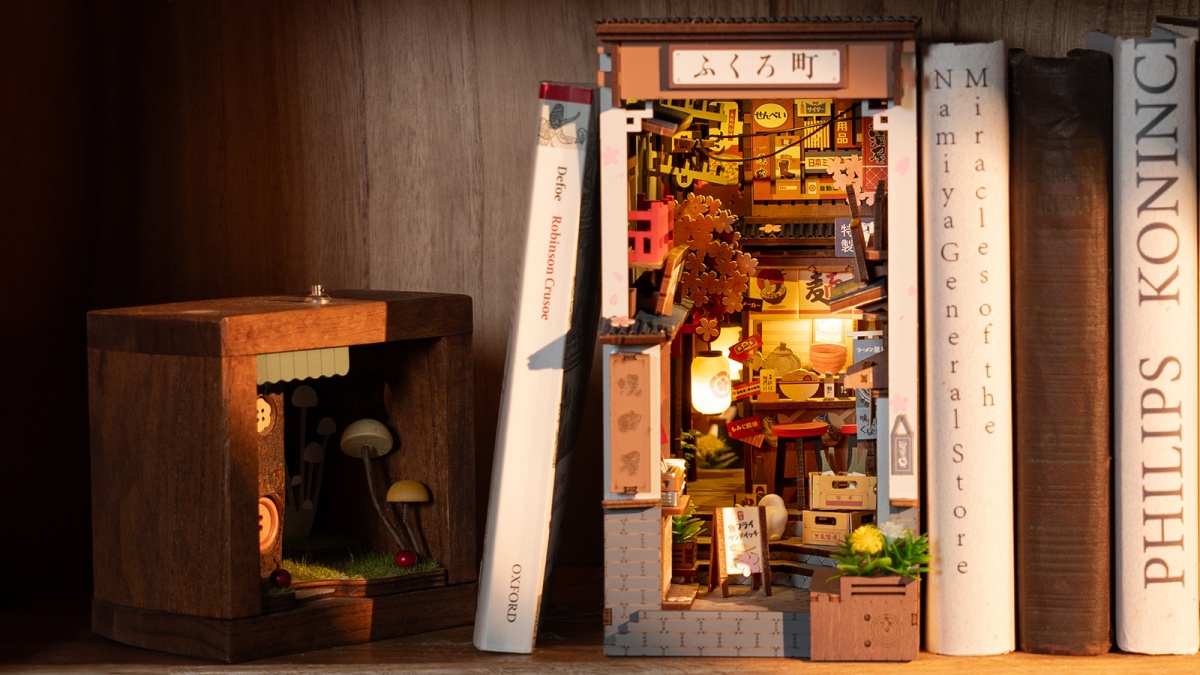
Quick Answer: To create a cozy Japanese-inspired reading corner, combine warm task lighting, natural textures, a restrained color palette, books you genuinely enjoy, and one or two objects that carry a story. A miniature book nook can act as the focal point, adding depth and evening atmosphere without filling every shelf with decor.
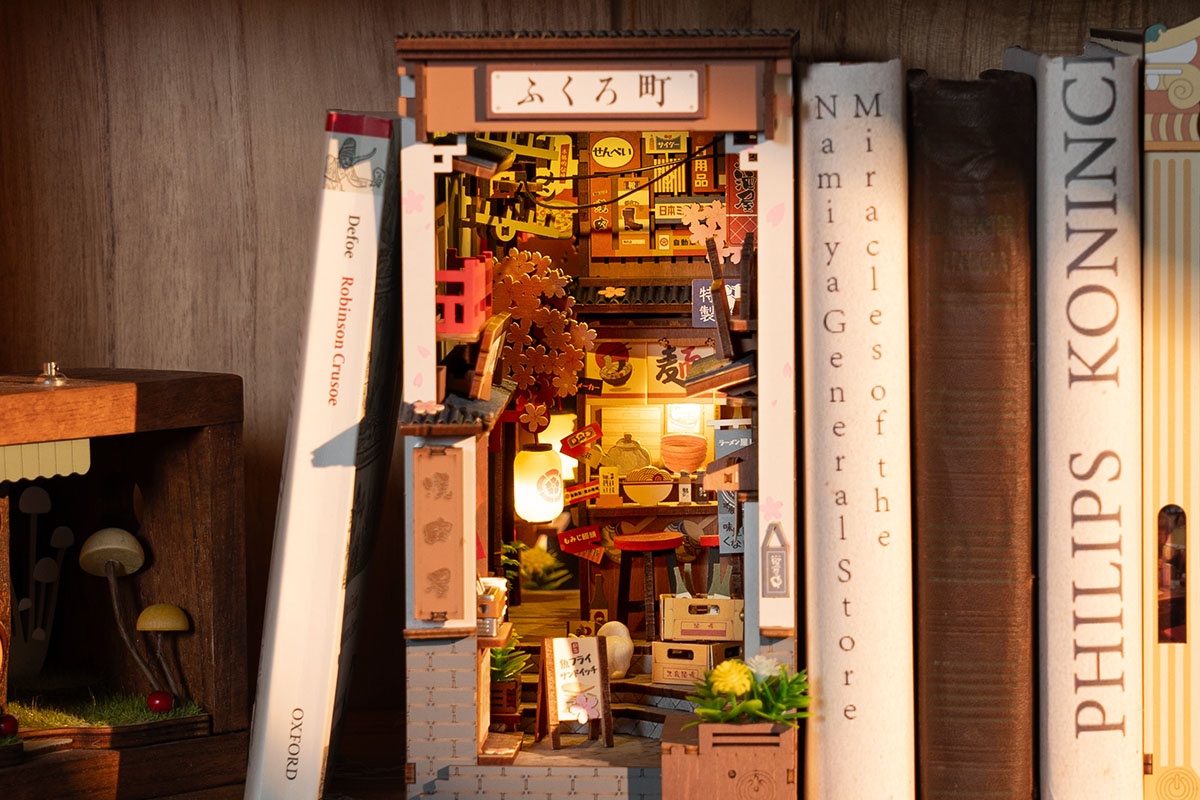
A reading corner does not need a separate room, custom shelving, or an expensive furniture plan. It needs a comfortable place to pause and a few visual choices that make the space feel intentional.
Japanese-inspired interiors are often associated with restraint, natural materials, warm indirect light, and attention to everyday objects. In a reading corner, those ideas can be interpreted simply: leave breathing room around the books, repeat a small material palette, and choose decor that means something to you.
Miniature decor works especially well in this setting because it brings story and scale together. Instead of adding several unrelated ornaments, one detailed scene can give the shelf a clear mood and invite a closer look.
A book nook is a miniature scene designed to sit between books, creating the feeling of a hidden world inside a bookshelf. It works as both a creative project and a piece of bookshelf decor.
What Makes Japanese-Inspired Home Decor Feel Cozy?
Cozy Japanese home decor is less about copying a complete traditional room and more about creating visual calm. The strongest reading corners usually balance four layers:
| Layer | What It Contributes | Simple Choices |
|---|---|---|
| Light | Warmth and a sense of time | A reading lamp, a softly lit book nook, or indirect shelf lighting |
| Material | Tactile character | Wood, paper, linen, ceramic, or woven textures |
| Story | Personal meaning | Favorite books, travel objects, photographs, or a miniature scene |
| Space | Visual calm | Open shelf area, limited color repetition, and room around the focal object |
Use Warm Lighting in Layers
Separate the light you need for reading from the light that creates atmosphere. A focused lamp should make the page comfortable to see. A softer glow on the shelf can reveal shape, color, and texture without competing with the book in your hands.
Miniature lighting is most effective as an accent. During the day, the scene reads as a crafted object. In the evening, illuminated windows and lantern-like details make it feel as if a second, smaller world has opened inside the room.
Repeat Natural Materials and Quiet Textures
Wooden shelves, paper book jackets, linen cushions, woven baskets, and simple ceramics create a warmer base than a collection of shiny, unrelated surfaces. You do not need every object to match. Repeating two or three materials is usually enough to make the corner feel connected.
Choose Details That Tell One Story
A small plant, a framed travel photograph, a tea cup, or a handmade object can make the reading corner personal. The useful question is not, "What else can I add?" but, "What does this object contribute to the mood?"
How Do You Style a Bookshelf with Miniature Decor?
The easiest way to prevent clutter is to treat the miniature as part of the shelf composition, not as an object placed on top of it. Work from one theme, then balance height, color, light, and empty space around it.
1. Start with a Theme
Choose a simple scene direction before arranging anything. A Japanese street corner might use warm wood, muted book spines, a small plant, and amber light. A garden scene could use green covers, botanical books, and a ceramic vase. A vintage cafe might pair well with cookbooks, travel writing, and an old photograph.
2. Combine the Miniature with Real Books
Book nooks work because their proportions already belong on a shelf. Place the scene between books of similar visual weight, then let nearby titles support the mood. Travel writing, Japanese fiction, design books, cookbooks, or personal favorites can all create a meaningful relationship without needing identical colors.
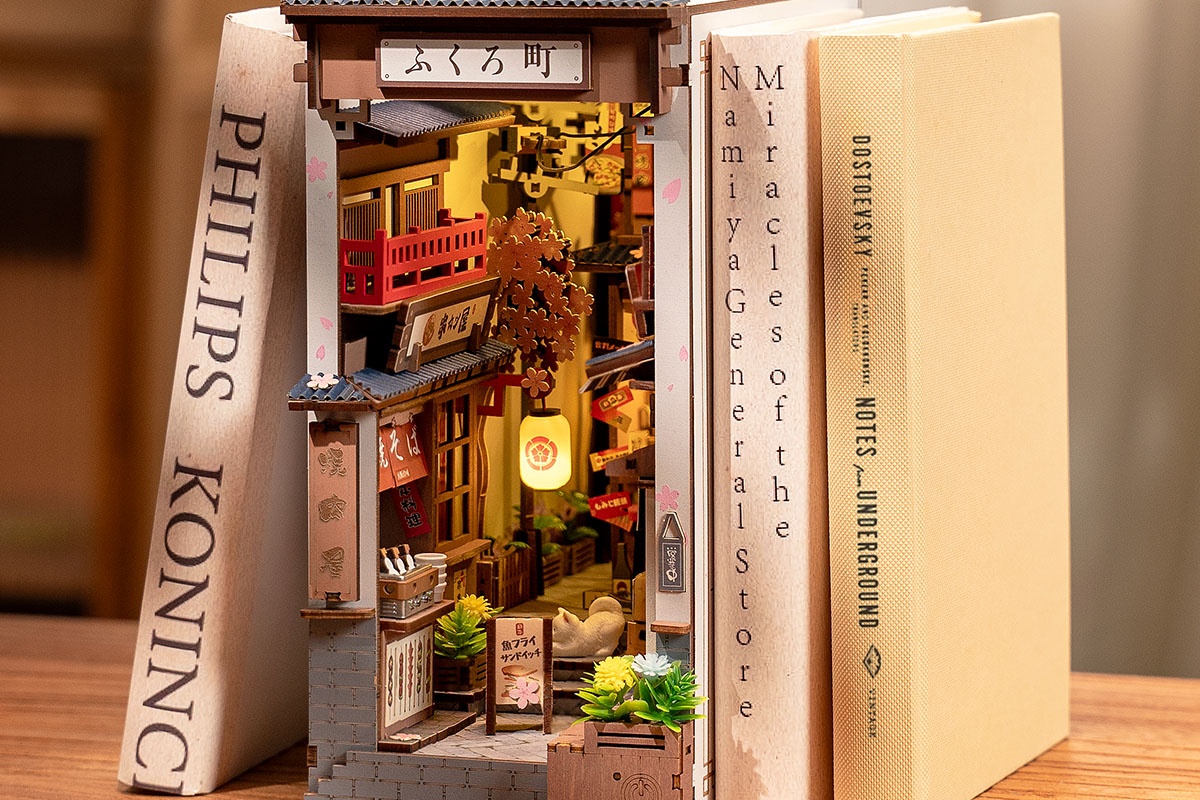
3. Use Lighting to Change the Mood
Test the shelf twice: once in daylight and once after sunset. During the day, look for balanced shapes and enough open space. At night, check whether the miniature glow is visible without being overwhelmed by a bright overhead light.
4. Mix Handmade Pieces with Everyday Objects
A miniature scene becomes more personal when it sits near objects from daily life. Try one plant, one photograph, a small ceramic piece, or a candle that remains unlit on the shelf. You can also use small handmade crafts to reinforce the scene's story. Keep flammable objects away from electrical components and leave access to the book nook's switch or battery compartment.
5. Leave Deliberate Empty Space
Negative space is part of the arrangement. If every gap is filled, the viewer cannot tell which object matters. Leave a small open area beside or above the miniature so its outline, lighting, and depth remain readable.
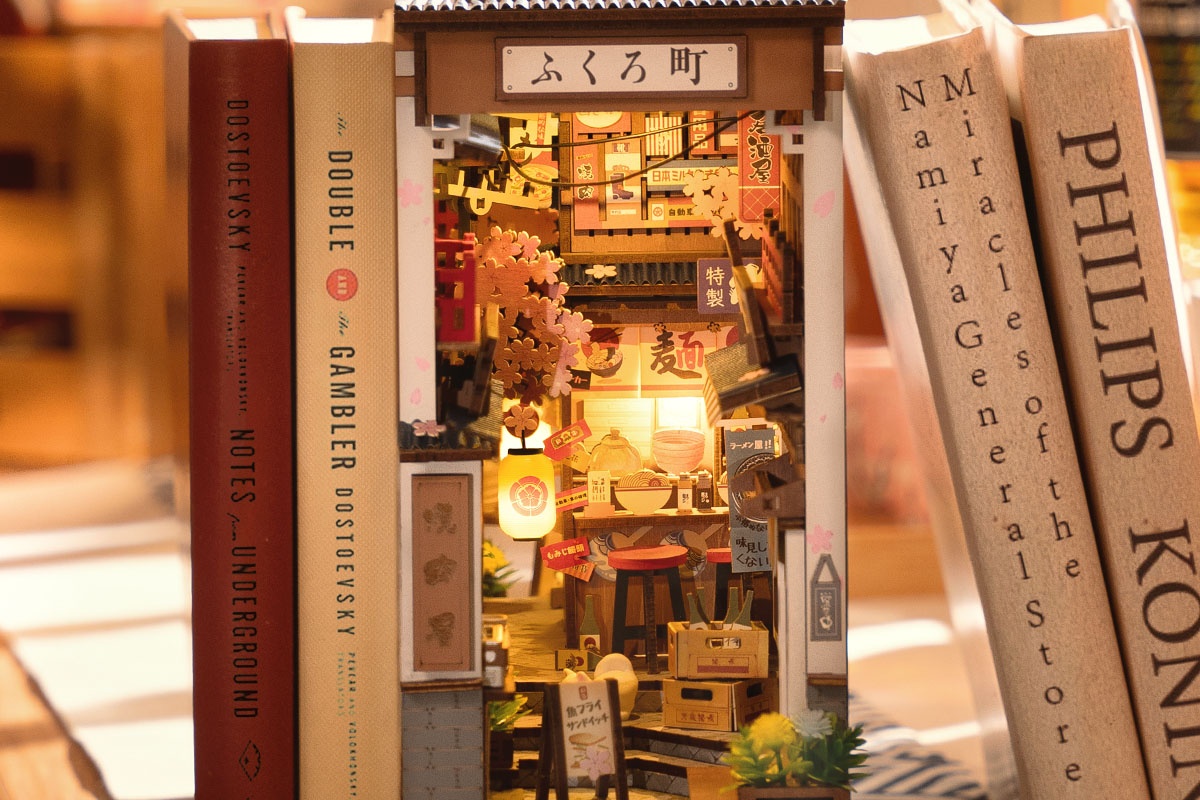
Shelf Styling Checklist:
- One clear theme
- One visual focal point
- Two or three repeated materials
- A mix of vertical and horizontal book stacks
- Visible negative space
- Easy access to lighting controls
Why Do Miniature Scenes Make Meaningful Home Decor?
Ordinary shelf ornaments are often chosen only for shape or color. A miniature scene can carry a place, a memory, or an imagined world. That narrative gives the object a reason to remain in the room after seasonal trends change.
They Represent a Place
A miniature street, cafe, garden, or bookstore can recall somewhere you visited or somewhere you still hope to see. The scene does not have to be a literal replica to create that connection.
They Reflect Personal Taste
Two readers may own the same book nook and style it completely differently. One might pair a Japanese alley with novels and travel books; another might place it beside manga, ceramics, or a framed photograph from Tokyo.
Building Creates Interaction
A DIY miniature is not only selected and displayed. It is assembled. That process makes the finished piece easier to remember because the builder has seen how its walls, signs, lighting, and tiny objects come together.
How Can Sakura Wine Alley Create a Japanese Alley Atmosphere?
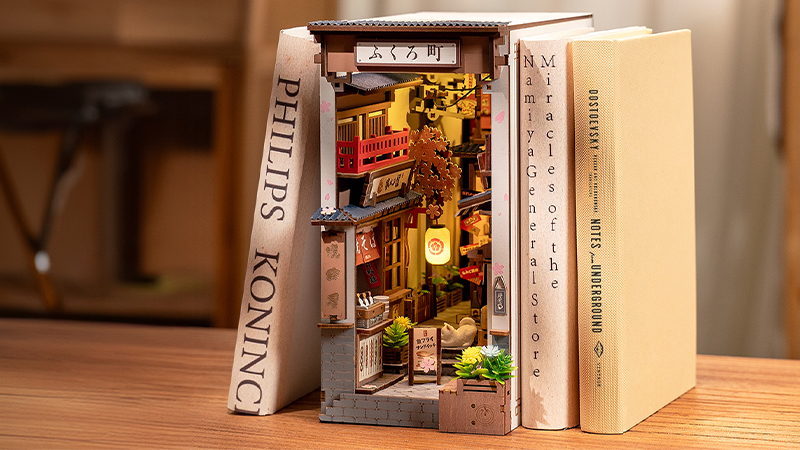
Sakura Wine Alley brings several parts of Japanese alley culture into one bookshelf scene: neighboring food shops, narrow passageways, layered signs, ramen-counter details, an izakaya entrance, cherry blossoms, and warm evening light.
It is inspired by Japanese alley scenes rather than copied from one exact street. That makes it easier to use as decor: the scene suggests the memory of wandering into a small food alley after dark while still reading as an imaginative miniature world.
Unlike a finished decoration piece, Sakura Wine Alley allows builders to participate in creating the scene before displaying it. Assembling the storefronts, signs, lighting, and small food details adds a personal connection that an ordinary shelf ornament does not provide.
To see how those cultural and visual ideas became a product, read the story behind Sakura Wine Alley. The design story follows the move from structural studies to storefront details, lighting, and the final book nook.
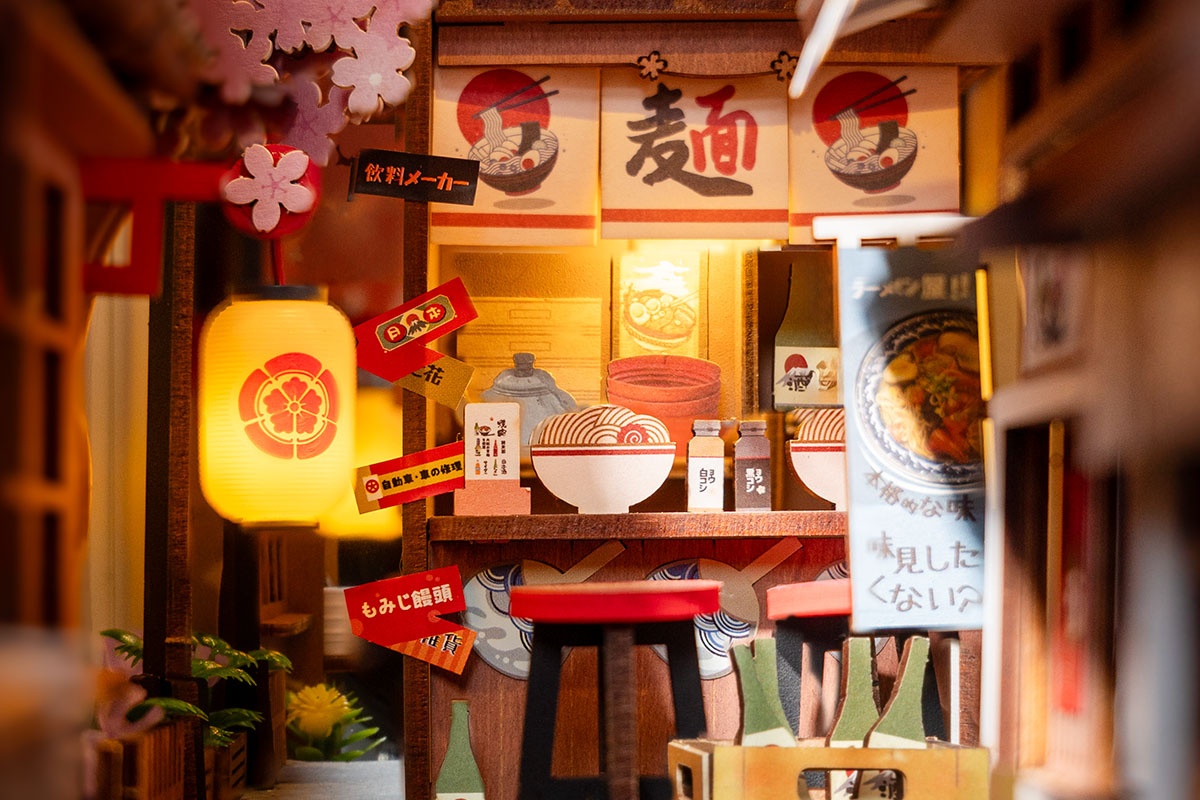
For a reading corner, its strongest role is as a focal object. The warm brown, red, cream, and sakura-pink palette works well with wood shelves, neutral book covers, muted textiles, and a small amount of greenery.
Where Should You Display a Miniature Book Nook?
Choose the location by how you want to experience the scene, not only by where an empty space exists.
| Location | Best For | Setup Tip | Watch For |
|---|---|---|---|
| Bookshelf | Book lovers and integrated shelf styling | Place between stable books and keep the front edge visible | Shelf depth and access to the switch |
| Reading corner shelf | A calm focal point near a chair | Pair with a reading lamp and one natural object | Too many competing light sources |
| Desk | A creative workspace and close detail viewing | Keep outside the main work area | Cables, spills, and visual distraction |
| Living room shelf | A conversation piece | Give the miniature open space on both sides | Glare from windows or overhead lights |
| Bedroom corner | A softer evening atmosphere | Use the light briefly as ambient decor | Leaving decorative lights on unattended |
| Display cabinet | Dust protection and collection grouping | Check visibility and battery access first | Reflections on the cabinet glass |
What Other Japanese-Inspired Miniature Decor Ideas Work Well?
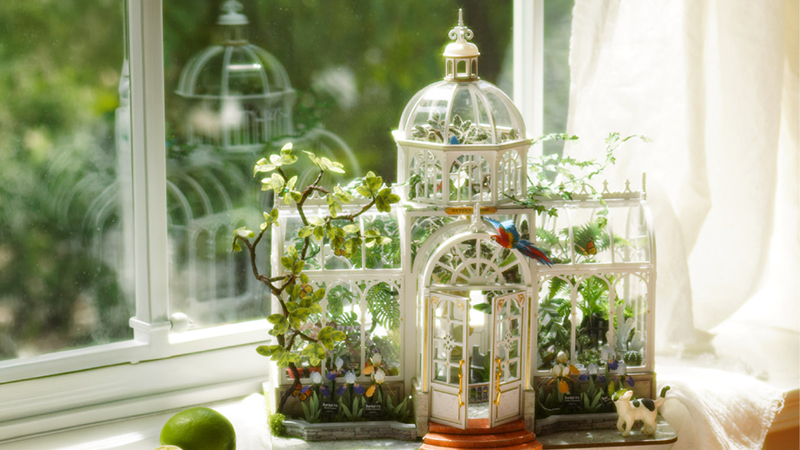
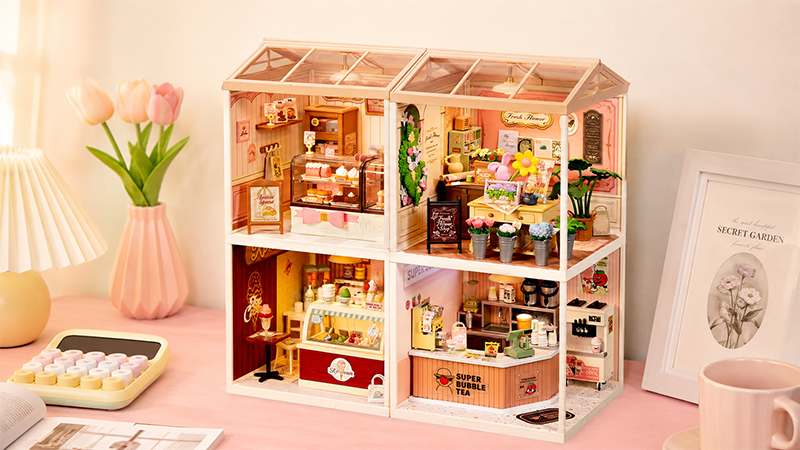
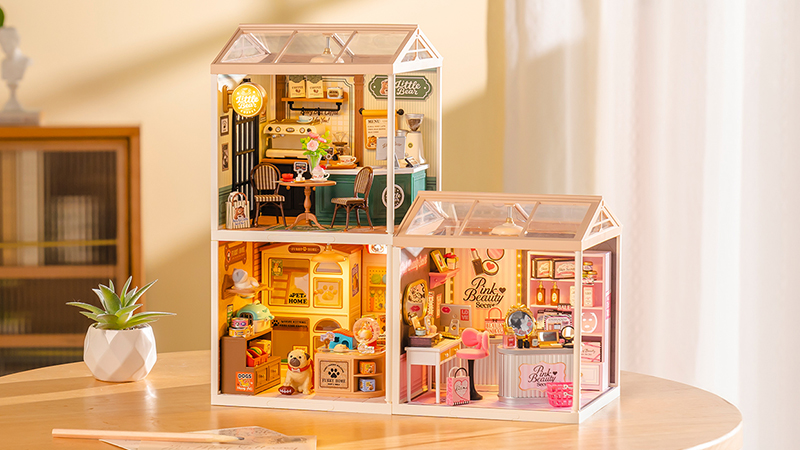
If an evening food alley is not the right mood, choose a miniature category that matches the feeling you want from the reading corner. The guide to Japanese-style book nook kits offers more scenes to compare.
Miniature Cafes
Warm counters, cups, menus, and seating create an intimate everyday setting.
Miniature Gardens
Plants, stone paths, pavilions, and softer colors suit a quieter shelf.
Traditional Street Scenes
Rooflines, signs, shop fronts, and narrow perspective create architectural depth.
Bookstores and Libraries
Shelves within shelves reinforce the reading theme without requiring a specific travel aesthetic.
Seasonal Book Nooks
Cherry blossoms, autumn foliage, or winter lighting can introduce seasonal atmosphere without redecorating the whole room.
Key Takeaway: A Japanese-inspired reading corner feels personal when each element has a role. Let lighting support reading, let natural textures create warmth, let empty space provide calm, and let one miniature scene carry the story.
Frequently Asked Questions
What Is a Book Nook?
A book nook is a miniature scene designed to sit between books, creating the feeling of a hidden world inside a bookshelf.
How Do You Decorate a Bookshelf Without Making It Cluttered?
Choose one theme, use a single focal object, balance vertical books with small horizontal stacks, and leave visible empty space instead of filling every gap.
Why Are Miniature Scenes Used as Home Decor?
They combine visual detail with personal creativity and storytelling. A miniature can represent a place, memory, interest, or imagined world.
Is a Book Nook a Good Gift for Someone Who Loves Japan or Books?
A book nook can be a thoughtful gift for Japan lovers, book lovers, and creative hobbyists who enjoy both hands-on projects and distinctive shelf displays. Before choosing one, consider the recipient's interest in building, available display space, and preferred visual theme.
Where Should I Display Sakura Wine Alley?
It works well on a bookshelf, reading corner shelf, desk, or display cabinet where its warm lighting and miniature details remain visible and the switch is easy to reach.
Create a Reading Corner That Holds a Story
The most inviting reading corners are not assembled from a shopping list. They grow from the books, materials, memories, and small rituals that already matter to the reader. Begin with good reading light and a comfortable place to sit, then add one scene that gives the shelf a point of view.
If a lantern-lit Japanese street fits the atmosphere you want, explore the Rolife Sakura Wine Alley DIY Book Nook and imagine how its warm evening scene could live among your own books.