


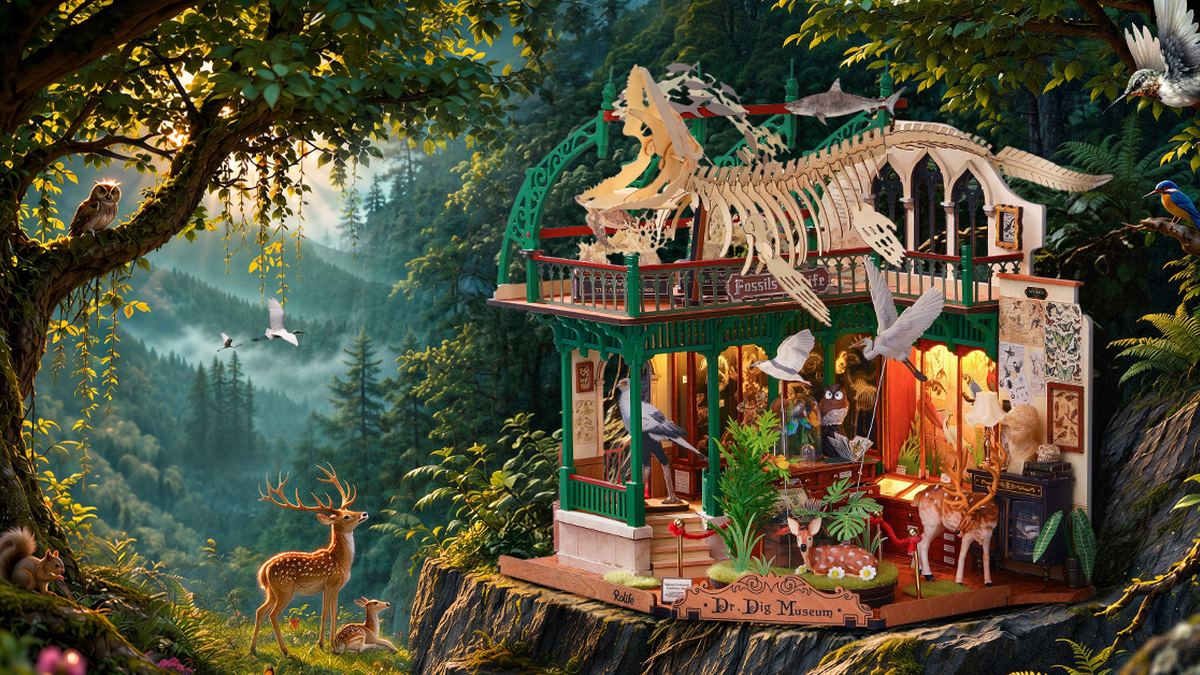
What if everything in a museum woke up after dark?
The butterflies would leave their display cases.
The birds would stretch their wings.
The deer would wander through the greenery.
And high above the exhibition hall, an ancient marine predator would begin to stir.
Welcome to Rolife Dr. Dig Museum DH105, a DIY miniature natural history museum where scientific curiosity meets a world of imagination.
Inspired by 19th-century European natural history collections, Dr. Dig Museum recreates a private museum filled with animal specimens, botanical discoveries, minerals, research notes, and extraordinary creatures from the distant past.
But there is a secret hidden among its exhibits.
When night falls, imagine the museum's silent collections coming to life.
With 634 pieces, approximately 20 hours of assembly, and a ★★★★★ difficulty rating, Dr. Dig Museum offers a detailed building experience for advanced DIY enthusiasts, natural history lovers, and anyone who has ever dreamed of exploring a mysterious museum after closing time.
This is more than a miniature museum.
It's a collection of natural wonders, a tribute to human curiosity, and a little adventure waiting to begin.
Quick Answer: What Is Rolife Dr. Dig Museum DH105?
Rolife Dr. Dig Museum DH105 is a 634-piece DIY miniature natural history museum inspired by European private collections and historical cabinets of curiosities.
Product highlights
- Assembly time: Approximately 20 hours
- Difficulty: ★★★★★ (advanced)
- Main materials: Wood and paper
- Finished size: 240 × 260 × 240 mm
- Architecture: Vintage green ironwork and a arched upper-gallery structure
- Main attraction: A suspended mosasaur skeleton with an opening-and-closing jaw
- Exhibits: Birds, butterflies, mammals, reptiles, marine life, minerals, seeds, and research collections
- Lighting: Three illuminated specimen display areas
- Special details: Miniature research station, collection cabinets, display barriers, and mixed-material exhibit construction
- Theme: Natural history, discovery, craftsmanship, and a magical nighttime adventure
Dr. Dig Museum is designed for experienced miniature builders, museum enthusiasts, nature lovers, and collectors who enjoy highly detailed, story-driven displays.

A Private Museum Full of Forgotten Wonders
During the day, Dr. Dig Museum looks like a carefully maintained private collection.
Behind its green iron framework, the exhibits are arranged with care.
Butterflies rest inside display cases.
Birds perch among miniature plants.
Skeletons occupy their own cabinets.
Minerals and seeds are cataloged alongside books, research papers, and handwritten observations.
Above the hall, the great skeleton of a mosasaur seems to float through the air.
Every object has a place.
Every specimen suggests a story.
The museum feels like the life's work of a naturalist who has spent years traveling, observing, collecting, and studying the natural world.
But once the lights begin to glow, it's easy to imagine a very different story.
Perhaps the museum is not quite as quiet as it seems.
When the Museum Comes Alive at Night
Imagine walking through the museum after the last visitor has left.
At first, everything is still.
Then a butterfly flutters inside its case.
A bird lifts its head.
Somewhere near the plants, a deer takes a cautious step.
Upstairs, the marine exhibits seem to drift through an invisible ocean.
And overhead, the ancient mosasaur slowly opens its jaws.
The entire museum becomes a world where the boundaries between past and present, science and fantasy, begin to disappear.
That is the storytelling concept behind Dr. Dig Museum.
The model's specimens are physical miniature displays, while the idea of their nighttime awakening invites you to imagine the extraordinary lives behind them.
Inspired by the Age of Natural History Collections
Long before modern museums adopted today's familiar exhibition layouts, collectors, scholars, and naturalists assembled private collections of remarkable objects.
These collections were often known as cabinets of curiosities, sometimes referred to by the German term Wunderkammer.
They brought together objects from the natural world, scientific instruments, unusual artifacts, and items collected during journeys.
Over time, collecting practices and scientific classification evolved, contributing to the development of modern natural history museums.
Dr. Dig Museum draws on that earlier atmosphere of discovery.
Instead of recreating a minimal, contemporary museum, it imagines a richly filled private collection where almost every shelf contains something worth examining.
The result is both a museum and a personal research world.
Architecture That Feels Like a 19th-Century Museum
One of the first things you notice about Dr. Dig Museum is its architectural character.
The structure combines:
- Deep green ironwork-inspired framing
- Curved arches
- Open upper-gallery architecture
- Wooden cabinets
- Layered exhibition areas
- Vintage collection furniture
The green arched framework gives the model a distinctive appearance, recalling the iron-and-glass architecture associated with European industrial-era buildings.
It also provides a beautiful contrast against the warmer wooden cabinets and colorful specimens.
The architecture makes the museum feel like somewhere discoveries have accumulated over generations.
The Mosasaur: An Ancient Giant Above the Hall
The suspended mosasaur skeleton is the visual centerpiece of Dr. Dig Museum.
High above the exhibition space, the skeleton immediately draws the eye.
Its long body and powerful jaws evoke a creature from an age unimaginably distant from our own.
Mosasaurs were large marine reptiles that lived during the Late Cretaceous period.
They were formidable predators in prehistoric seas.
In the miniature museum, the suspended skeleton represents both the excitement of paleontological discovery and the mystery of vanished life.
An Interactive Jaw Detail
The model's mosasaur skeleton features a jaw that can open and close.
This gives builders another way to interact with the finished scene.
Even a small adjustment to the jaw can change the creature's expression.
It makes the central exhibit feel more dramatic and helps reinforce the museum's nighttime fantasy.
Rather than simply looking at an ancient skeleton, you can imagine what it might have been like to encounter the living animal.
A Natural History Collection Across Land, Sea, and Sky
The museum brings together several areas of the natural world.
Instead of focusing on one animal group, it combines:
- Prehistoric marine life
- Birds
- Mammals
- Butterflies and insects
- Reptiles
- Plants and seeds
- Minerals and gemstones
- Aquatic environments
This variety is one of its strongest design features.
It creates the feeling of moving through several small exhibitions within one private museum.
Every section adds another chapter to the story of nature.
The Forest Exhibition: A Deer Awakens
One of the gentlest scenes in the museum is its woodland display.
A small deer appears among the greenery, with a larger deer nearby.
The scene captures the quiet beauty of a forest habitat.
Soft grass-like textures and miniature vegetation help create a natural environment around the animals.
The deer bring a sense of warmth and familiarity to a museum otherwise filled with unusual specimens and prehistoric creatures.
In the nighttime story, they become some of the first signs that the collection is awakening.
Birds That Seem Ready to Take Flight
The bird collection is one of the museum's richest display areas.
It includes miniature representations of several species and bird groups, including:
- Parrots
- Macaws
- Gulls
- Storm petrels
- Egrets
- Flamingos
The birds are arranged with botanical elements to make the exhibits feel more natural and lively.
Rather than presenting only rigid specimen forms, the design references living postures.
Wings, colors, and surrounding plants help suggest the animals as they might appear in the wild.
Imagine returning after dark to find their perches empty.
Where would they have gone?

The Butterfly Cabinet: A Collection of Color
Butterflies add a very different kind of beauty to the museum.
The butterfly display area emphasizes color, pattern, and the delicate forms of insects.
Additional insect specimens appear in drawers beneath the main display.
The structure recalls the careful organization found in historical specimen collections.
But visually, the butterflies provide a burst of color among the wooden shelves and green framework.
In the museum's imaginary nighttime world, they become tiny dancers escaping their display cases.
The Naturalist's Workbench: Where Discovery Begins
A museum is not only a place where objects are displayed.
It is also a place where people study, compare, document, and try to understand what they have discovered.
Dr. Dig Museum includes a private research area filled with details that suggest the collector's work.
You can find elements such as:
- Research notes
- Specimen preparation materials
- Illustrated references
- Personal collections
- Small sculptures
- Cabinets containing records and tools
The workbench adds an important human presence to the model.
You may not see the museum's owner, but their interests and habits are visible everywhere.

A Museum Owner With a Lifetime of Stories
Imagine the person who created this collection.
Perhaps they spent years traveling and recording discoveries.
Perhaps some specimens were acquired from other collectors.
Perhaps the books on the desk contain unfinished research.
A suitcase holds botanical and zoological illustrations, while feathers and butterflies appear to escape into the air around it.
These details make the owner feel like a character in the story.
Dr. Dig Museum is not simply a collection of exhibits.
It is also a portrait of the person who assembled them.
Research Journals and Illustrated Animal Studies
The walls and cabinets feature references to illustrated zoological and botanical studies.
They help reinforce the atmosphere of a naturalist's personal research space.
For users who enjoy science, these details make the museum theme more convincing.
For fantasy lovers, they suggest hidden clues and unfinished adventures.
One viewer might see a scientific workspace.
Another might imagine the pages of a mysterious explorer's journal.
The same miniature details support both interpretations.
A Collection of Skeletons, Seeds, and Natural Curiosities
Beyond the colorful bird and butterfly displays, Dr. Dig Museum contains more unusual collections.
The skeletal exhibits include miniature representations of animals such as:
- Sheep
- Deer
- Foxes
- Rabbits
- Rodents
- Chameleons
- Pangolins
Nearby, cabinets and tables hold botanical materials, including seeds, specimen tubes, and plant illustrations.
This mixture of living organisms, skeletal forms, and scientific records gives the museum a strong collector's identity.
It feels deliberately crowded with discoveries.
And that sense of abundance is part of its charm.
A Secretarybird Takes an Unexpected Walk
One of the most memorable animal details is the secretarybird.
This distinctive African bird of prey is known for its long legs, striking appearance, and ground-hunting behavior.
In the miniature's fantasy narrative, it is easy to imagine the bird stepping away from its display and wandering through the museum corridors.
Its unusual silhouette gives the scene a whimsical personality.
Among the carefully arranged exhibits, it feels like a character with a story of its own.
Follow the Staircase Into Another World
The museum's layout invites viewers to explore more than one level.
An archway leads toward another interior area, and a staircase connects the lower collection spaces with the upper exhibition.
This adds a sense of discovery.
Rather than seeing everything at once, the viewer can follow the architectural layers and imagine moving from room to room.
It also supports the narrative of a nighttime adventure, when every doorway might reveal another unexpected encounter.
The Upper Gallery: A Journey Into the Ocean
Upstairs, the museum shifts its attention from land animals to marine life.
The exhibition includes:
- The suspended mosasaur skeleton
- Sea turtles
- Penguins
- Fish
- Coral specimens
- Marine-inspired arrangements
The combination suggests a journey through different aquatic environments and periods of natural history.
The prehistoric mosasaur dominates the space, while the smaller animals and specimens create a richer surrounding world.
In the imaginary nighttime story, the gallery becomes an underwater realm.
Fish drift through the air.
A sea turtle passes overhead.
And the ancient skeleton seems to swim again.
Three Illuminated Display Cases Bring the Museum to Life
Lighting plays an important role in the museum's atmosphere.
Dr. Dig Museum includes three illuminated specimen display areas:
- Mammal skeleton collection
- Bird specimen collection
- Butterfly collection
These lights draw attention to some of the model's most detailed exhibits.
They also recreate an essential part of the museum experience: carefully directed exhibition lighting.
During the day, you can appreciate the structure and the arrangement of the specimens.
When illuminated, the display cabinets create a warmer, more mysterious atmosphere.
The lighting makes it easier to imagine the museum continuing its secret life after closing time.
From Scientific Display to Fantasy Adventure
The most interesting aspect of Dr. Dig Museum is the contrast between its two identities.
By day, the model represents curiosity, research, and the careful preservation of natural specimens.
By night, the same objects become characters in an imaginary adventure.
The mosasaur is no longer simply a skeleton.
The butterflies are no longer just arranged specimens.
The birds are no longer frozen in their display cases.
This transformation happens through storytelling and imagination rather than powered animation.
That distinction is important.
The model gives you the detailed environment and the interactive mosasaur jaw; the rest of the adventure is yours to imagine.
A 20-Hour DIY Challenge for Experienced Builders
With 634 pieces and approximately 20 hours of assembly, Dr. Dig Museum is designed for people who enjoy spending serious time on a craft project.
Its ★★★★★ difficulty rating makes it a demanding advanced build.
The experience involves assembling a detailed architectural structure while creating and arranging many miniature exhibits.
Different areas bring different types of work.
One moment, you are building a cabinet.
The next, you are arranging an animal display.
Later, you might be adding architectural details, exhibit accessories, or lighting.
This variety helps the project feel like the creation of an entire miniature museum rather than a single repeated construction task.
A Build With Many Small Milestones
One of the rewards of a large DIY model is watching it develop.
The museum structure comes first.
Then the rooms begin to take shape.
Cabinets and exhibition furniture add depth.
Specimens give each space its purpose.
Finally, the lighting and finishing details help bring everything together.
Each completed section provides a small sense of achievement before the whole museum is finished.
For experienced DIY builders, this layered progression can make the 20-hour project particularly satisfying.
Mixed Materials Add Richness to the Exhibits
Dr. Dig Museum uses wood and paper as its main materials, with varied textures and finishes to represent different museum objects.
The details include:
- Transparent-looking specimen covers
- Small metal fasteners
- Metal-style exhibition barriers with red ropes
- A molded miniature deer with spotted detailing
- Soft fabric used to simulate grassy surfaces
- Bone- and plaster-like textures
- Metal wire mesh
- Decorative display hardware
These different textures help distinguish the exhibits from the architecture around them.
The result is a miniature with greater visual variety, especially when viewed up close.
The Joy of Building a Collection Within a Collection
Many experienced miniature builders enjoy models packed with small, recognizable objects.
Dr. Dig Museum is particularly suited to this preference.
There are specimens to examine.
Cabinets to discover.
Research papers to notice.
Animal figures hidden among plants.
Small exhibition details scattered throughout the building.
The museum itself becomes a collection of miniature collections.
That gives builders and collectors plenty to explore even after assembly.
A Different Kind of DIY Art House
Many Rolife miniature houses recreate familiar everyday spaces.
Cafés.
Bookstores.
Flower shops.
Homes.
Dr. Dig Museum takes a different approach.
Its main focus is not domestic life or a cozy commercial space.
It is a place of discovery.
The design blends historical collecting culture with the wonder of the natural world.
That gives the finished model a different emotional character.
Instead of imagining what the owner might serve for afternoon tea, you find yourself wondering what lies behind the next display case.
Natural History Meets Fantasy Storytelling
Dr. Dig Museum appeals to two different interests that work surprisingly well together.
For natural history enthusiasts, the model offers recognizable references to museum exhibits, specimen collections, and paleontology.
For fantasy lovers, it provides an imaginative setting where extinct creatures and preserved animals might return to life.
The two ideas strengthen each other.
The historical museum setting makes the imagined adventure more convincing.
And the fantasy story makes the museum feel less static.
A Display Piece for Curious Minds
The finished Dr. Dig Museum measures approximately 240 × 260 × 240 mm.
Its broad structure and elaborate exhibits give it substantial presence as a decorative model.
It can work especially well in:
- A home library
- A study
- An office
- A craft room
- A collection display
- A reading corner
The dark green architectural details, wooden furniture, and warm exhibit lighting make it particularly suitable for spaces with vintage, academic, or nature-inspired décor.
It can become a conversation piece for anyone who enjoys unusual miniature environments.
A Gift for Museum Lovers and Makers
Dr. Dig Museum is especially well suited to people whose interests go beyond conventional décor.
It could make a thoughtful gift for someone who enjoys natural history, paleontology, wildlife illustration, museum visits, or challenging DIY projects.
The combination of a long-form build and a highly detailed finished piece makes it particularly appealing as a meaningful hobby gift.
Because of its complexity, it is best suited to recipients who already enjoy patient, detailed crafting rather than those seeking a quick beginner project.
Who Is Dr. Dig Museum For?
Natural History Enthusiasts
For people who love fossils, wildlife, paleontology, biodiversity, and visiting museums.
Museum and Vintage Collection Lovers
For users fascinated by private collections, cabinets of curiosities, historic architecture, and antique display cases.
Fantasy and Adventure Fans
For people who enjoy imaginative stories where ordinary places conceal extraordinary worlds.
Experienced DIY Builders
For makers looking for a challenging 634-piece project with rich architecture, numerous exhibits, and varied materials.
Miniature Collectors
For users who enjoy detailed display environments filled with individual objects and storytelling possibilities.
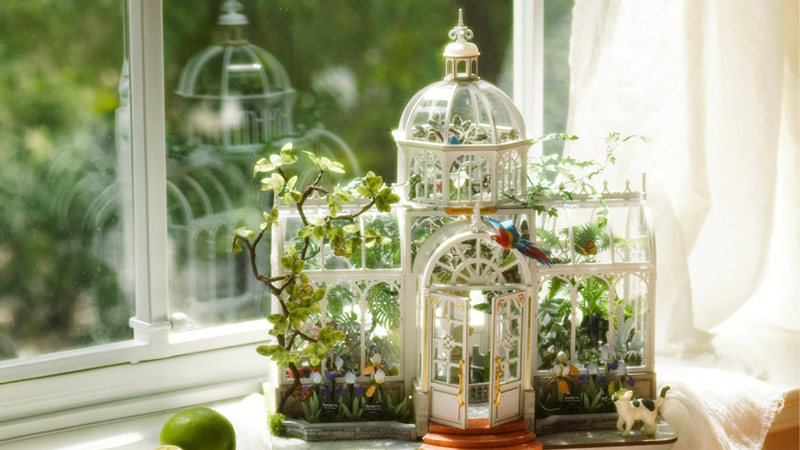
Dr. Dig Museum vs. Other Advanced Rolife DIY Art Houses
If you enjoy ambitious miniature projects, Dr. Dig Museum belongs naturally alongside several of Rolife's more challenging art houses.
| Product | Main Theme | Building Experience |
|---|---|---|
| Dr. Dig Museum DH105 | Natural history and fantasy adventure | 634 pieces, approximately 20 hours, ★★★★★ |
| Clockwise Clocks DH104 | Vintage clockmaking and mechanical craftsmanship | 739 pieces, approximately 27 hours, ★★★★★★ |
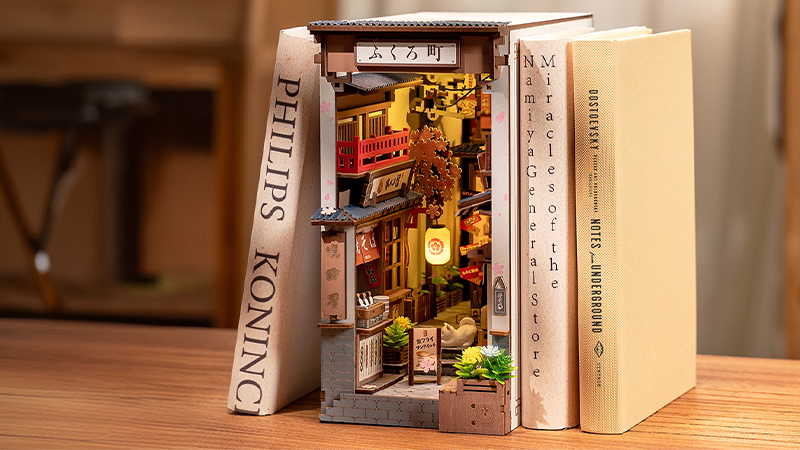
| Pagestory Books DH103 | Literary sanctuary and vintage bookstore | 933 pieces, approximately 25 hours, ★★★★★☆ |
| Oxygen Oasis DH102 | Glasshouse garden and botanical retreat | 1,168 pieces, approximately 36 hours, ★★★★★★ |
Each model offers a different kind of immersion.
Choose Dr. Dig Museum for natural history, creature collections, and imaginative exploration.
Choose Clockwise Clocks for mechanical details, traditional craftsmanship, and an even more demanding Master-Level build.
Choose Pagestory Books if you love books, classic interiors, and richly detailed literary spaces.
Choose Oxygen Oasis if you prefer lush greenery, greenhouse architecture, and botanical scenery.
Together, they show how different a DIY miniature house can feel depending on the world it invites you to create.
Product Details
| Feature | Specification |
|---|---|
| Product Name | Rolife Dr. Dig Museum |
| Model | DH105 |
| Product Type | DIY Art House / Miniature Natural History Museum |
| Pieces | 634 pcs |
| Materials | Wood and paper |
| Assembly Time | Approx. 20 hours |
| Difficulty | ★★★★★ (advanced) |
| Finished Size | 240 × 260 × 240 mm |
| International Package | 310 × 230 × 65 mm |
| Domestic Package | 315 × 237 × 65 mm |
| Main Theme | Vintage European private natural history collection |
| Main Exhibit | Mosasaur skeleton |
| Interactive Feature | Movable mosasaur jaw |
| Lighting | Three illuminated specimen display areas |
| Architectural Style | Green ironwork and open upper gallery |
| Exhibition Themes | Marine life, birds, mammals, butterflies, botanical collections, minerals |
What Makes Dr. Dig Museum Special?
Dr. Dig Museum brings together:
- 634-piece advanced DIY construction
- Approximately 20 hours of building
- ★★★★★ difficulty
- A 19th-century European natural history museum aesthetic
- A nighttime fantasy storyline
- Suspended mosasaur skeleton with movable jaw
- Multiple animal and natural specimen collections
- Butterfly, bird, and mammal exhibits
- Marine life gallery
- Research workspace and personal collection details
- Vintage green ironwork-inspired architecture
- Three illuminated specimen displays
- Rich mixed-material construction
- Strong collectible and decorative appeal
Its greatest strength is the balance between a carefully detailed museum and a world that invites the imagination to wander.
FAQ
What is Rolife Dr. Dig Museum DH105?
Rolife Dr. Dig Museum DH105 is a 634-piece DIY miniature natural history museum inspired by 19th-century European private collections. It includes animal specimens, a suspended mosasaur skeleton, bird and butterfly cabinets, marine exhibits, research displays, and illuminated exhibition areas.
How long does Dr. Dig Museum take to build?
The estimated assembly time is approximately 20 hours, depending on experience and building pace.
How difficult is Dr. Dig Museum?
It has a ★★★★★ (advanced) difficulty rating, making it a challenging project best suited to experienced DIY miniature builders.
How many pieces are included?
Dr. Dig Museum includes 634 pieces.
What is the main feature of the museum?
The suspended mosasaur skeleton is one of the main visual attractions. It also has an interactive jaw that can be opened and closed.
What animals are featured in Dr. Dig Museum?
The model includes miniature exhibits inspired by prehistoric marine reptiles, birds, butterflies, mammals, reptiles, fish, penguins, sea turtles, and other animals.
Does Dr. Dig Museum have lights?
Yes. It features three illuminated specimen display areas, highlighting the mammal skeleton, bird, and butterfly collections.
Do the museum animals move automatically?
The museum's nighttime awakening is a fantasy storytelling concept. The provided product details confirm a movable mosasaur jaw, but do not specify automatic motion for the other animal exhibits.
Is Dr. Dig Museum based on a real museum?
The model is inspired by the architecture and collecting traditions of historical European natural history museums and private cabinets of curiosities. It is not presented as a replica of one specific institution.
Is Dr. Dig Museum suitable for beginners?
It is more appropriate for experienced makers because of its 20-hour build time, five-star difficulty level, and highly detailed exhibits.
What size is the finished model?
The assembled model measures approximately 240 × 260 × 240 mm.
Is Dr. Dig Museum a good gift for natural history lovers?
Yes. Its museum architecture, animal specimens, paleontological details, and immersive DIY experience make it especially suitable for natural history enthusiasts and experienced hobbyists.
Every Collection Has a Story. This One Has a Secret.
The museum is quiet again.
The birds have returned to their branches.
The butterflies are back in their cases.
The deer stand still among the greenery.
High above the hall, the mosasaur hangs silently above the upper gallery.
Everything appears exactly where it belongs.
But you have seen what this place can become.
And now, whenever the lights come on, you can imagine a whole world waking up among the exhibits.
With Rolife Dr. Dig Museum DH105, you are not simply building a collection of natural wonders.
You are creating a miniature world where discovery and imagination meet.
A museum filled with stories from the past.
And one extraordinary adventure that begins after dark.