
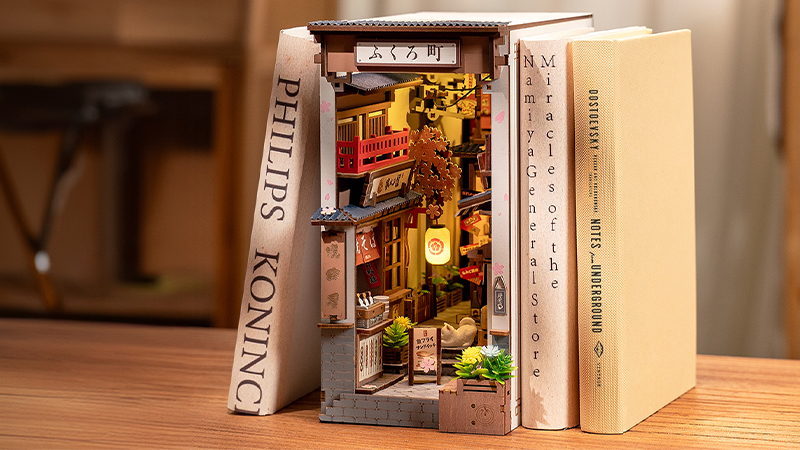

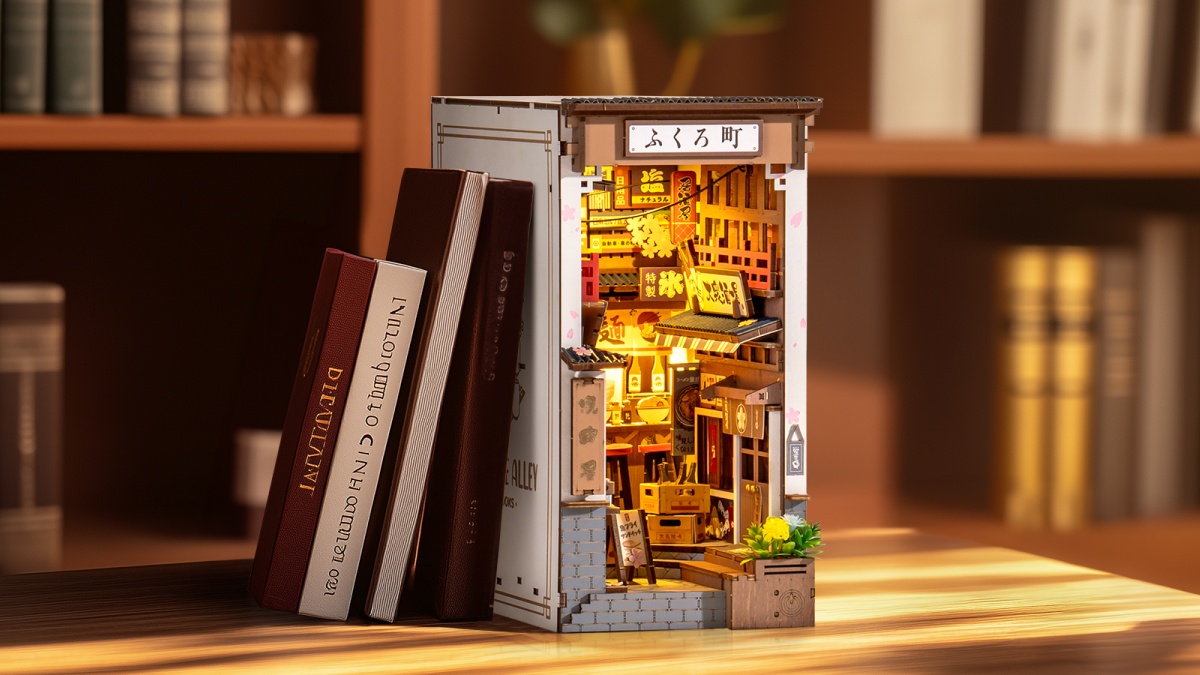
Sakura Wine Alley enmarca una calle iluminada por la noche dentro de las proporciones estrechas de un book nook.
Respuesta rápida: Rolife Sakura Wine Alleyes un book nook inspirado en Japón que traducecultura de callejones japonesa- la relación entre pequeñas tiendas, luces cálidas, comida y momentos sociales cotidianos - en una miniatura construible. Su desarrollo desde estudios estructurales hasta una muestra iluminada final muestra cómo Rolife convirtió un recuerdo de una calle nocturna en una exhibición de estantería en capas.
Algunos recuerdos de viaje se definen por monumentos famosos. Otros regresan como fragmentos más pequeños: el resplandor de una linterna, un letrero escrito a mano, la sugerencia silenciosa de vapor sobre un mostrador de ramen, o un pasaje estrecho que parece continuar más allá de la vista.
Sakura Wine Alley creció a partir de ese segundo tipo de memoria. El objetivo no era copiar una dirección callejera documentada. Era combinar las señales visuales de un callejón japonés en una escena que pudiera encajar entre libros y aún sentirse estratificada, cálida y viva.
La inspiración detrás de Sakura Wine Alley
El estado de ánimo original se describió con tres palabras: retro, literario y romántico. La escena se imaginó en el momento en que la noche se establece, las luces de la tienda se encienden y un modesto callejón se convierte en su propio pequeño mundo.
En lugar de presentar la calle como ruidosa o concurrida, el concepto se centró en un tipo de actividad más tranquila. Las tiendas están muy cerca unas de otras, pero cada una tiene su propio carácter. El callejón invita a la vista a moverse lentamente de la puerta al mostrador, de letrero a farol, y de escaparate a escaparate.
La paleta ayudó a establecer ese ambiente. El rojo y el marrón formaron la base visual, mientras que el azul, el amarillo y el blanco aportaron contraste y hicieron que la escena se sintiera más brillante. Las flores de sakura suavizaron la arquitectura más oscura y añadieron una capa estacional, de cuento de hadas, al entorno nocturno.
Cómo Sakura Wine Alley captura la cultura de los callejones japoneses
La cultura de los callejones japoneses no se trata solo de arquitectura. Está moldeada por la relación entre pequeñas tiendas, luces cálidas, comida y momentos ordinarios compartidos en una calle cercana. Un mostrador al lado de una puerta, una linterna sobre un letrero o un conjunto de escalones que conducen a un bar compacto pueden hacer que el callejón se sienta social, personal y habitado.
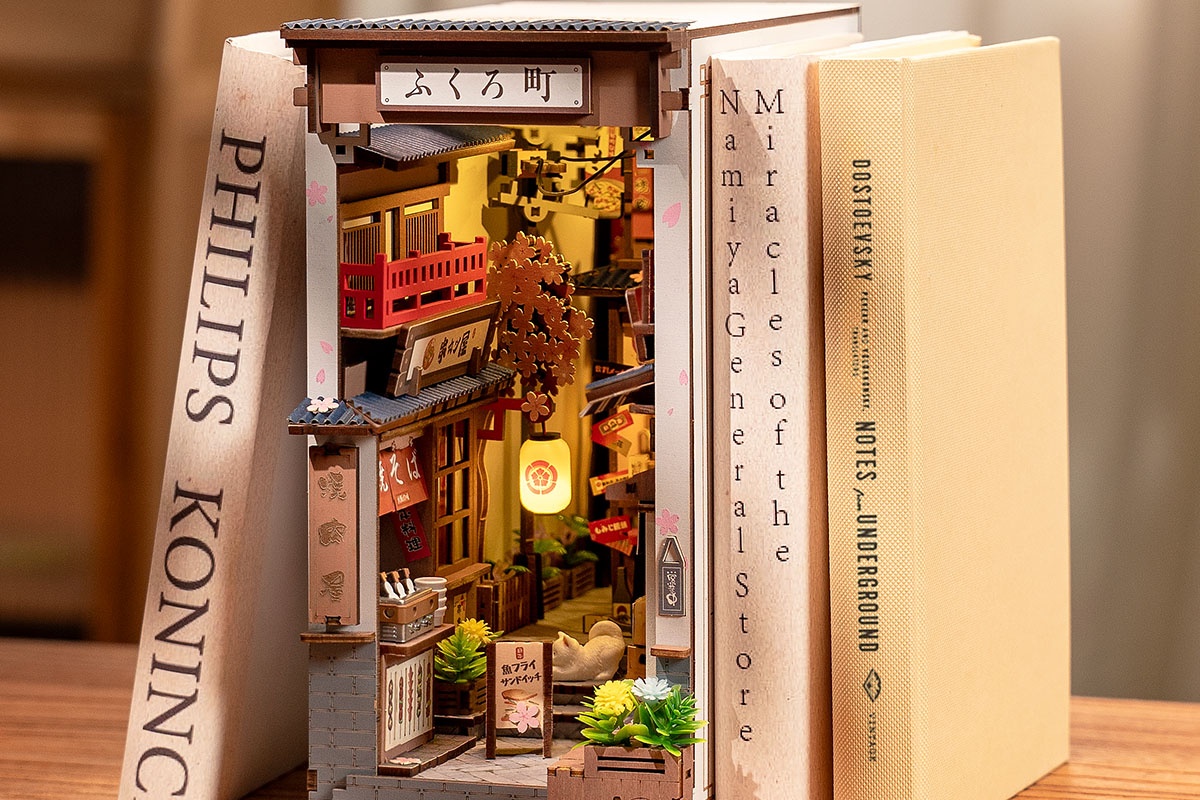
Sakura Wine Alley traduce estas relaciones en forma de miniatura. Su tienda de ramen, casa de parrilla e izakaya están dispuestas como vecinas en lugar de exhibiciones aisladas. La iluminación conecta las fachadas después del anochecer, mientras que letreros, cajas, pétalos, taburetes y un gato errante sugieren la actividad cotidiana que le da carácter a un callejón japonés. Para un vistazo más cercano a las tradiciones culinarias detrás de la escena, exploraCultura de comida callejera japonesa al anochecer.
Del boceto al rincón de lectura final
El registro de desarrollo muestra una secuencia compacta pero significativa de decisiones.
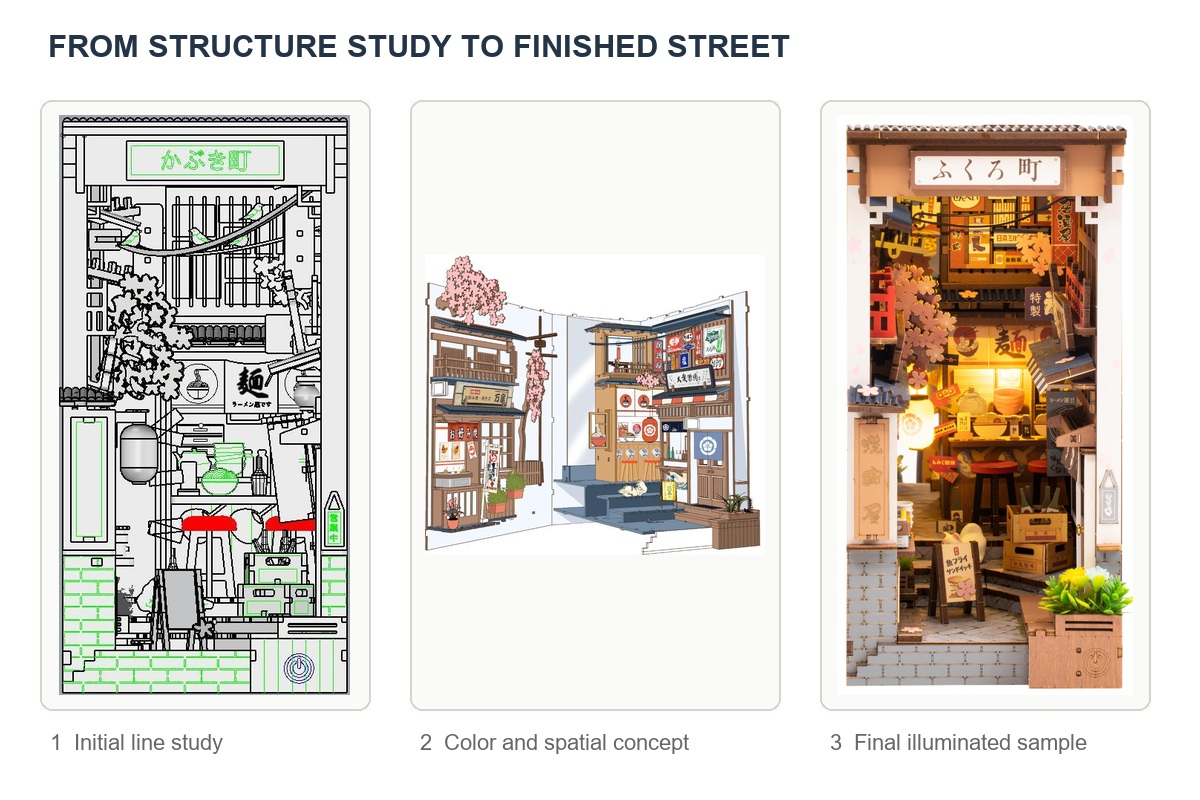
El cambio de dibujo a muestra no fue simplemente una cuestión de añadir color. El equipo tuvo que decidir qué líneas se convertirían en paredes, qué señales crearían ritmo visual, cómo se estrecharía la calle hacia atrás y dónde debería detenerse primero la mirada del espectador.
Por qué la cultura de los callejones japoneses inspiró este diseño.
¿Por qué Rolife eligió una atmósfera de calle japonesa inspirada en la era Showa?
Sakura Wine Alley toma prestado el lenguaje visual de una calle de un antiguo barrio japonés: líneas de techo oscuras, frentes de madera estrechamente espaciados, letreros en capas, faroles, pequeños mostradores y una sensación de que los edificios han acumulado historias a lo largo del tiempo.
La influencia de la era Showa se entiende mejor como una atmósfera en lugar de una reconstrucción histórica precisa. Le da a la escena calidez y familiaridad, mientras que la paleta más brillante y las flores de cerezo mantienen el diseño imaginativo. El resultado se sitúa entre la observación y la memoria: lo suficientemente reconocible como para sentirse arraigado, pero compuesto para funcionar como arte en miniatura.
¿Por qué son importantes la comida y los espacios sociales?
Los mostradores de ramen, las parrillas y los izakayas hacen que el callejón sea comprensible a través de la actividad humana. Sugerir comidas rápidas, cocina visible, platos compartidos y conversación después del anochecer. No son etiquetas decorativas en las vitrinas; juntos, explican por qué la calle se siente como un lugar donde la vida cotidiana continúa hasta la noche.
Tres escaparates cuentan tres historias.
Las tres empresas le dan al callejón más que variedad. Cada una contribuye con un ritmo y una sensación social diferentes.
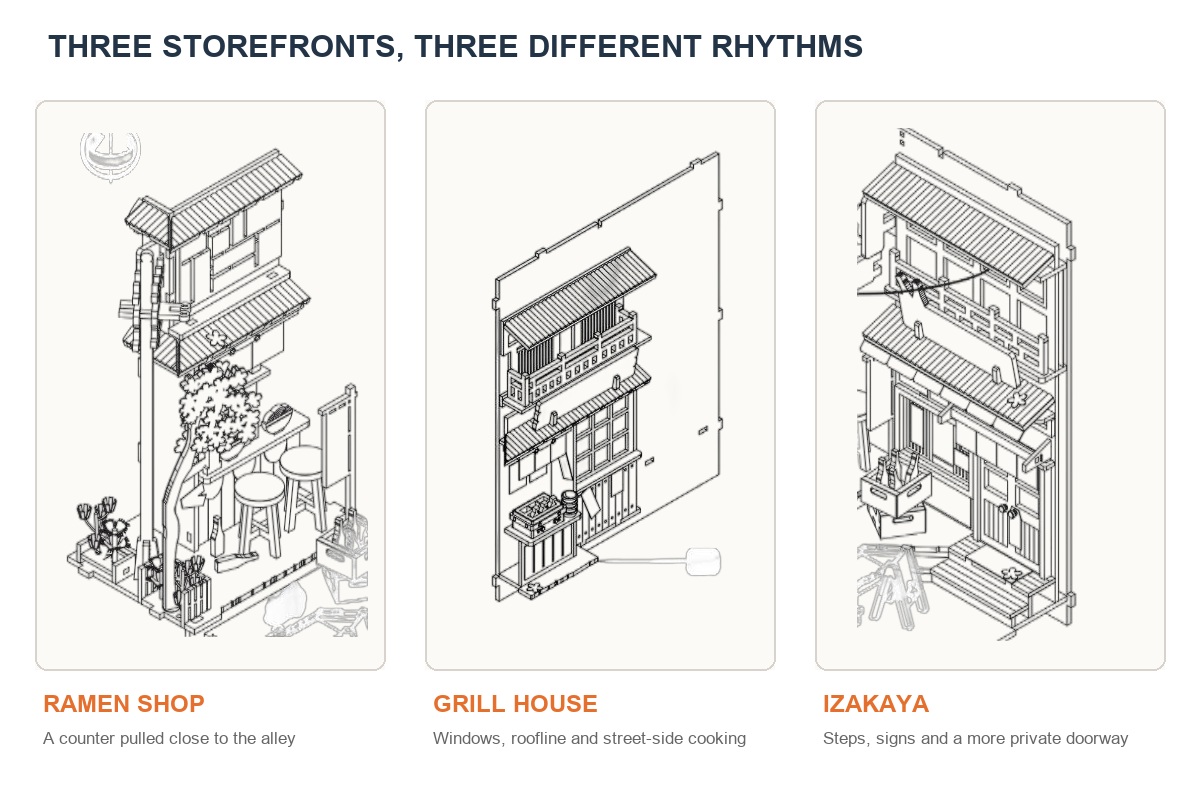
La tienda de ramen acerca al espectador más a la comida
La tienda de ramen está construida en torno a la inmediatez: taburetes de barra, cuencos, utensilios de cocina, cortinas, una linterna y carteles agrupados alrededor de la entrada. Su disposición abierta permite que la vista lea rápidamente el área de cocina, convirtiéndola en la fachada más directa y acogedora de la escena.
El restaurante The Grill House añade una planta superior habitable.
La casa de parrilla utiliza una ventana de celosía, un puesto de comida al lado de la calle, un techo de tejas y un pequeño balcón en el segundo piso. Estos elementos verticales evitan que el callejón se sienta como una fila de fachadas planas. El edificio parece continuar por encima de la línea de visión inmediata del espectador.
El Izakaya Crea un Umbral de Noche Más Privado
El izakaya se encuentra detrás de escalones en niveles diferentes y una puerta más profunda. Cajas, letreros irregulares, un tratamiento de ventana y una entrada ligeramente más cerrada sugieren un lugar hecho para quedarse en lugar de una parada rápida.
Cómo el diseño crea profundidad
Un book nook tiene muy poco ancho físico, por lo que la profundidad debe diseñarse a través de superposición, perspectiva y visibilidad controlada. Sakura Wine Alley utiliza varias técnicas a la vez:
- Las vitrinas están escalonadas en lugar de estar colocadas en una línea plana.
- Los escalones cambian el nivel de los ojos del espectador y hacen que el camino se sienta irregular y habitado.
- Las líneas del techo, los balcones, los letreros y los detalles colgantes crean capas de adelante hacia atrás.
- Un techo recortado permite que la luz entre en el interior mientras añade un motivo decorativo inspirado en las olas.
- Un espejo al final del callejón refleja la escena, por lo que la calle parece continuar más allá de la caja física.
El espejo es especialmente importante. Cambia la escena de un pequeño recinto a un pasaje visual. Lo que el espectador sabe es solo un corto book nook que comienza a leer como una calle con algún otro lugar al que ir.
Cómo la iluminación amplía la perspectiva nocturna
La configuración nocturna depende del contraste. Si cada superficie estuviera iluminada de manera uniforme, el callejón perdería la intimidad que lo inspiró. Sakura Wine Alley, en cambio, utiliza tres zonas de iluminación cálida: una luz superior, una luz ambiental similar a una linterna y una fuente cálida detrás del mostrador de comedor.
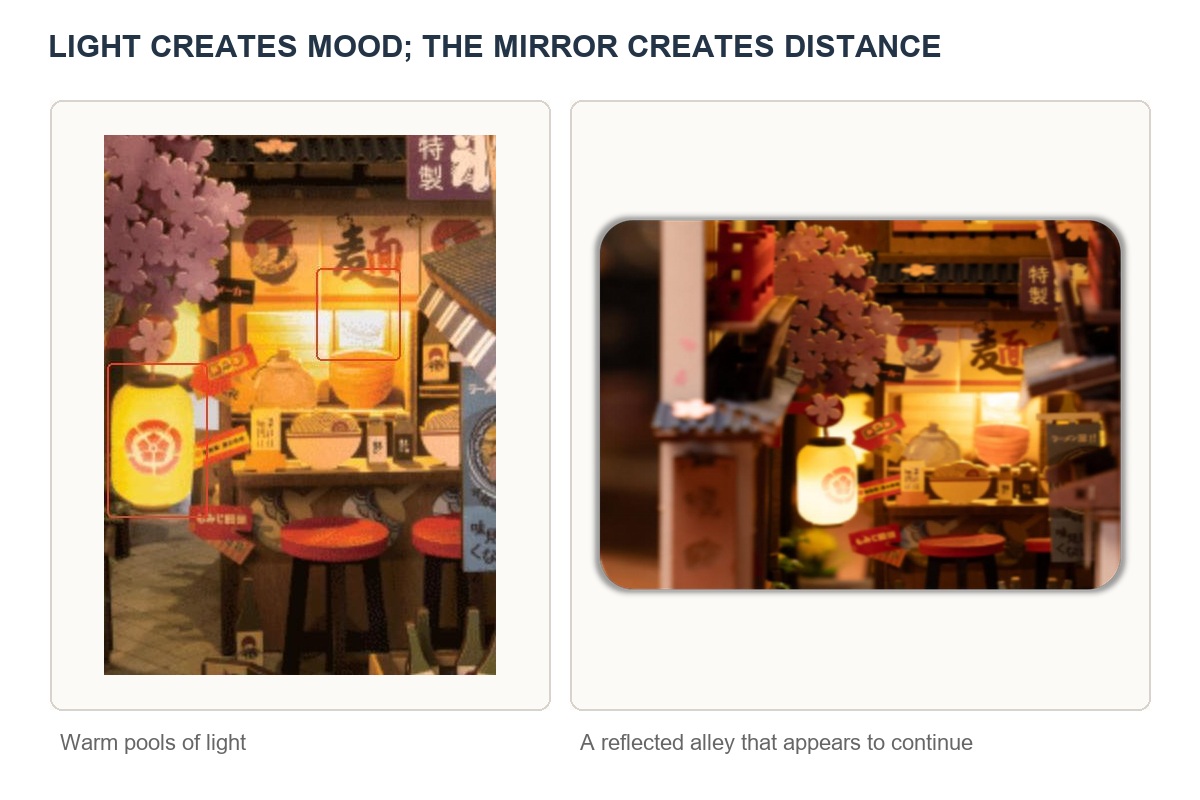
Juntos, las luces guían la atención. La zona más brillante atrae la mirada hacia el mostrador de ramen, los brillos secundarios revelan letreros y pétalos, y los bordes más oscuros preservan la impresión de edificios cerrándose alrededor de un camino estrecho. El control táctil también permite que la escena cambie de carácter sin perturbar la exhibición.
Cómo los pequeños detalles hacen que el callejón se sienta habitado
La arquitectura explica dónde se encuentra el espectador. Los objetos pequeños sugieren que alguien acaba de estar allí.
- Tazones, utensilios de cocina, condimentos, taburetes y gráficos del menú alrededor del mostrador de ramen
- Piezas de puesto de comida, ventanas de celosía, tejas de techo oscuras y un pequeño balcón superior en la casa de la parrilla
- Cajas de bebida, letreros de tienda irregulares, una entrada de azulejos y ventanas superpuestas alrededor del izakaya
- Un gato estirándose, pétalos esparcidos, plantas, carteles y señalización en estilo manuscrito a lo largo del camino.
Estos detalles no necesitan una biografía escrita de los personajes. Su disposición es suficiente para implicar rutinas diarias: una tienda preparándose para la noche, un cliente a punto de sentarse, o un gato buscando el lugar más cálido en la calle.
Diseñado para amantes de Japón y coleccionistas de miniaturas.
Sakura Wine Alley está diseñado para personas que quieren más que un adorno genérico en la estantería. Su mayor atractivo proviene de la conexión entre la atmósfera cultural, la creación práctica y la exhibición. Los lectores que comparan escenas similares también pueden consultar la guía para elLos mejores kits de estilo japonés book nook.
Amantes de Japón
Para las personas que quieren llevar la sensación de una calle lateral japonesa iluminada por faroles a su hogar.
Entusiastas de los viajes
Para los viajeros que recuerdan - o esperan experimentar - las pequeñas calles de comida y los rincones ocultos de la noche que se encuentran más allá de los principales hitos.
Amantes de las manualidades
Para los constructores que disfrutan viendo cómo una escena cobra profundidad a medida que las paredes, letreros, escaparates, accesorios y luces se unen.
Coleccionistas de decoración del hogar y rincones de lectura
Para cualquiera que busque una estantería distintiva que cambie de carácter cuando se encienden sus luces cálidas. Explora el completoColección Rolife book nookpara más mundos del tamaño de una estantería.
Desde piezas de construcción hasta la creación de tu propio recuerdo
El proceso de diseño establece la calle, pero el constructor completa su experiencia. Cada capa ensamblada cambia la vista: una pared plana se convierte en una vitrina, letreros separados comienzan a crear un ritmo visual, y la primera luz cálida transforma la estructura en una escena nocturna.
Esa participación hace que el terminado book nook sea personal. El constructor no está simplemente copiando una exhibición completada. Están aprendiendo cómo funciona el callejón, eligiendo el ritmo de la construcción y creando su propio recuerdo de la escena a través del acto de hacerla.
¿Qué cambia cuando el constructor ensambla la historia?
La calle terminada presenta un recuerdo completo. El proceso de construcción revela cómo se construye ese recuerdo. Las paredes establecen la ruta, las tiendas definen las paradas, los letreros crean ruido visual y la iluminación convierte la estructura ensamblada en una escena nocturna.
El kit fue diseñado en torno a conexiones de madera ajustadas, accesorios moldeados listos para usar y pegatinas precortadas. Ese enfoque de construcción mantiene al constructor cerca de las decisiones visuales: dónde se coloca un letrero, cómo se superpone un techo a una ventana y qué objetos hacen que una tienda sea diferente de la siguiente.
Esta es la fuerza silenciosa de una historia de producto contada a través del ensamblaje. El constructor no solo recibe la imagen final. Descubre las elecciones detrás de ella, una capa a la vez.
Conclusión principal:Al combinar tiendas de alimentos vecinas, luz cálida, profundidad en capas, detalles cotidianos y la participación de constructores, Sakura Wine Alley convierte la cultura de los callejones japoneses en una experiencia en miniatura en lugar de una decoración temática plana.
Preguntas frecuentes
¿Cómo representa Sakura Wine Alley la cultura de los callejones japoneses?
Expresa la cultura de los callejones japoneses a través de la relación entre tiendas vecinas compactas, comida, luz cálida de la tarde, señalización y detalles sociales cotidianos. La escena está inspirada en esta atmósfera en lugar de ser copiada de una calle exacta.
¿Está Sakura Wine Alley basado en una calle japonesa real?
Se entiende mejor como una escena de calle compuesta, inspirada en Japón, en lugar de un modelo a escala de una dirección documentada. El diseño combina detalles arquitectónicos, de comedor y nocturnos reconocibles en una miniatura historia.
¿Por qué se incluyen las flores de cerezo en un callejón de comida nocturna?
Las flores de sakura añaden una capa estacional y emocional al entorno retro de la calle. Su color más claro también suaviza las líneas de los techos oscuros y las cálidas fachadas marrones.
¿Qué representan los tres escaparates?
La tienda de ramen, la parrilla y el izakaya representan diferentes ritmos de la comida en callejones: una comida directa en el mostrador, cocina visible al lado de la calle y un espacio más social para bebidas y platos compartidos.
¿Qué función tiene el espejo dentro del rincón de lectura?
El espejo refleja el estrecho callejón, por lo que parece continuar más allá de la profundidad física del modelo. Es un dispositivo de narración espacial tanto como un efecto visual.
¿La iluminación tiene como objetivo iluminar una habitación?
No. Las luces cálidas son decorativas y están diseñadas para revelar la escena en miniatura, guiar la atención y crear su atmósfera nocturna.
Un recuerdo callejero digno de una estantería.
Sakura Wine Alley muestra cómo Rolife interpreta la cultura de los callejones japoneses como una experiencia en miniatura: tiendas de comida vecinas, luz cálida, capas espaciales estrechas y detalles ordinarios ensamblados en una calle de la tarde. Su viaje desde una estructura áspera hasta la muestra final revela cómo esa atmósfera fue traducida en forma, color, profundidad y una historia que el constructor ayuda a completar.
Lleva un callejón japonés de la tarde a tu estantería.Explora el Paseo de los Vinos Sakura de Rolifey crea tu propio recuerdo en miniatura.