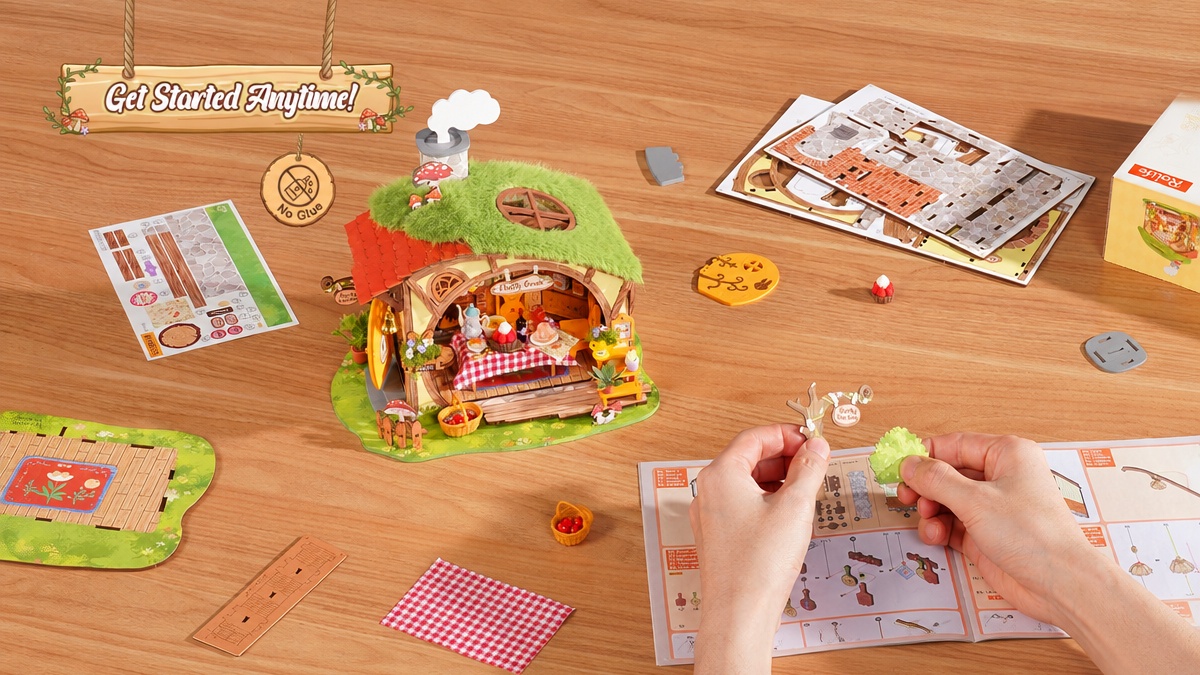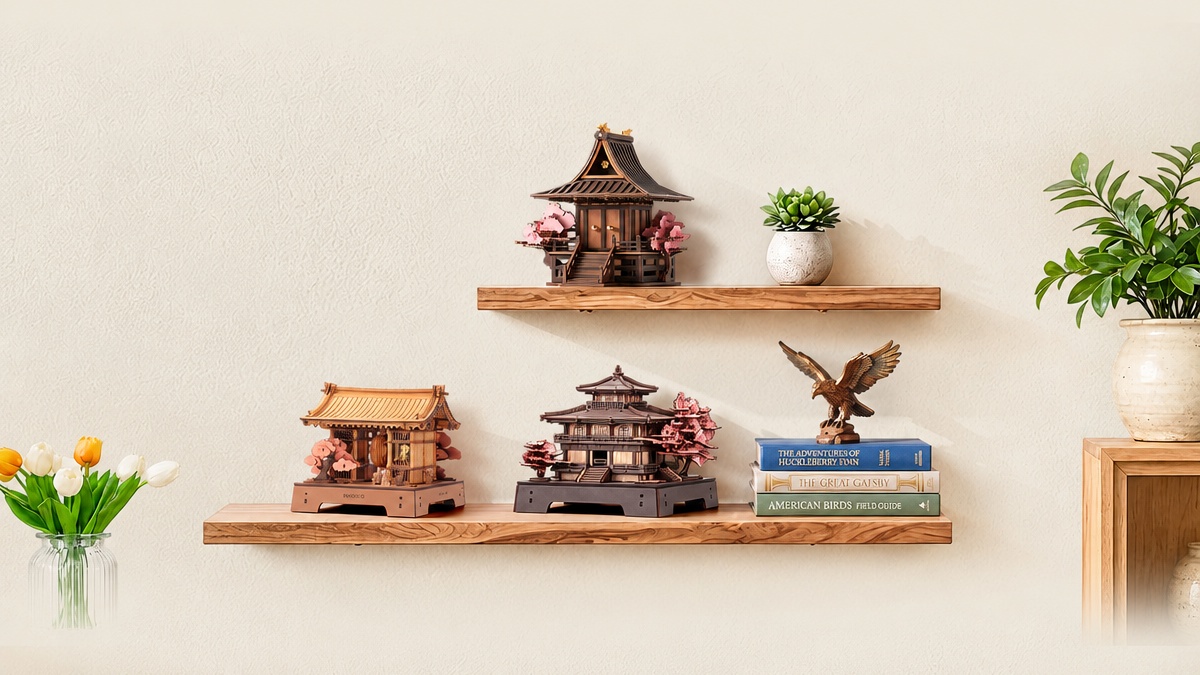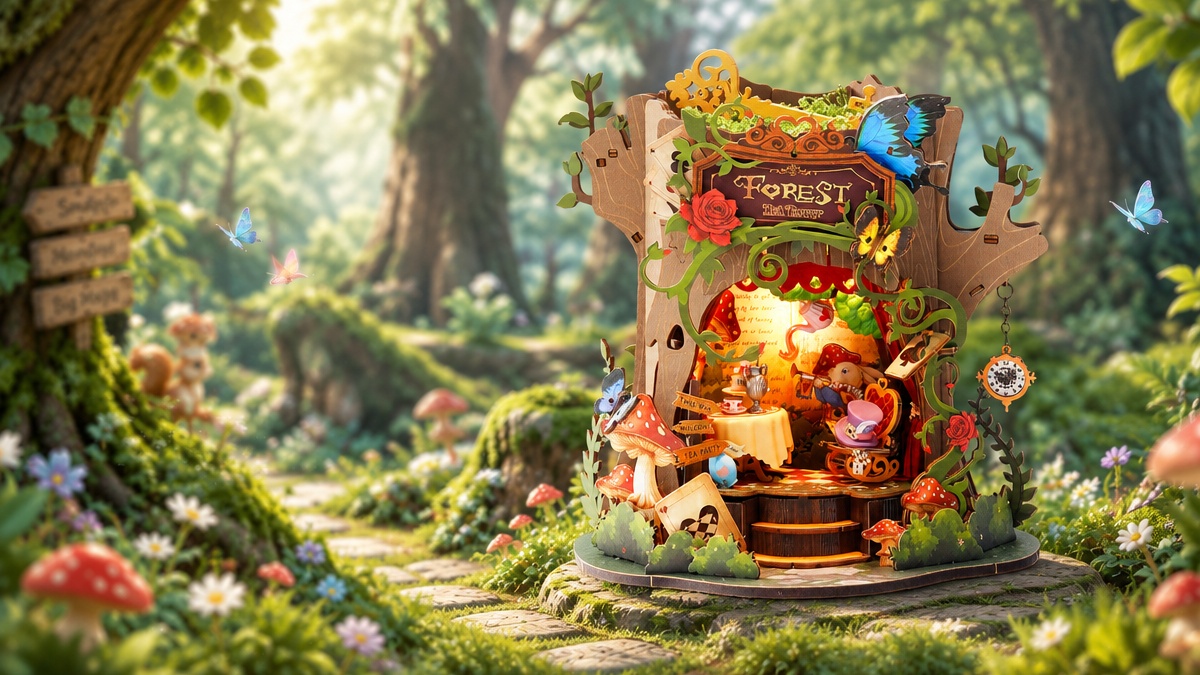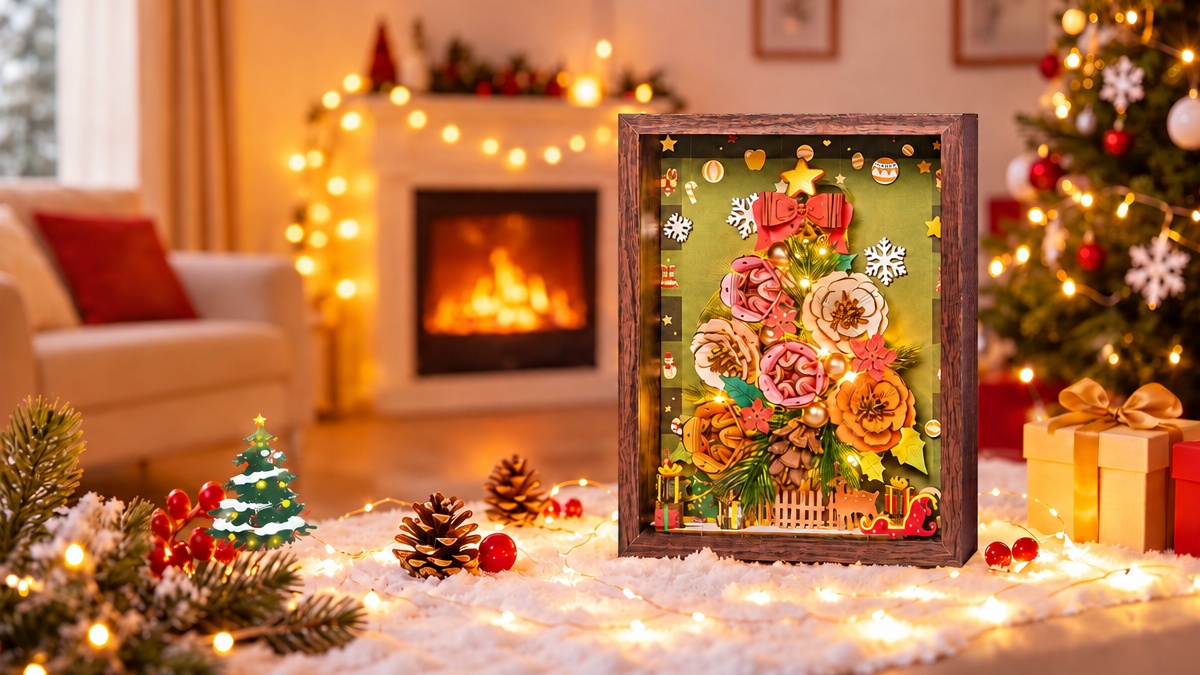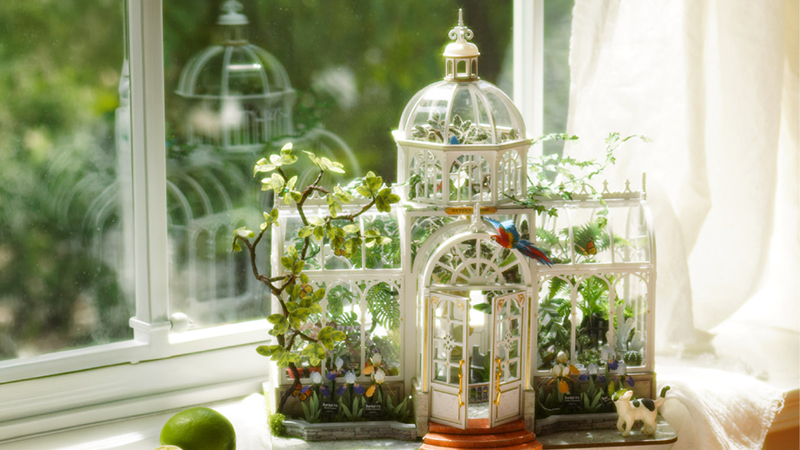
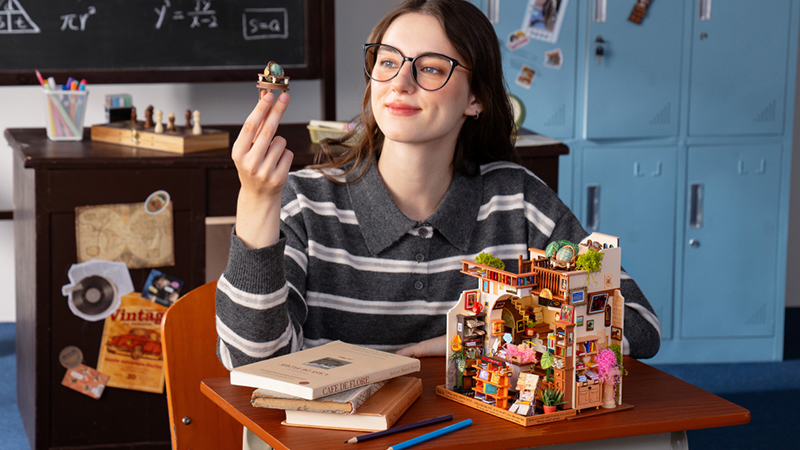
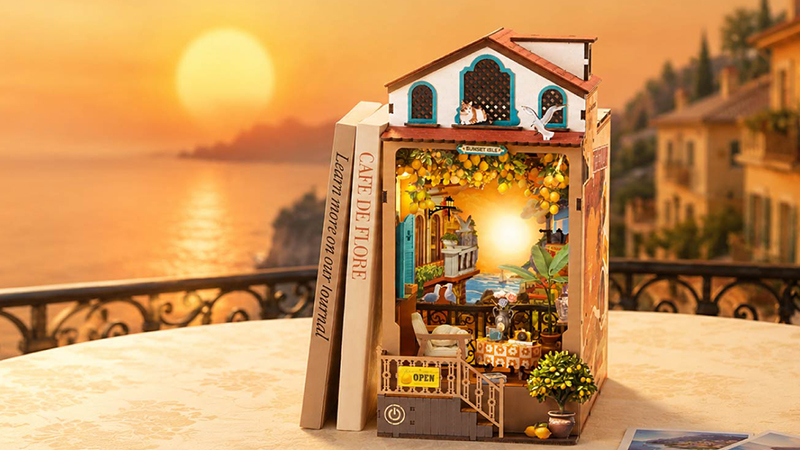
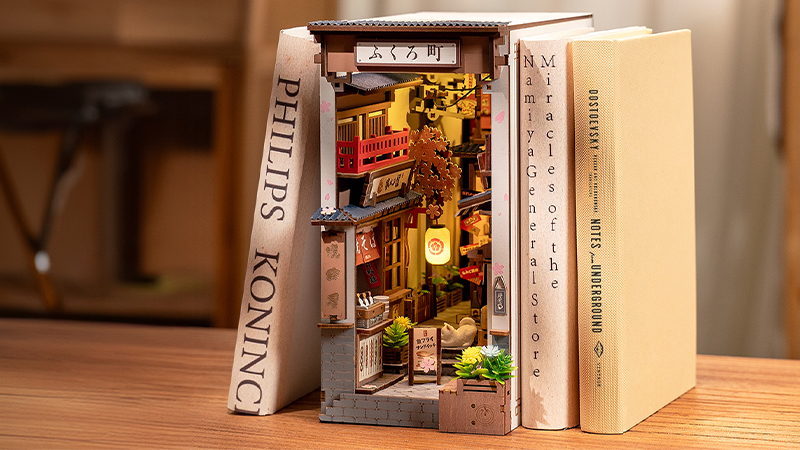

Choosing your first Rolife kit is easier when you compare the kind of building experience you want—not simply the smallest box or the shortest-looking project. Rolife kits can involve very different assembly styles, detail work, time commitments, tools, and display formats.
A good first kit should match your patience, available workspace, comfort with small parts, and what you want to display when the build is finished. Use this guide as the main decision page, then check the linked Help articles for current details about build time, glue, and assembly methods.
Quick Answer: What Is the Easiest Rolife Kit for Beginners?
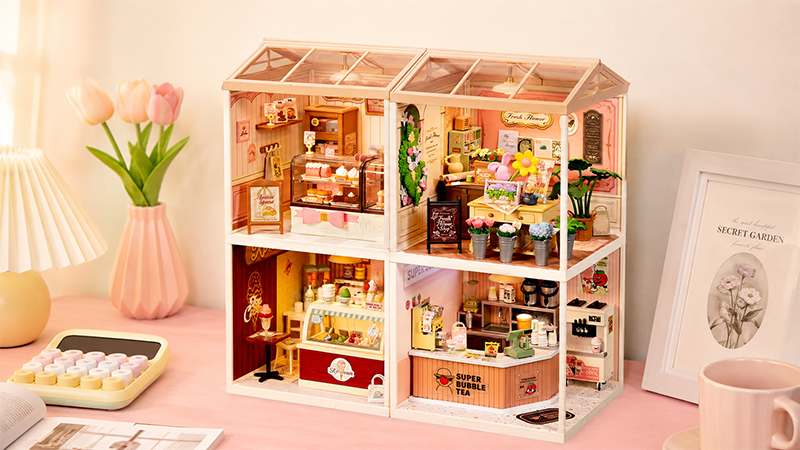
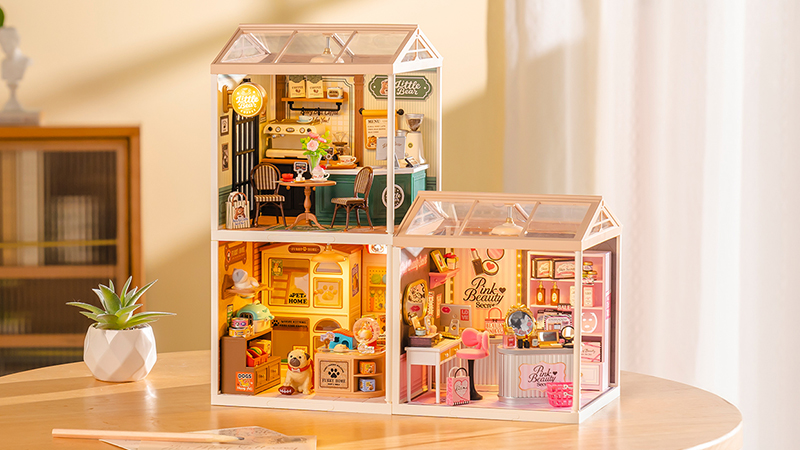
For many complete beginners, a compact Rolife Super Creator kit is an approachable place to start because the rooms use a clear modular format and create visible progress quickly. However, there is no single easiest kit for everyone. A beginner who enjoys wooden assembly may prefer a 3D wooden puzzle, while a book lover may be happier with a beginner-level Book Nook.
Choose by assembly method first, then compare the exact model's difficulty, estimated time, glue requirements, tools, lighting steps, and finished display size.
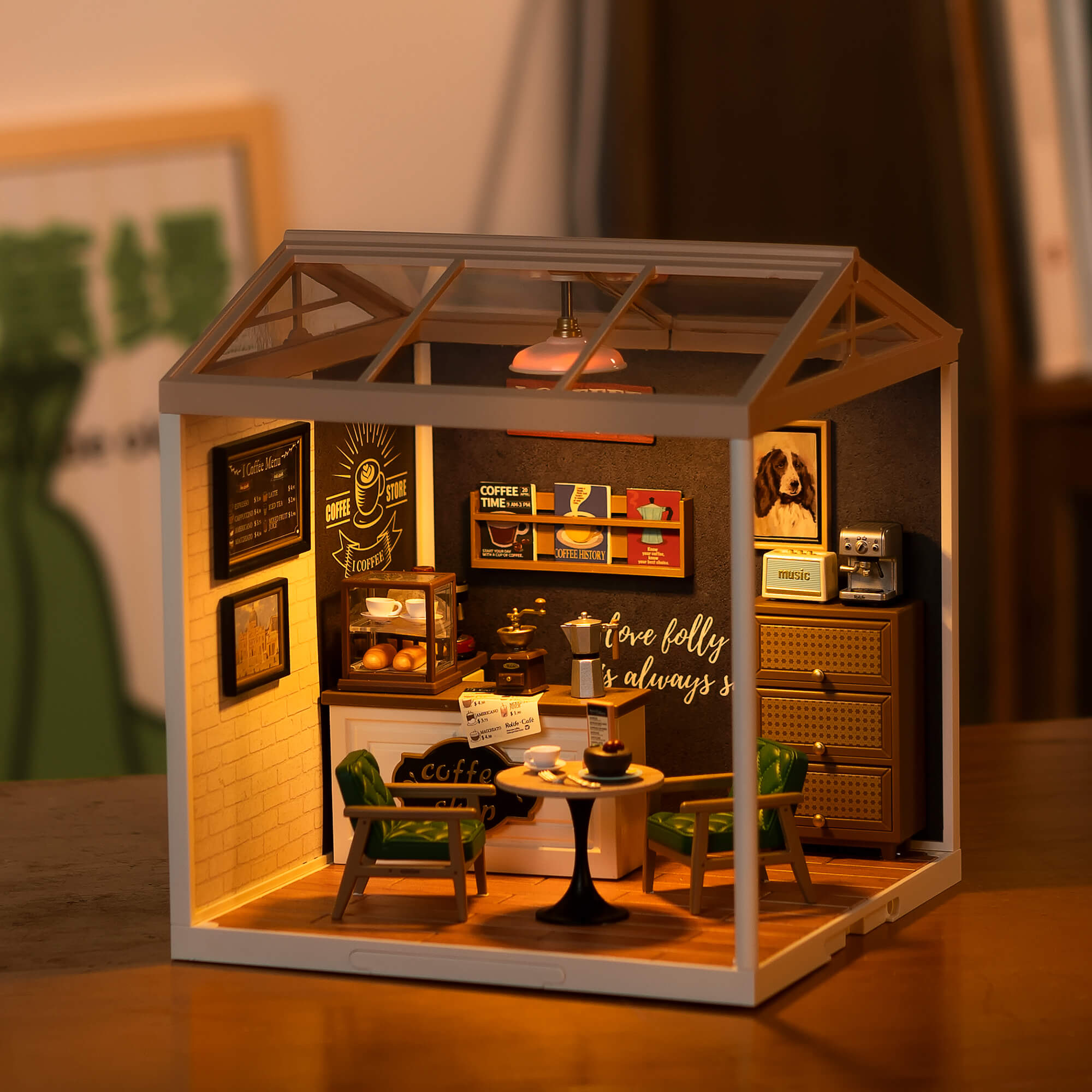
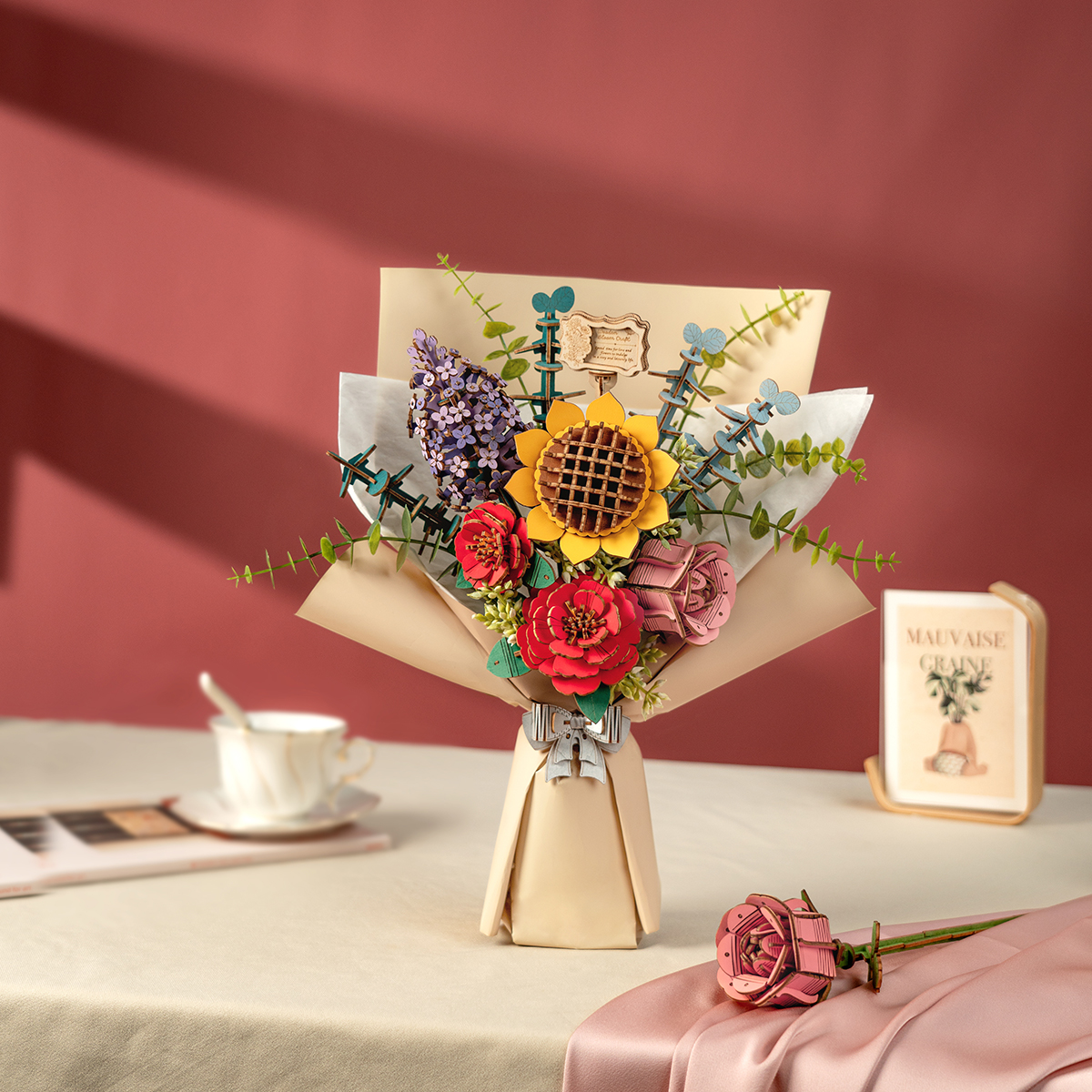
Use This Five-Question Beginner Fit Check
- What kind of handwork sounds enjoyable? Choose between modular room assembly, wooden press-fit construction, paper-and-detail crafting, or a bookshelf scene. The Rolife kit types guide explains how the main product lines differ.
- How much time do you realistically want to spend? Do not judge by box size alone. Compare the exact model or use the Rolife build-time guide for product-line ranges and planning advice.
- Do you want to avoid glue or detailed paper work? Requirements vary by product line, model, market, and version. Check the model instructions and read Do Rolife Kits Require Glue? before buying.
- How much fine detail feels satisfying rather than tiring? Tiny furniture, paper plants, repeated decorations, wiring, and close-fitting wooden parts create different kinds of difficulty.
- Where will the finished piece live? A modular room, Book Nook, freestanding miniature house, flower arrangement, and wooden model need different display spaces.
If one answer is still uncertain, choose the factor most likely to make you stop—time, glue, tiny parts, tools, or display space—and compare that before choosing by theme.
Compare Rolife Kit Types for a First Build
| Kit type | What the building experience emphasizes | May suit you if | Check before buying |
|---|---|---|---|
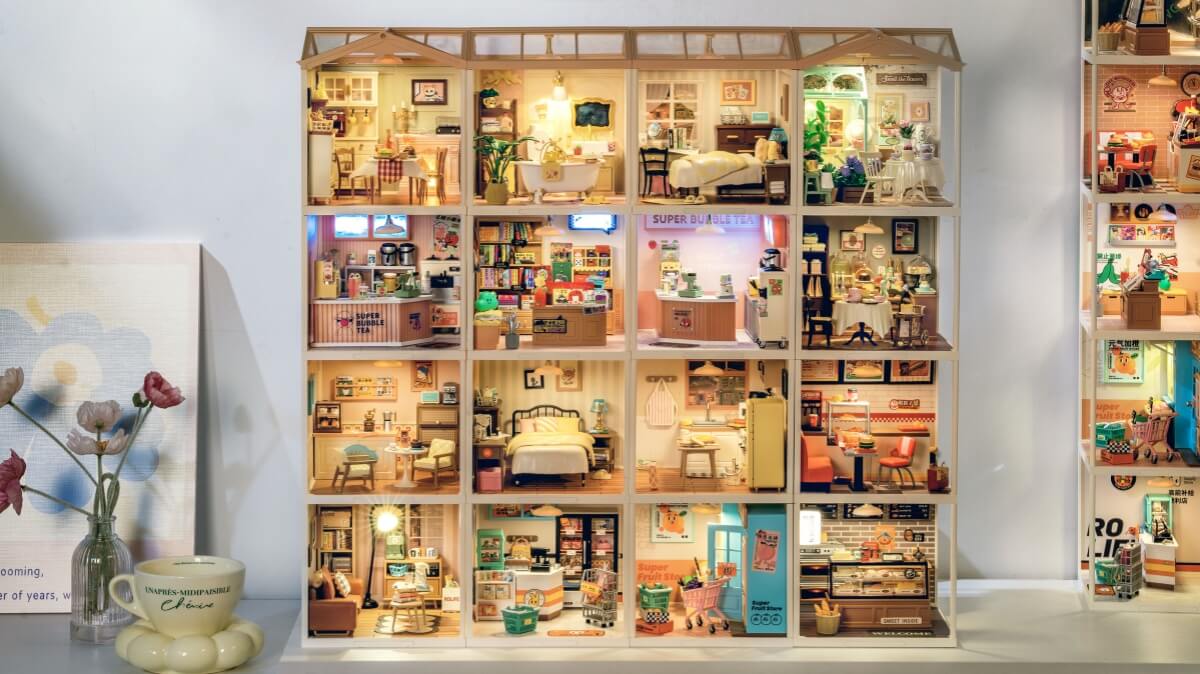
| Super Creator | Compact modular room assembly and decorating | You want a contained miniature scene and a clear starting structure | Exact difficulty, lighting steps, tools, and included accessories |
| Mini Super Creator | A smaller modular scene with a short, focused format | You want to test whether miniature building suits you before starting a larger project | Age guidance, small parts, lighting, and the exact assembly method |
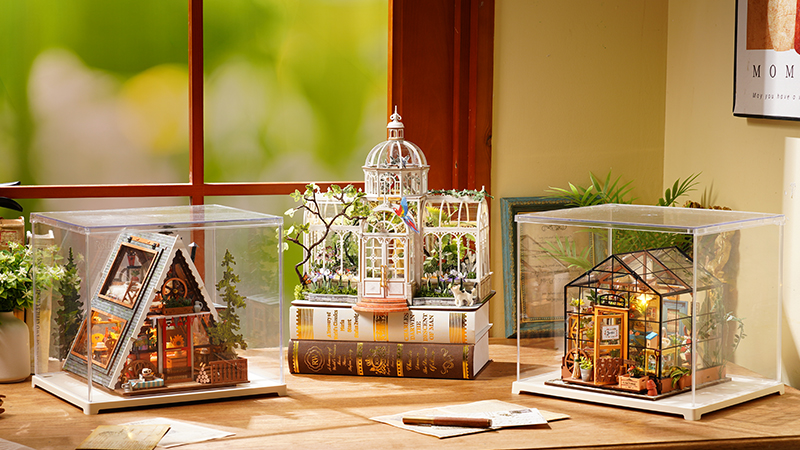
| Beginner Book Nook | Layered structural assembly designed for bookshelf display | You enjoy books and want the finished project to sit between them | Model difficulty, estimated time, lighting, switch access, and shelf space |
| 3D wooden puzzle | Press-fit wooden construction and mechanical or decorative form | You prefer structured assembly to furnishing a miniature room | Piece count, moving mechanisms, tight fits, and tool guidance |
| Traditional DIY miniature house | Furniture, paper details, decorating, and a longer scene-building process | You want an immersive craft and enjoy many small stages | Glue, paper work, wiring, tools, version, and model-specific time |
| Wooden flower kit | Decorative wooden assembly rather than room building | You want a giftable display craft and do not need a miniature interior | Shaping steps, piece size, tools, and the exact difficulty label |
These descriptions are orientation, not a substitute for the exact product page and instructions. Products within the same line can still differ. For a fuller breakdown of snap-fit, pre-made, paper-craft, and traditional structures, use Rolife Kit Types Explained.
When Super Creator Is a Strong First Choice
Super Creator is a practical starting point when you want a complete miniature room without committing to the longer paper-and-detail work found in some traditional miniature houses. The modular format can also appeal to collectors who may want to connect or display more rooms later.
When a Miniature House Is the Better First Choice
A beginner-level miniature house may be more satisfying if the classic Rolife experience—tiny furniture, interior styling, and layered decorative details—is the reason you want to build. Choose a simpler model and verify its assembly method rather than assuming every small house is easy. The DIY Miniature House Beginner Guide can help narrow this category.
When a Book Nook Is the Better First Choice
A Book Nook can be a good first project when bookshelf display is the main goal and you are comfortable with structural assembly. Start with the beginner Book Nook collection, then check the exact model's difficulty and lighting steps.
How Should Beginners Use Rolife Difficulty Levels?
Difficulty labels are a useful filter, but they do not tell you which type of work you will enjoy. Two kits with a similar difficulty level can feel different if one relies on wooden fitting while another includes more paper shaping, small decorations, or wiring.
| Difficulty label | How a beginner should use it |
|---|---|
| Basic or beginner | Start here when you want a lower-friction first experience, then confirm the exact assembly style. |
| Easy | Suitable for many new builders who are comfortable following instructions and handling small parts. |
| Intermediate | Consider it for a first build only when you enjoy the specific process and are comfortable taking more sessions. |
| Advanced | Usually better after you know which Rolife assembly tasks you enjoy and how you organize a longer project. |
The label is only one part of the decision. Also compare the instructions, tools, materials, lighting, model-specific time, and finished display format.
How Should Beginners Compare Time, Glue, Tools, and Batteries?
There is no universal beginner build time. A first build may take longer than the listed estimate because you are learning the symbols, sorting parts, and checking orientation. Use the build-time comparison for current product-line ranges, then check the exact model rather than using one time bracket as a rule for every beginner.
Glue requirements also vary. Some current modular and press-fit products are designed for glue-free standard assembly, while some traditional miniature houses use adhesive. Older and updated versions of a model may differ, and package contents can vary by market. The glue guide explains these distinctions in more detail.
Before buying, confirm:
- whether glue is required for standard assembly;
- whether tools, batteries, and lighting parts are included;
- whether the project includes paper shaping, wiring, painting, or other detail work;
- whether the exact age and difficulty guidance fit the builder;
- where an unfinished project can stay between sessions.
Which Rolife Kit Type Fits Different Beginners?
| What you want from the first build | Starting point to compare | Why |
|---|---|---|
| A compact modular miniature room | Super Creator | Contained format with a clear room structure |
| A short trial of miniature building | Mini Super Creator | Smaller format that can help you test your interest |
| A bookshelf display | Beginner Book Nook | Finished form is designed around books and shelf depth |
| Structured wooden assembly | Basic-difficulty 3D wooden puzzle | Focuses more on fitting a model together than decorating a room |
| Detailed miniature crafting | Beginner-level miniature house | Offers furniture, styling, and a more immersive process |
| A decorative craft rather than a room | Wooden flower kit | Creates a floral display without building an interior scene |
For a child or teen, first check the exact product's age guidance and safety information. Then use the child-readiness checklist to consider patience, instruction habits, fine-motor work, and adult support.
When Should a Beginner Choose a Different Kit?
Do not reject an entire product line simply because some models are detailed. Instead, pause before buying when the exact kit includes several tasks you already know you dislike, such as long repetitive paper work, delicate wiring, tight wooden fitting, many tiny decorations, or a build that cannot stay set up between sessions.
A visually impressive kit is not automatically the best first kit. Choose one whose process sounds enjoyable even before you see the finished photo.
Tips for Building Your First Rolife Kit
- Read the instructions before removing parts. Identify lighting, glue, tools, and any steps that need special care.
- Sort only what you need for the current stage. Keep numbered sheets and bags intact until the instructions call for them.
- Test-fit before forcing a part. Recheck the number, orientation, and edge before applying more pressure.
- Test lights at the stage specified in the instructions. Avoid closing the structure before confirming that the components work.
- Plan a stopping point. Use a tray, divided container, or lidded box so the project can continue over more than one session.
- Use the exact product guidance. General articles help you compare, but the manual for the model in your box takes priority.
Frequently Asked Questions
What Is the Easiest Rolife Kit for Beginners?
For many complete beginners, Super Creator is an approachable starting line because it offers a compact modular room format. The easiest choice still depends on whether you prefer room decorating, wooden assembly, a bookshelf scene, or another type of craft.
Should a Beginner Always Choose the Shortest Build Time?
No. A shorter project can reduce commitment, but assembly method and detail type matter too. Choose a process you enjoy, then compare the exact model's estimated time.
Do Beginner Rolife Kits Require Glue?
Some do and some do not. Requirements vary by product line, model, version, and market. Check the exact instructions and product information rather than assuming that every beginner kit is glue-free.
Are Rolife Book Nook Kits Good for Beginners?
Some are. Choose a beginner-level model when bookshelf display is important to you, and confirm the assembly, lighting, time, and shelf-space requirements before buying.
Can a Beginner Start With a Traditional Miniature House?
Yes, when the builder enjoys detailed crafting and chooses a model whose difficulty, assembly method, tools, and time commitment fit their experience. A modular kit may be easier to start, but it is not automatically the most satisfying choice for everyone.