
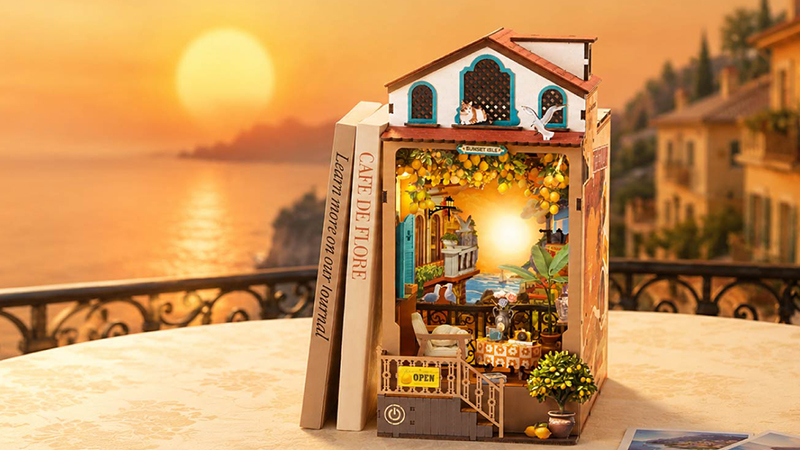
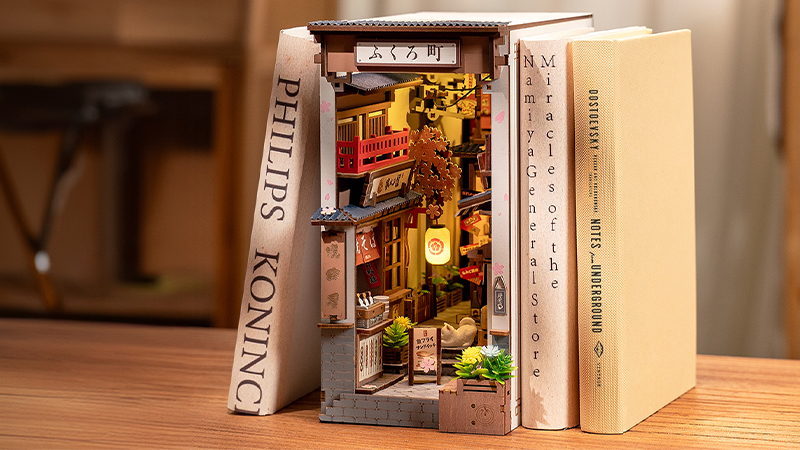
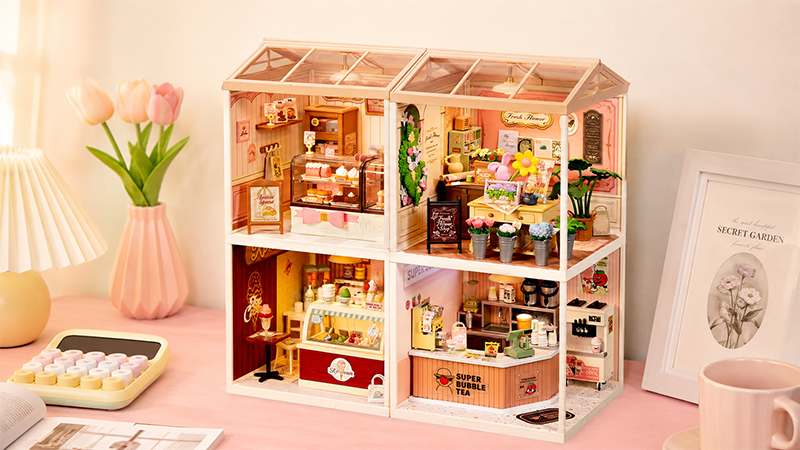
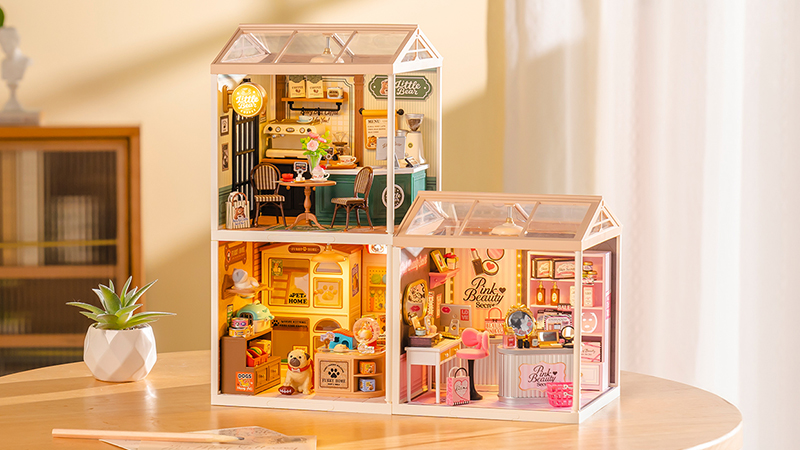

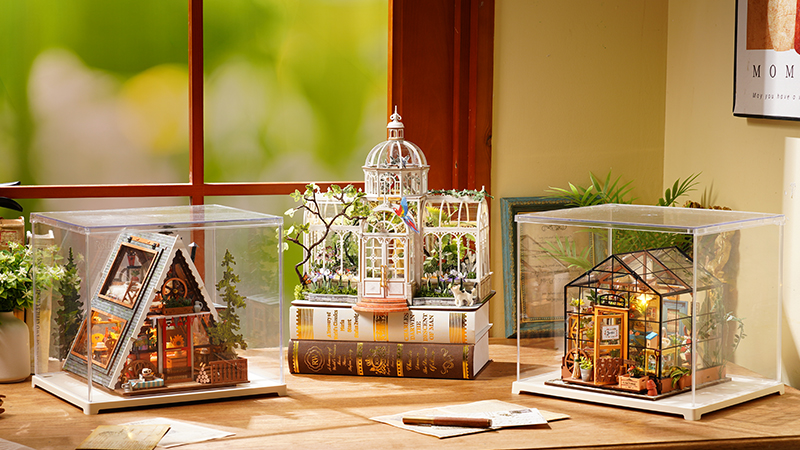
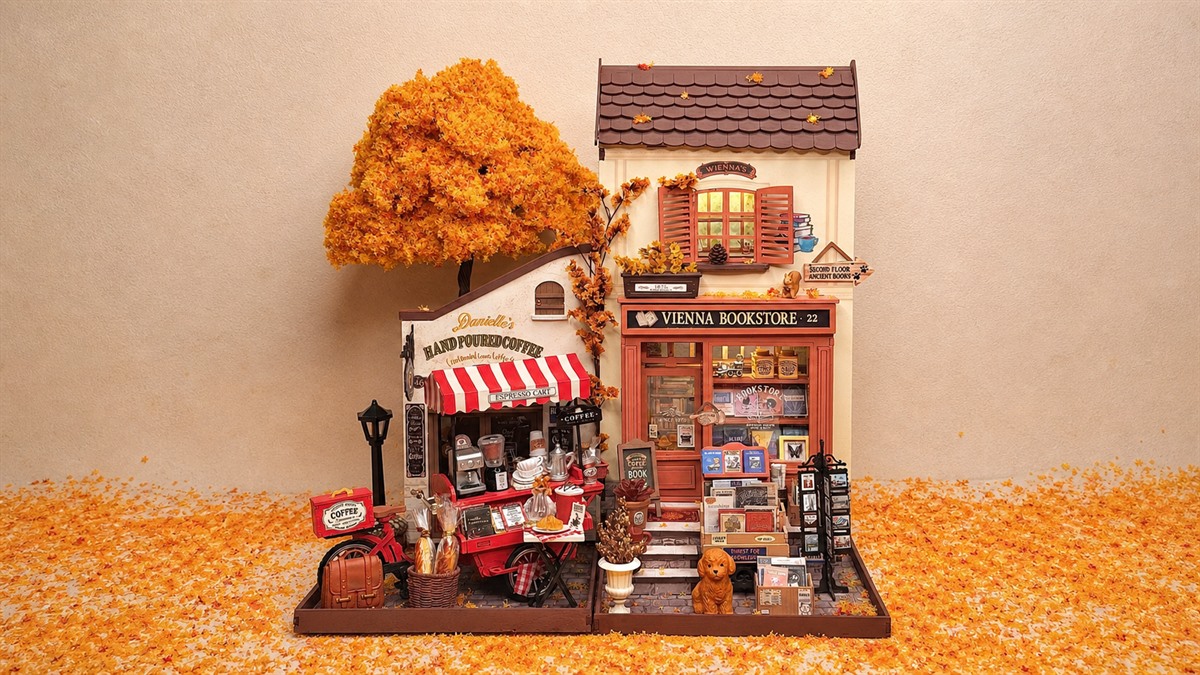
Quick answer: Rolife kits make flexible fall decor because one miniature can hold color, light, texture, and story in a small display area. Choose a forest, bookstore, or street scene that already fits your autumn mood, then add removable leaves, trees, and seasonal details so the display can change again when the next season arrives.
The most memorable fall decor often begins with a feeling rather than a shopping list: a quiet afternoon in a bookstore, a glowing forest hideaway, or coffee under amber trees. Three Rolife Community makers turned those feelings into miniature worlds, showing how a few focused changes can make an existing kit feel deeply personal and unmistakably autumnal.
Why Are Miniature Displays Perfect for Seasonal Decorating?
A miniature creates a complete seasonal moment without requiring a room-wide makeover. That makes it especially useful for apartments, desks, bookshelves, entryways, and anyone who prefers decor that is easy to refresh and collect over time.
- Small footprint: One shelf or tabletop can hold an entire fall story without adding clutter across the room.
- Easy to refresh: Removable foliage, figures, signs, and textile details can change the mood without rebuilding the original kit.
- Collectible by theme: A forest cottage, bookstore, cafe, or home interior can represent a different seasonal memory.
- Reusable every year: Store the seasonal accessories together, then bring the display back with a new arrangement next fall.
The same miniature can move through the calendar: spring flowers can give way to a summer outdoor scene, fall leaves, and winter lights. A stable central build with removable seasonal layers becomes a long-term home decor piece rather than a one-season craft.
Which Rolife Miniature Scenes Work Best for Fall Decor?
Start with the kind of autumn story you want to see at home. Forest structures carry foliage naturally, bookstores suit quiet reading corners, and street scenes create a warmer social atmosphere around coffee, windows, and evening light.
| Rolife scene | Best fall mood | Why it works |
|---|---|---|
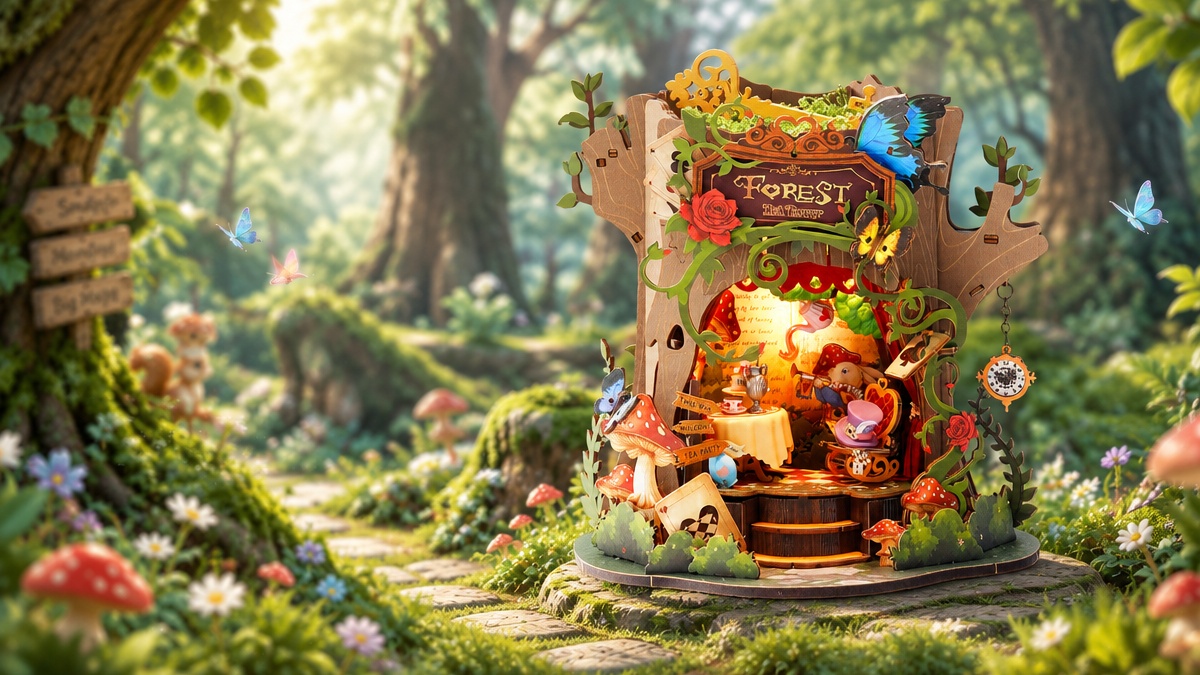
| Fairytale Tree House DG179 | Woodland fall | The tree-house structure makes foliage a natural part of the scene. |
| Corner Bookstore DG164 | Cozy reading corner | Warm rooms contrast beautifully with leaves and darker exterior tones. |
| Vienna Bookstore DG183 | Autumn street scene | The storefront pairs naturally with a tree, figures, and a nearby cafe or cart. |
Choose the Fairytale Tree House when foliage is the main visual feature, the Corner Bookstore for an intimate reading display, or the Vienna Bookstore when you want a more complete lifestyle scene. The product should carry the story before seasonal accessories are added.
What Makes a Miniature Scene Feel Like Fall?
A convincing autumn miniature uses more than orange leaves. It combines a controlled color palette, layered texture, warm light, and a small everyday story. Choose one mood first, then let every added detail support it.
How Did Rolife Community Makers Turn Miniatures Into Personal Fall Stories?
These Rolife Community examples are more than decorating exercises. Each maker began with a personal version of fall, chose a Rolife scene that could carry it, and changed only the details needed to make that story visible.
1. Turn a Fairytale Tree House Into an Amber Forest
Maker: Rolife Community maker
Creation: Fairytale Tree House DG179
What inspired them: A warm animated forest, autumn tree-house references, and favorite tiny characters.
What they changed: Orange-red trees rise around the roof, while moss, mushrooms, fallen leaves, and figures soften the base and extend the story beyond the original structure.
Why it works: The seasonal treatment travels from the ground to the canopy, so fall feels built into the miniature rather than scattered on top.
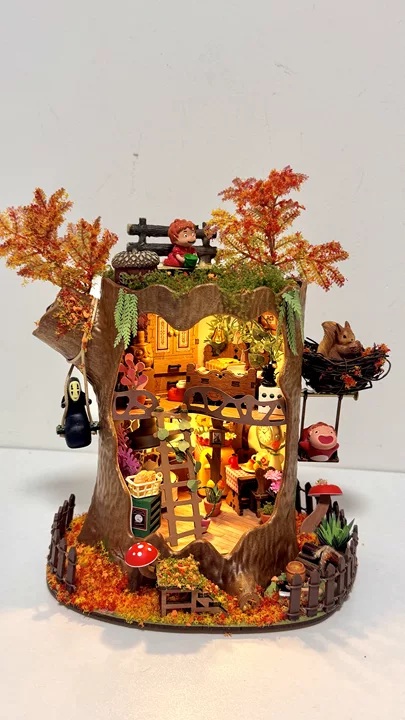
What works especially well is the vertical layering. The fall treatment begins at ground level, climbs the trunk, and finishes above the roofline. Try choosing one hero tree, repeating two or three leaf colors around the base, and reserving the brightest orange for the upper canopy. Add personal figures only where they seem to be doing something—waiting by a door, sitting beneath a tree, or exploring a path.
2. Let Leaves Drift Through a Corner Bookstore
Maker: Rolife Community maker
Creation: Corner Bookstore DG164
What inspired them: The feeling of reading indoors while autumn leaves drift slowly outside.
What they changed: Handmade tree trunks and faux foliage frame the open rooms, while scattered leaves suggest that a breeze has just moved through the scene.
Why it works: Most of the seasonal storytelling stays around the edges, preserving the bookstore interior and its warm contrast with the darker exterior.
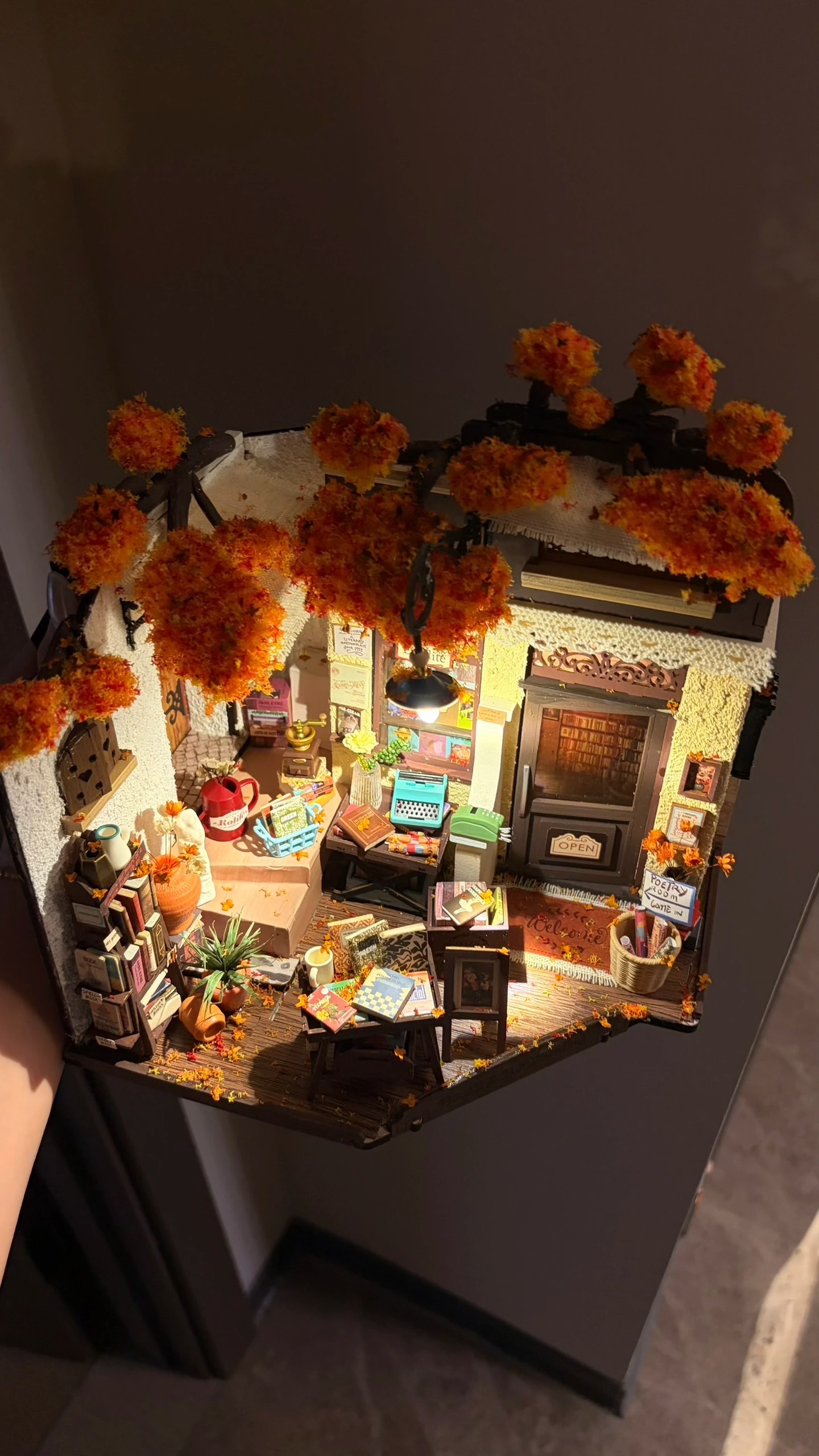
The useful lesson is that you do not have to alter every room. The bookstore remains readable and inviting; most of the seasonal storytelling happens around its edges. Add one tree trunk at the side rather than centering it. Place a few leaves on the canopy, a few on ledges, and more on the ground. That three-level rhythm suggests movement without hiding the miniature furniture.
3. Build a Slow Autumn Street Around a Bookshop and Coffee Cart
Maker: Rolife Community maker
Creation: Vienna Bookstore DG183 with the Aromatic Coffee Cart DG182
What inspired them: A slow autumn street corner where someone can buy coffee, browse books, and spend an unhurried afternoon.
What they changed: A golden tree, leaf-covered ground, small figures, and warm light connect the bookshop and coffee cart as one street scene.
Why it works: The tree visually joins two destinations, turning separate miniatures into a believable routine and a more complete autumn home display.
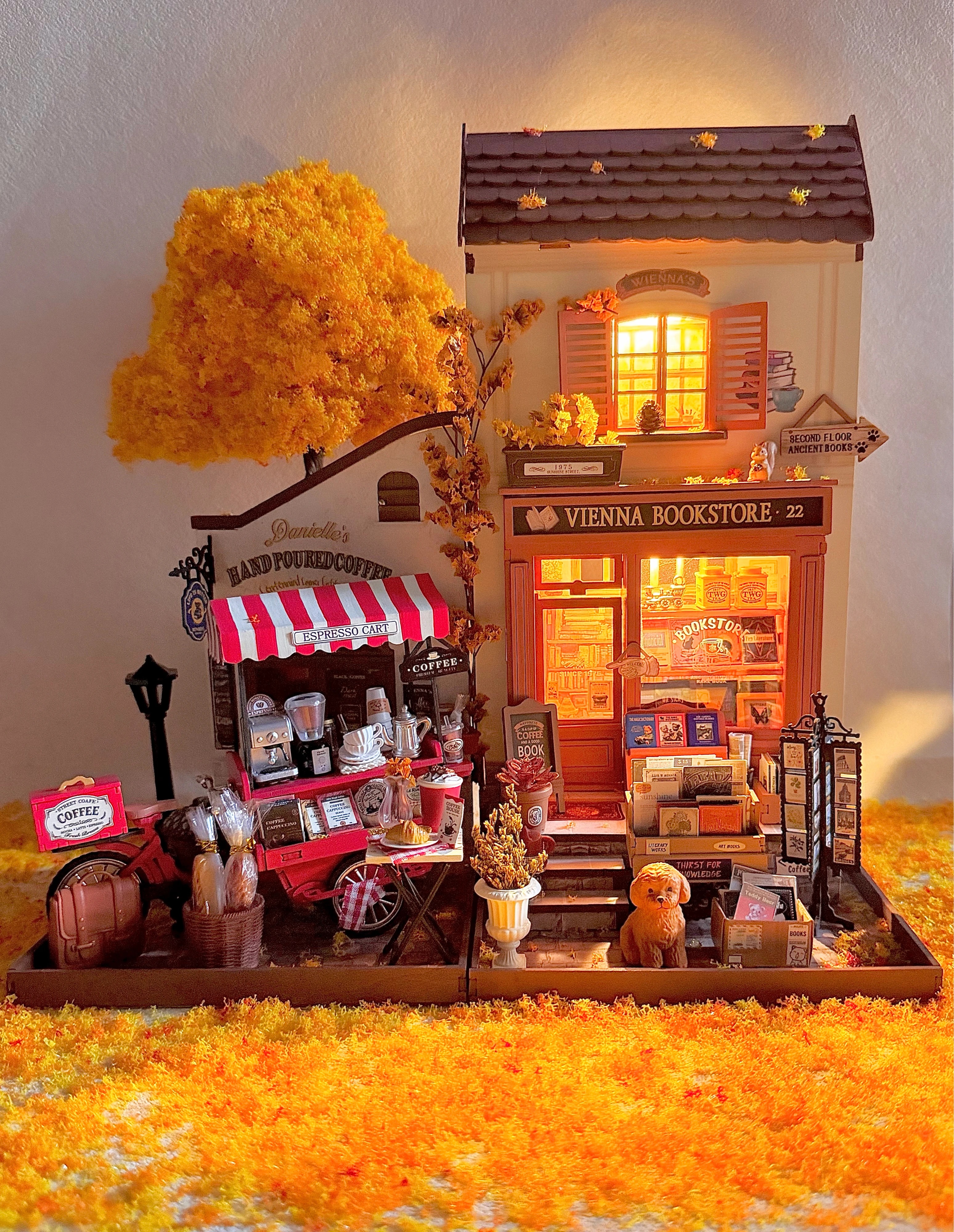
This scene feels especially homelike because it connects two destinations. The tree is not only decoration; it visually joins the cafe and bookstore. Try pairing two mini scenes that share a believable routine—books and coffee, flowers and a bakery, or a kitchen and dining room. Repeat one autumn material across both pieces so they read as one place.
How Can You Create Your Own Fall Miniature Makeover?
Start With One Sentence
Before choosing materials, write the moment you want to create: “a rainy afternoon in a bookshop,” “a glowing forest at dusk,” or “coffee beneath a maple tree.” This sentence helps you reject details that are pretty but unrelated.
Build a Simple Color Recipe
Try a 60-30-10 approach: let the original house and natural browns carry most of the scene, use ochre or rust as the supporting seasonal color, then add a small amount of brighter orange or red. The exact percentages do not need to be measured; the point is to avoid giving every fall color equal weight.
Layer Leaves Instead of Pouring Them Everywhere
- Canopy: Clustered leaves establish the season from a distance.
- Mid-level: A few leaves on railings, ledges, roofs, or branches suggest movement.
- Ground: A denser but irregular carpet helps the scene feel settled into autumn.
Add One Vertical Seasonal Element
A tree, climbing vine, hanging garland, or tall stack of firewood can pull the eye through the display. One strong vertical detail is usually more effective than many small items spread evenly across the base.
Use Light as Part of the Story
Warm built-in light can make a reading room or cafe feel inviting as evenings grow darker. Keep windows, doors, and lighting controls clear, and use the kit's lighting only as intended. For the larger home display, choose battery-powered ambient lights rather than an open flame near paper, faux foliage, or miniature parts.
Keep Seasonal Additions Removable
If you enjoy changing your display through the year, mount leaf clusters, pumpkins, signs, and small figures on discreet removable bases. You can refresh the scene for winter without rebuilding the original miniature.
How Can a Miniature Bring Fall Atmosphere Into a Room?
Treat the miniature as the center of a small vignette, not as an isolated object. Leave enough open space around it for the details to breathe, then echo one or two colors nearby.
- On a bookshelf: Place it beside warm-toned book spines and a small wooden object, keeping the front opening visible.
- In a reading corner: Set a bookstore scene where its light can be seen from a chair, with a folded rust or olive textile nearby.
- On an entryway console: Use a shallow tray to contain a few faux leaves or pinecones so the arrangement feels intentional and easy to clean.
- On a desk: Keep the seasonal layer compact and removable, leaving room to work and access switches or battery compartments.
What Common Mistakes Make Fall Miniatures Look Too Busy?
- Using every autumn color at the same intensity. Choose one dominant leaf color and let the others act as accents.
- Covering the original storytelling. Do not hide tiny books, furniture, paths, doors, or windows under foliage.
- Repeating leaves too evenly. Natural-looking clusters vary in size and leave some quiet areas exposed.
- Adding details without a scale check. Test a tree, pumpkin, or figure beside the doorway before fixing it in place.
- Forgetting the viewing angle. Style the side that faces the room, then check how the miniature looks when its light is on.
Key takeaway: A fall miniature feels convincing when color, texture, light, and story point in the same direction. Begin with one mood, add leaves at several heights, preserve the original scene's best details, and give the finished piece room to glow.
Ready to Create a Small Autumn World?
Choose a scene that already fits the story you want to tell. Browse Rolife DIY miniature house kits for forest, home, shop, and cafe settings, or explore bookstore and study miniature kits for a cozy reading-corner display. Then add only the autumn details that make your tiny world feel like your own.
Frequently Asked Questions
Do I need to rebuild a miniature house to give it a fall theme?
No. You can keep the finished structure intact and add removable trees, leaf clusters, tiny signs, figures, and a seasonal base around it.
What colors work best for fall miniature decor?
Start with warm brown, ochre, rust, muted green, and cream. Add brighter orange or red sparingly so the scene keeps depth rather than becoming one flat block of color.
How do I make miniature fallen leaves look natural?
Mix at least two sizes or tones, gather some leaves in clusters, and leave portions of the ground visible. A few leaves on ledges and branches help connect the canopy to the floor.
Where is the best place to display a fall miniature?
A bookshelf, reading corner, side table, desk, or entryway console can all work. Choose a stable surface with enough space to see the front and reach any lighting control.
Can I use real leaves in a miniature scene?
Pressed leaves can be beautiful, but they may fade or crumble. Faux foliage or sealed paper leaves are usually easier to store, clean, and reuse as removable seasonal decor.
Photo credits: Rolife Community images.