

Quick answer: Choose by the experience you want to revisit on your shelf. Sakura Densya feels like a spring tram journey; Sakura Wine Alley creates a warm evening street; Nostalgic Corner Shop offers the richest retro-store detail; and Falling Sakura turns the shelf into a glowing floral fantasy. Then check build time, difficulty, and finished size before you decide.
A Japanese-style book nook can make a bookshelf feel like a doorway: a tram disappears beneath cherry blossoms, a lantern glows at the end of a narrow alley, or a neighborhood shop waits with its shelves still full. Yet these kits do not all create the same mood—or ask for the same amount of time and patience.
This guide compares four Rolife designs using the details that matter after the first impression: the story each scene tells, the official difficulty rating, piece count, estimated build time, finished dimensions, and the kind of shelf display it creates. If you are choosing your first Japanese book nook—or adding a contrasting scene to a collection—start with the experience you want, then confirm that the build and footprint fit your space.
What Counts as a Japanese-Style Book Nook?
A book nook is a miniature scene designed to sit on or between books. Japanese-inspired designs often use recognizable visual cues such as narrow streets, tiled roofs, hanging signs, cherry blossoms, trains, warm storefront lighting, and compact neighborhood architecture. The strongest designs do more than collect those details: they create a specific point of view, as if you are standing at the entrance to a place and looking into its story.
That point of view is why two kits with sakura can feel completely different. One may emphasize travel and depth, another nightlife and food culture, and another a dreamlike landscape. Treat “Japanese style” as the broad theme—not the final buying decision.
Japanese-Style Book Nook Comparison
Use this table as a first filter. Difficulty ratings, piece counts, assembly times, and dimensions below are taken from the current Rolife product pages.
| Kit | Experience | Build commitment | Finished size | Best for |
|---|---|---|---|---|
| Nostalgic Corner Shop TGE05 | A richly stocked Showa-era neighborhood shop | 4/5 difficulty · 225 pieces · about 11 hours | 24.6 × 15.9 × 18.7 cm | Nostalgia lovers and detail-focused builders |
| Sakura Densya TGB01 | A spring tram journey through a Japanese street | 4/5 difficulty · 340 pieces · about 6 hours | 19 × 11.5 × 22 cm | Travel, train and cinematic-scene fans |
| Sakura Wine Alley TGB11 | A lantern-lit evening walk past tiny food and drink stops | 3/5 difficulty · 249 pieces · about 3.5 hours | 11.1 × 19.5 × 22.1 cm | Urban-nightlife decor fans and shorter-project seekers |
| Falling Sakura TGB05 | A luminous cherry-blossom landscape rather than a city street | 4/5 difficulty · 240 pieces · about 3 hours | 10.1 × 18.7 × 24.2 cm | Fantasy, floral and dramatic-lighting fans |
1. Nostalgic Corner Shop TGE05: Best for Retro Detail and a Wider Display
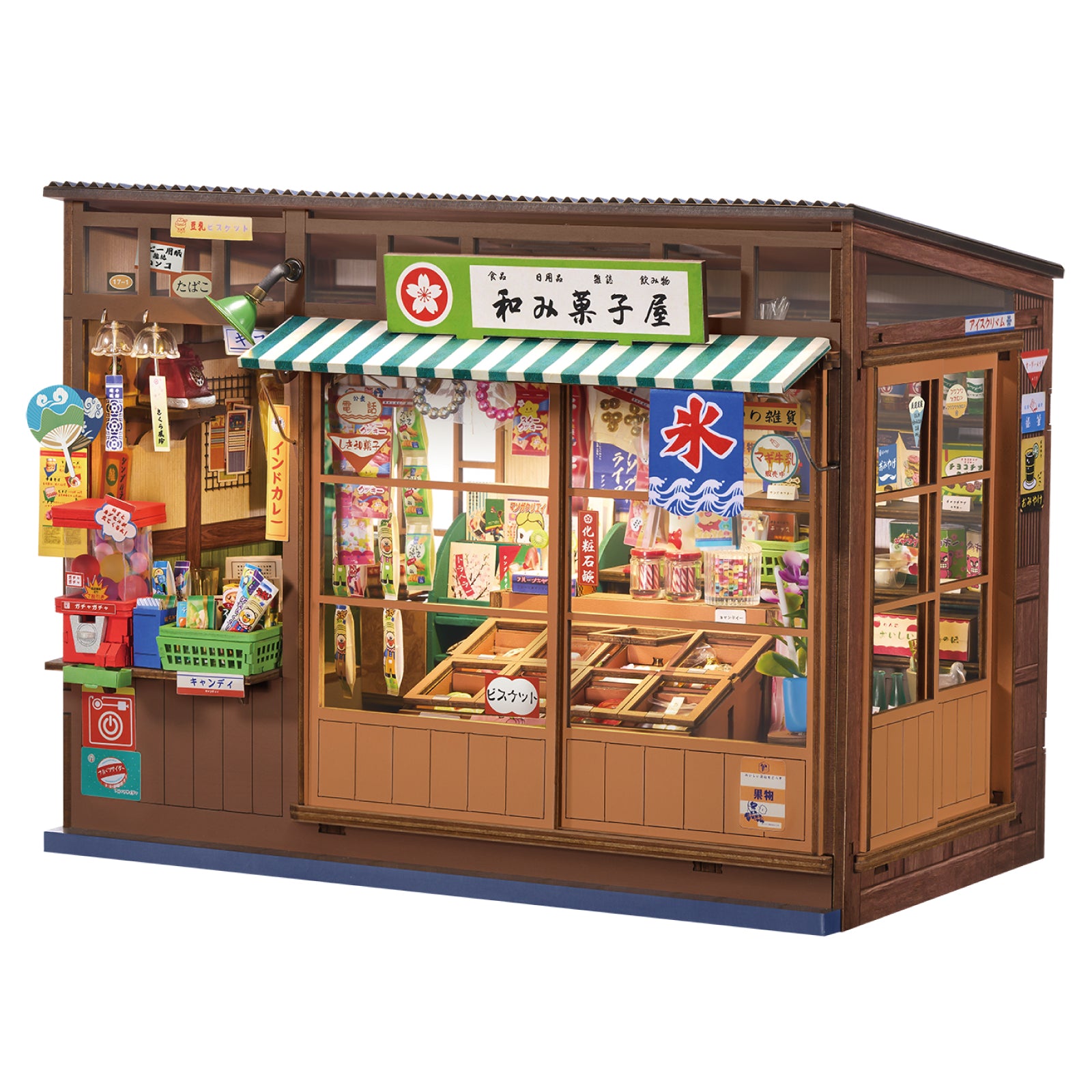
Nostalgic Corner Shop is the choice for someone who wants to study a miniature rather than only glance into it. The Showa-era shop is crowded with sweets, magazines, capsule toys, signs, baskets, counters, and shelves. It feels inhabited, and the broader corner-store format lets details appear across the front and side instead of being confined to one narrow tunnel.
The tradeoff is commitment. Rolife rates it 4/5 for difficulty, with 225 pieces and an estimated 11-hour assembly time—the longest build in this comparison. Its 24.6 × 15.9 × 18.7 cm finished size is also substantially wider than a conventional bookshelf insert. Measure your intended shelf or tabletop before buying.
Choose it if your core motivation is nostalgia, close-up detail, or the pleasure of a longer, slower project. It is especially suited to a low shelf, sideboard, desk, or display surface where viewers can approach it from more than one angle.
Explore Nostalgic Corner Shop TGE05.
2. Sakura Densya TGB01: Best for a Cinematic Spring Journey
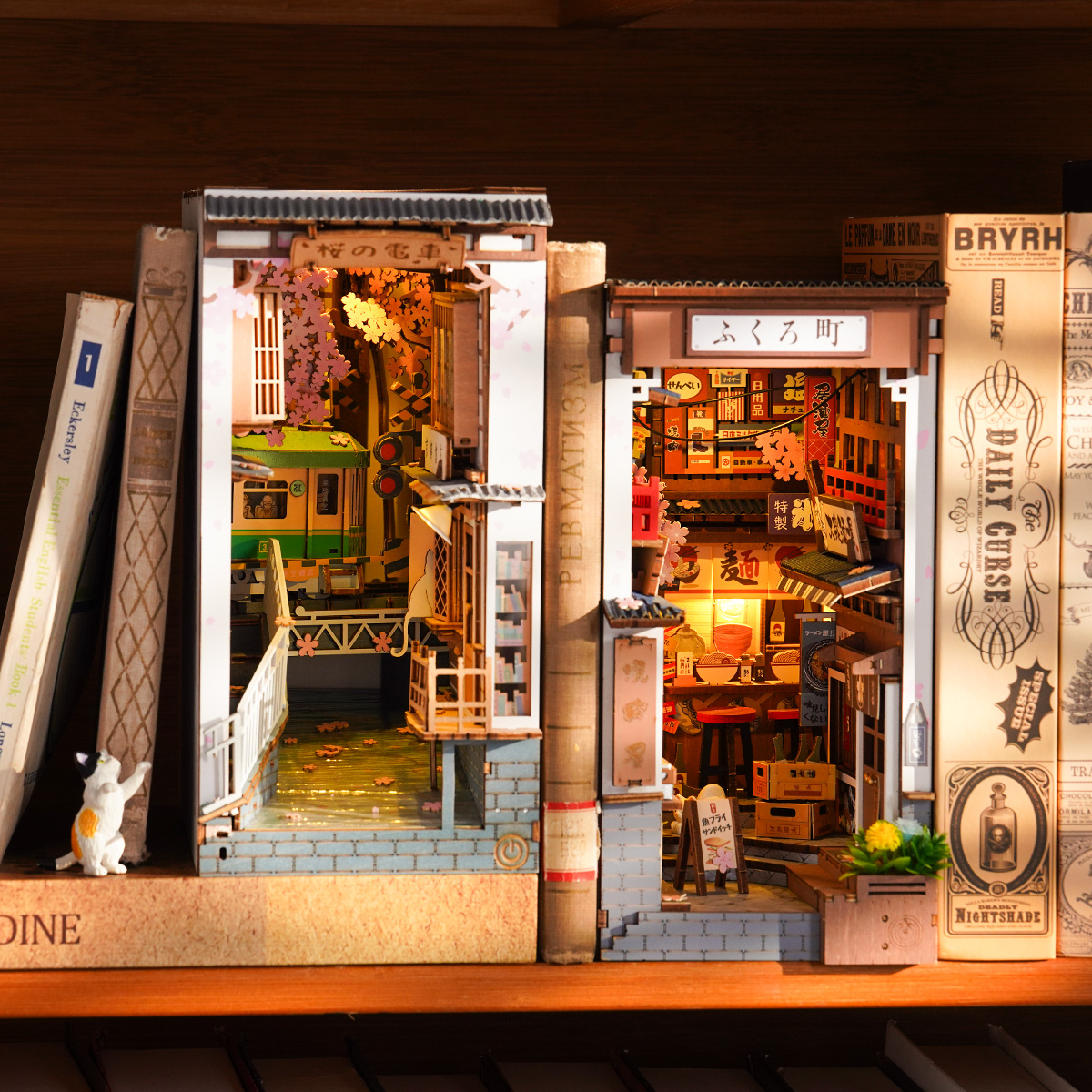
Rolife Sakura Densya TGB01 illuminated tram street under cherry blossoms on a bookshelf.
Sakura Densya frames a tram beneath cherry blossoms, turning the view into a moment of movement. The tracks and street pull the eye inward, while the train gives the scene a clear narrative: you are arriving, departing, or watching a spring journey pass.
This kit has the highest piece count in the group at 340 pieces. Rolife lists a 4/5 difficulty rating and an estimated six-hour assembly time. That combination makes it better described as a rewarding compact project than an automatically beginner-friendly one. A patient first-time builder may still enjoy it, but the decision should be based on comfort with detailed assembly—not only on the soft color palette.
At 19 × 11.5 × 22 cm, Sakura Densya has a relatively shallow footprint and works well when shelf depth is limited. Choose it for train lovers, Japan-travel dreamers, and anyone who wants the strongest sense of a journey continuing beyond the frame.
Explore Sakura Densya TGB01.
3. Sakura Wine Alley TGB11: Best for Evening Atmosphere and a Shorter Build
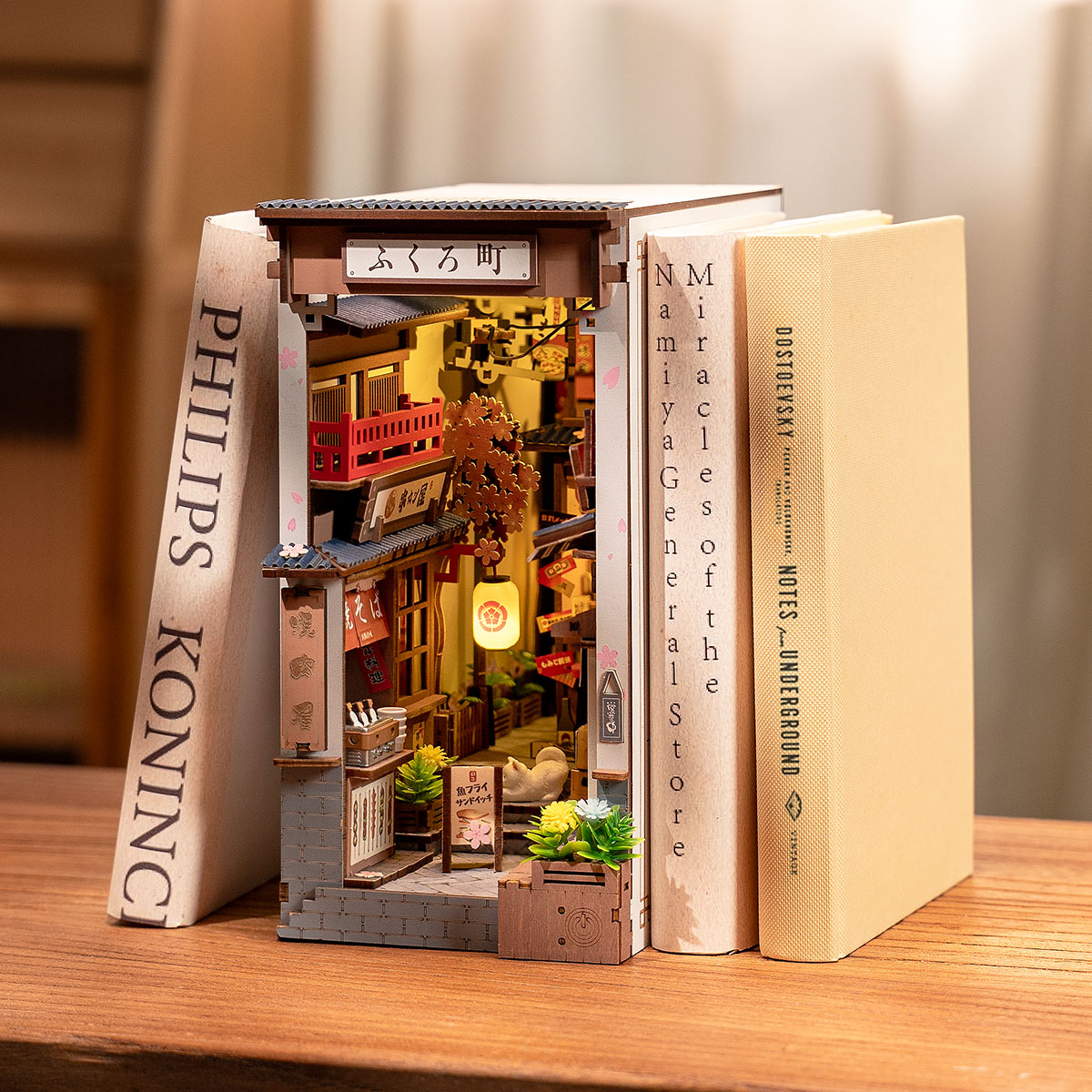
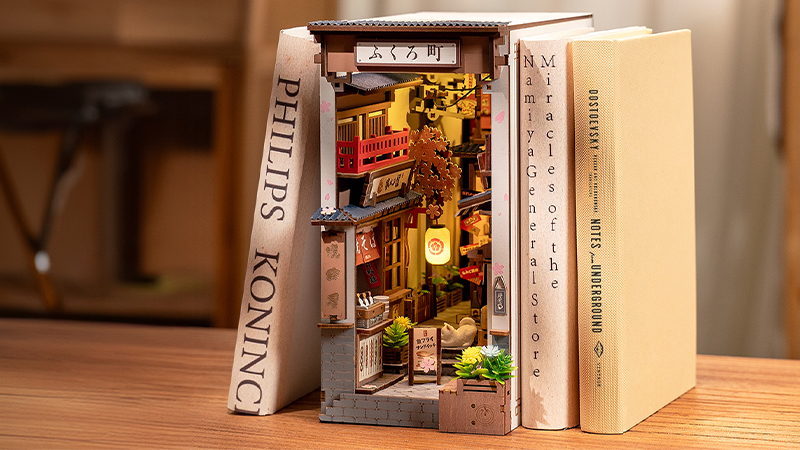
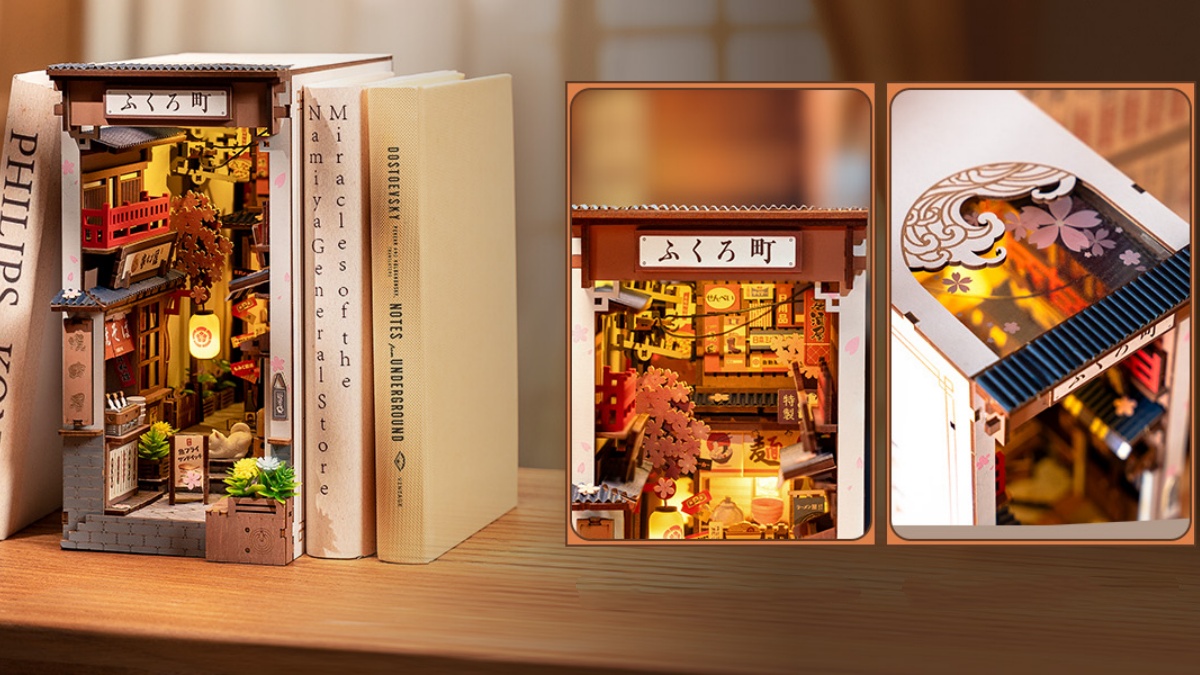
Rolife Sakura Wine Alley TGB11 lantern-lit Japanese evening alley displayed between books.
Sakura Wine Alley shifts the story from daytime travel to an evening walk. Warm lanterns, compact storefronts, hanging signs, food-and-drink details, and a narrow path create the feeling of discovering a small place after dark. The mood is social and cozy rather than quiet or ceremonial.
Rolife rates the kit 3/5 for difficulty, with 249 pieces and an estimated 3.5-hour assembly time. Among these four options, it offers one of the more approachable time commitments without giving up layered street detail. Its 11.1 × 19.5 × 22.1 cm size is narrow at the front but deeper than Sakura Densya, so confirm shelf depth as well as height.
Choose it if your bookshelf leans warm, urban, or food-themed—or if you want a scene that becomes more atmospheric after the lights come on. It also pairs naturally with Sakura Densya: one gives you the journey, the other the evening destination.
Explore Sakura Wine Alley TGB11.
4. Falling Sakura TGB05: Best for Floral Fantasy and Dramatic Light
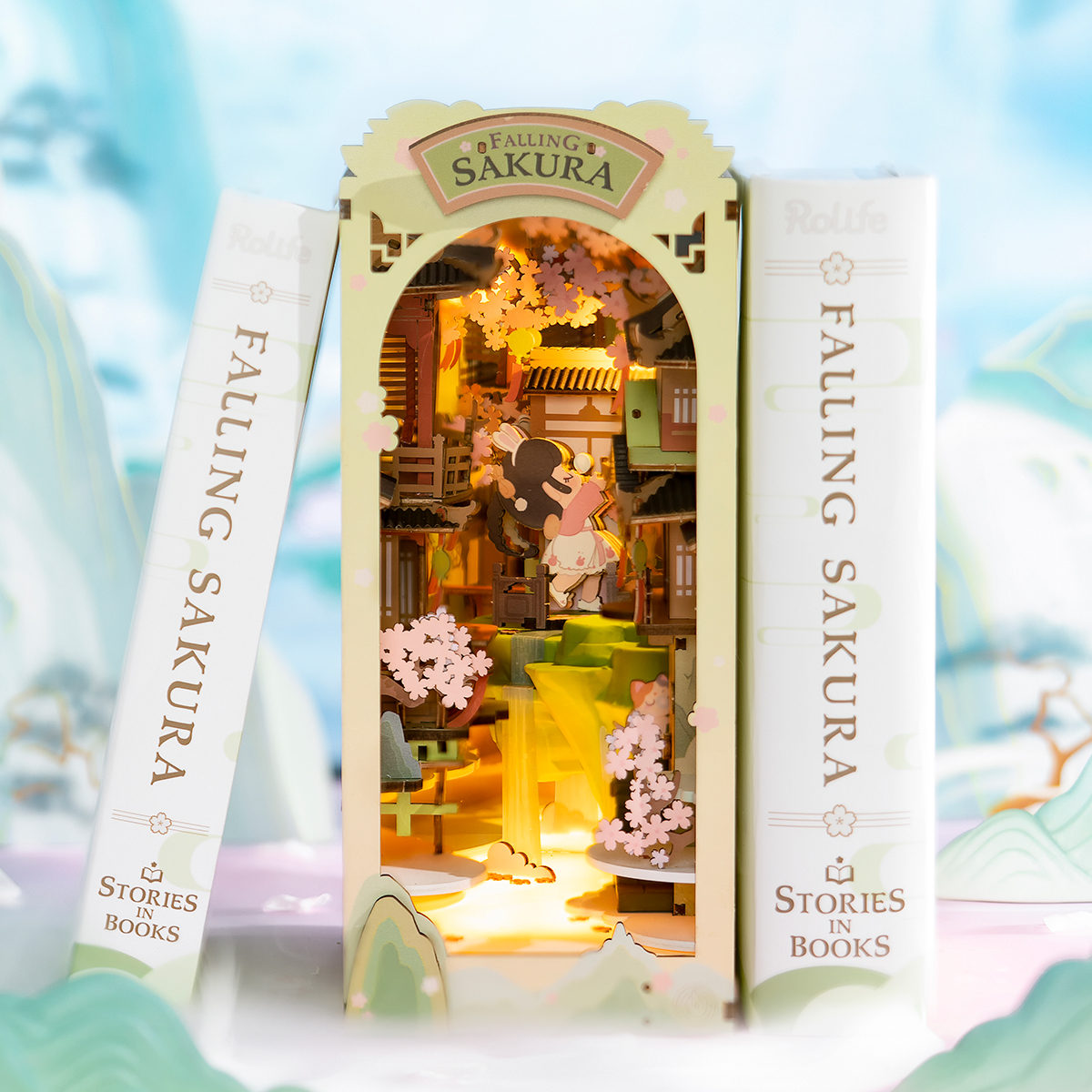
Rolife Falling Sakura TGB05 illuminated fantasy cherry blossom valley between books.
Falling Sakura is the outlier in the most useful way. Instead of recreating an urban street, it builds a cherry-blossom landscape with buildings, a mountain valley, a moon, trees, and a luminous river. The result is less like a remembered trip and more like entering an illustrated spring story.
The official specifications list a 4/5 difficulty rating, 240 pieces, and an estimated three-hour assembly time. Its 10.1 × 18.7 × 24.2 cm footprint is the tallest of the four, so it needs enough vertical clearance. The dramatic lighting and light exterior make it a strong focal point on a shelf with pale, floral, fantasy, or romantic book covers.
Choose it if your core motivation is escapism, spring color, or a bright display effect rather than realism. It is also the clearest alternative for someone who likes Japanese-inspired scenery but does not want another city alley.
Explore Falling Sakura TGB05.
Which Japanese Book Nook Is Best for Your Style?
The most useful question is not “Which one is best?” but “Which scene matches the reason I want one?”
| If you are… | Your core motivation | Best match | Why |
|---|---|---|---|
| A Japan-travel dreamer or train fan | Revisit the feeling of movement and arrival | Sakura Densya | The tram and deep street perspective make the scene feel in motion. |
| A retro-culture and detail lover | Explore a place slowly and discover tiny objects | Nostalgic Corner Shop | Its shelves, signage, and multi-angle shop layout reward close viewing. |
| A cozy-nightlife or food-street fan | Create a warm evening atmosphere | Sakura Wine Alley | Lantern light and compact storefronts give it a social, after-dark mood. |
| A floral, fantasy, or romantic-decor fan | Escape into a luminous spring landscape | Falling Sakura | Its river, moon, blossoms, and vertical depth feel dreamlike rather than urban. |
Which One Is Best for a First Japanese Book Nook?
A first kit should match your patience, not a generic label. In this group, Sakura Wine Alley has the lowest official difficulty rating at 3/5 and an estimated 3.5-hour build, making it the clearest starting point for someone who wants a street scene with a moderate time commitment.
Falling Sakura is estimated at three hours but carries a 4/5 difficulty rating, so shorter does not necessarily mean simpler. Sakura Densya also carries a 4/5 rating and has 340 pieces. Nostalgic Corner Shop is the longest project at about 11 hours and makes more sense for builders who actively want a detailed, extended experience.
Practical rule: Compare all three signals—difficulty, piece count, and estimated time. Any one number by itself can hide the kind of attention the build requires.
How to Choose Before You Buy
1. Decide whether you want realism or escapism
Nostalgic Corner Shop, Sakura Densya, and Sakura Wine Alley use everyday streets, shops, and travel as their emotional anchor. Falling Sakura moves toward fantasy. Both directions work; the better choice depends on whether you want to remember a place or disappear into one.
2. Compare the finished view—not only the box art
A narrow tunnel creates strong depth from the front. A wider corner shop offers more surface detail and side views. Think about where people will stand when they see the finished model. If the display can only be viewed straight on, a traditional narrow book nook may be more effective.
3. Measure width, depth, and height
Bookshelf photos can make every kit appear equally compact, but the dimensions vary. Sakura Densya is relatively shallow; Sakura Wine Alley and Falling Sakura need more depth; Nostalgic Corner Shop is much wider. Leave a little extra clearance for placement and battery access rather than matching the measurements exactly.
4. Choose the lighting mood
Warm evening light supports cozy streets and shop interiors. Bright floral light creates a more decorative focal point. Before buying, imagine the kit with the room lights off: that nighttime version is often the one you will notice most.
How to Style a Japanese Book Nook on Your Shelf
- Give it breathing room. A small gap from tall book spines can keep the entrance from feeling visually crowded.
- Repeat one color, not every color. Pull pink from sakura, amber from lanterns, or brown from shop woodwork into nearby book covers or a small object.
- Use the scene as a transition. Place travel writing beside Sakura Densya, food or city books beside Sakura Wine Alley, nostalgic fiction beside TGE05, or fantasy and nature titles beside Falling Sakura.
- Test the sightline. Lower shelves favor top and front views; eye-level shelves make tunnel depth and lighting more immersive.
- Plan cable or battery access before filling the shelf. A display is easier to enjoy when the switch remains reachable.
Browse more Japanese and sakura book nook themes or compare the wider travel and street-scene book nook collection.
Common Mistakes to Avoid
Choosing only by color: Two pink sakura kits can tell completely different stories. Compare the point of view, light, and narrative—not only the palette.
Calling a detailed kit beginner-friendly without checking specifications: Use the official difficulty, piece count, and estimated time to set realistic expectations.
Ignoring the finished footprint: Depth and width matter as much as height, especially for TGE05 and the deeper narrow inserts.
Buying a second scene that feels identical: Collectors often get a stronger display by contrasting day and night, realism and fantasy, or travel and neighborhood life.
Hiding the strongest viewing angle: Place a tunnel scene front-facing and give a wider shop enough side visibility to reward its extra detail.
Frequently Asked Questions
What is the best Japanese-style book nook kit?
There is no single best choice for every shelf. Sakura Densya is strongest for a cinematic journey, Sakura Wine Alley for a warm evening street, Nostalgic Corner Shop for retro detail, and Falling Sakura for floral fantasy.
Which Rolife Japanese book nook is best for beginners?
Within this comparison, Sakura Wine Alley has the lowest official difficulty rating at 3/5 and an estimated 3.5-hour build. Beginners should still review the instructions and choose a scene they are motivated to finish.
Which kit has the strongest nostalgic feeling?
Nostalgic Corner Shop TGE05 is the clearest nostalgia-led option because it recreates a Showa-era neighborhood store filled with familiar everyday goods and signage.
Which Japanese book nook works best as a dramatic shelf centerpiece?
Falling Sakura creates the most overtly dramatic focal point through its tall format, luminous river, moon, blossoms, and fantasy landscape.
How do Sakura Densya and Sakura Wine Alley differ?
Sakura Densya centers on movement: a tram and spring street create a sense of travel. Sakura Wine Alley centers on destination: lanterns, storefronts, and food-and-drink details create a cozy evening stop.
Do all Japanese book nooks fit between books?
No. Narrow inserts are designed for conventional bookshelf placement, but Nostalgic Corner Shop has a wider 24.6 cm format. Always compare the finished dimensions with your actual display space.
Should I choose by build time or difficulty?
Use both, together with piece count. A shorter estimated build can still carry a higher difficulty rating, while a longer build may reflect the amount of layered detail rather than one especially hard step.
Final Recommendation
Start with the memory or mood you want to see every day. Choose Sakura Densya for the journey, Sakura Wine Alley for the night out, Nostalgic Corner Shop for the details of everyday life, or Falling Sakura for the escape. Once the story feels right, confirm the official build commitment and finished size. That sequence leads to a better choice than picking by color or popularity alone.
For a two-kit display, Sakura Densya and Sakura Wine Alley make the clearest companion pair: spring travel by day and a lantern-lit destination by night. For contrast, pair a realistic street or shop with Falling Sakura’s dreamlike landscape.