
Introduction
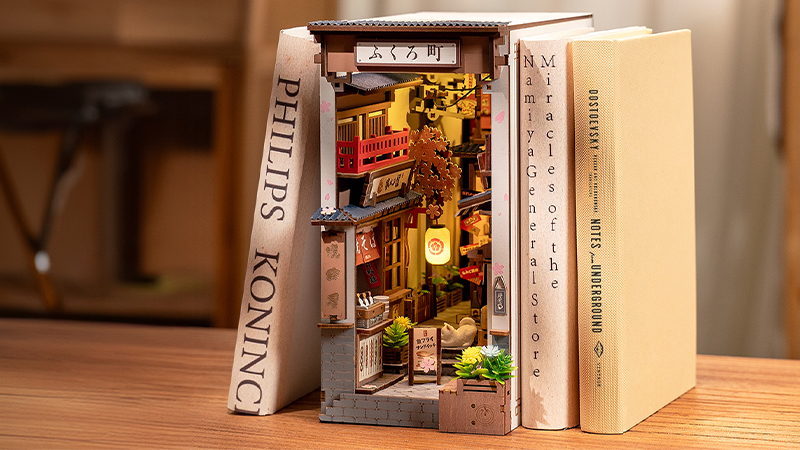
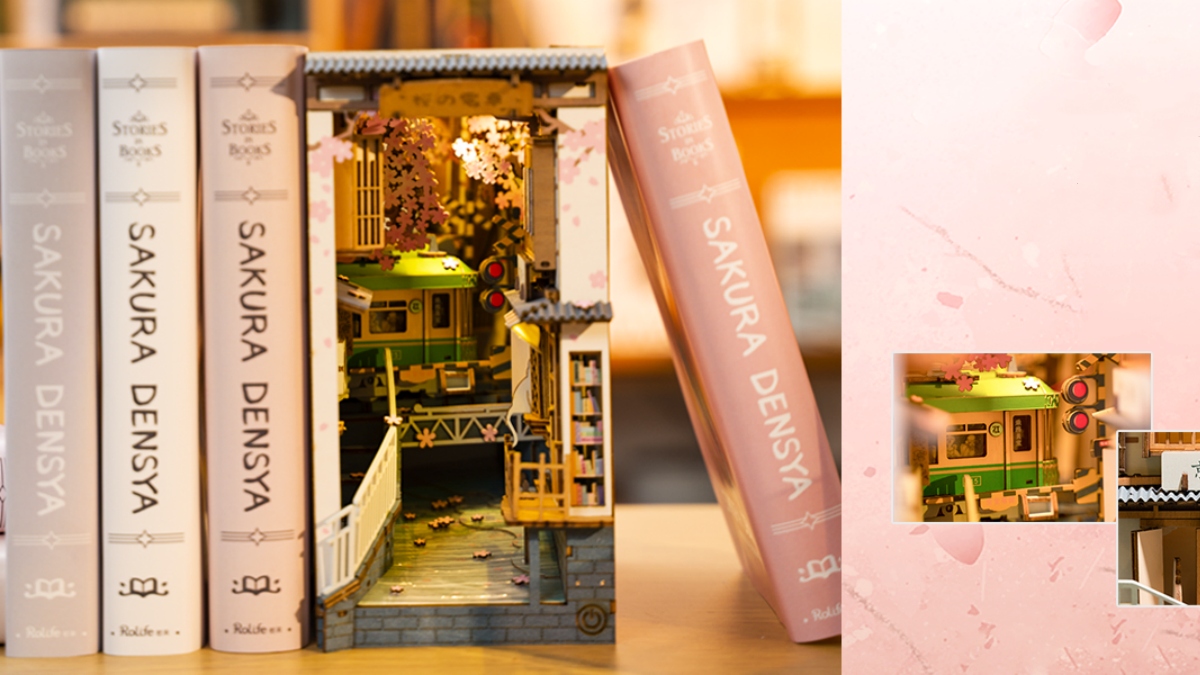
The Rolife Sakura Densya Book Nook is one of the most popular miniature kits in the Rolife book nook collection. Its soft pink lighting, cherry blossom details, and iconic Tokyo tram scene create a peaceful and cinematic moment—especially when the lights are switched on.
In this guide, we break down the full building process based on a detailed video tutorial from Build With The Boys, a popular DIY content creator. Whether you're assembling this kit for the first time or you simply want help with wiring (the most common beginner challenge), this article provides a clear, step-by-step overview.
Overall Review: Is Sakura Densya Hard to Build?
Short answer: It’s easier than most Rolife book nooks.
Compared to Sunshine Town, Magic House, and other early Rolife nooks, Sakura Densya is:
- Less complex in structure
- Faster to assemble
- Designed with more intuitive parts
- Only uses two lights instead of three
If you’re a beginner who wants a magical book nook without overwhelming difficulty, Sakura Densya is one of the best choices.
Step-by-Step Building Guide
Below is a simplified and organized breakdown of the video tutorial.
Summary of Assembly Steps
- Unbox the kit 00.01.17
- Test the bulbs 00.02.25
- Build the small parts such as the sakura tree, shutters, and air conditioning unit. 00.04.54
- Build the body of the tram. 00.06.15
- Build the roof of the tram. 00.07.54
- Build the tram crossing 00.09.50
- Build the base and attach the battery box to the base 00.11.43
- Attach the water element to the base 00.1.40
- Build the sidewalls 00.14.57
- Fix the wiring for the bulbs 00.15.56
- Test the lighting 00.19.14
- Insert the mirror& finish19.47
1. Unboxing — What’s Inside the Kit
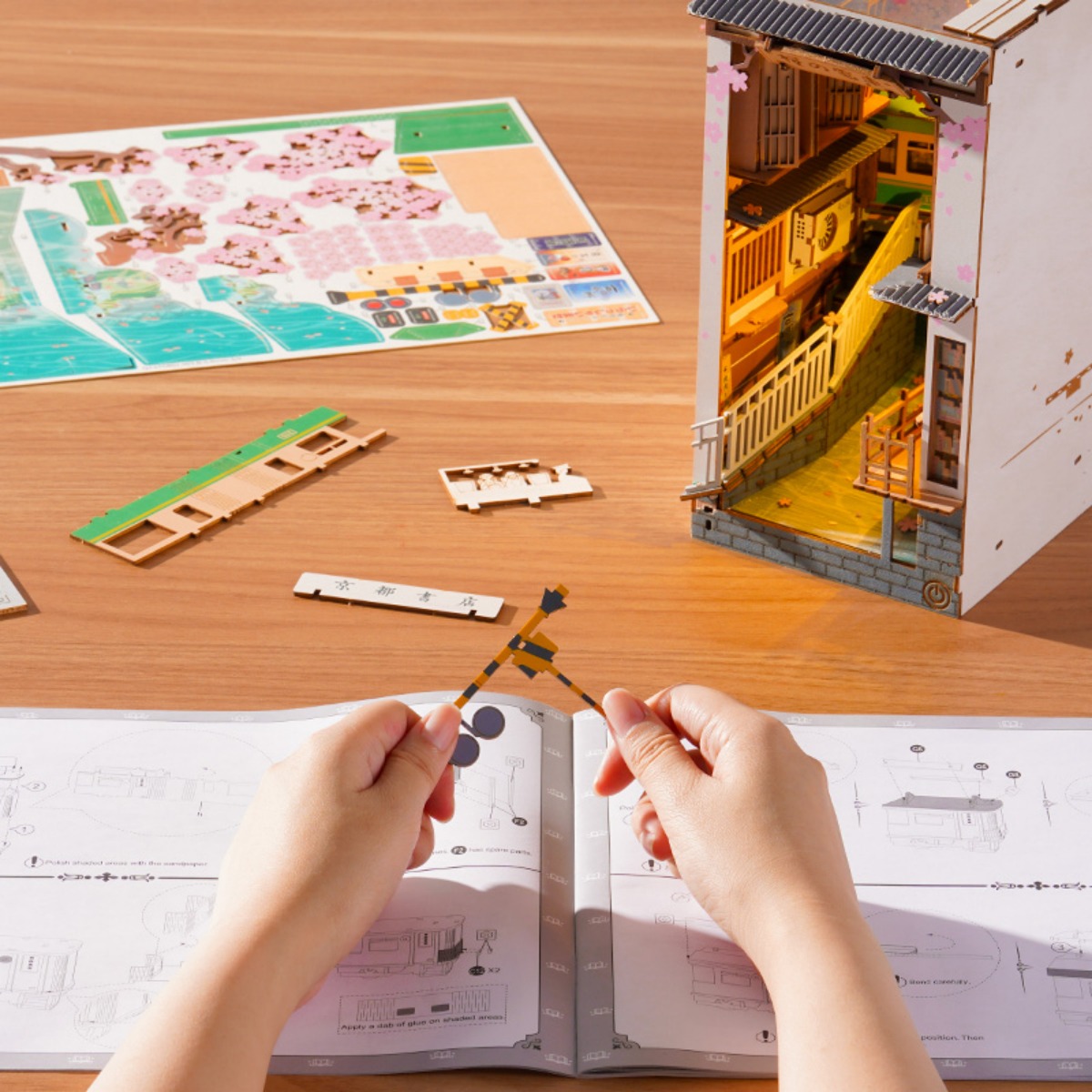
Okay, so here's everything that comes inside the box:
- Instruction manual, wooden sheets, pre-cut detail pieces.
- Battery box + touch switch, small screwdriver, screws.
- Water texture sheet, sandpaper, wire insulation.
TIPS: Included screwdriver is perfectly okay, but a PHO makes life a lot easier than using it.
2. Before You Start: Test the Bulbs
(1) Why test the bulbs now?
The reason for this is that one of the questions I get asked a lot is, ‘Do you think I've got a defective bulb or do you think I've got a defective switch?’ Well, it's kind of after the fact. If you're trying it once you've already installed it, it's hard to tell. So try your bulbs before you fit it.
(2) How to test (beginner friendly)
Here's a really simple way to do this.
Remove the protective covering from the ends of the wires
Put the black wire on top of the battery and the red on the bottom. By doing this, I can see that this bulb works. So if there's any problem with my lighting, I know. It isn’t the bulb. So let's try the other bulb.. Because they are going to be linked together, if one of them is defective, it's pretty much going to short out the other one.
So that's a really simple way to see if your bulbs work before you even start building. If they don't, you know you've got a problem.
3. Start with the Decorative Mini Builds
Now you can see from the first few pages of the instructions, we're not building anything really nookish. We're just building the stuff that's going to go on the detailing. So we've got some windows and an air conditioning unit. We've got quite a lot of bits to build before we get to the tram.
- Asakura tree: Now you can see the arm coming through. It's very simple. We're just attaching the branches to the trunk of the tree. We've got another one here as well, so you can see the blossoms coming down.
- Tram: We've made the tram crossing over here. Again, very simple, as we just glued it. This has actually been the easiest start to abook nook from Rolife that I've done so far.
- AC unit:which is a simple box construction.
- Shutters: Now, this is one that you need to pay attention to because all of these are the same part. You can see the tabs at the bottom of these here, and here you're gonna make four of these in total. They're all constructed the same way, but you need two of the tabs on the left-hand side and two of the tabs on the right-hand side.
4. Building the Tram Body (Main Highlight)
.jpg?w=1200&h=1200)
We'll move on to the tram now, so let's get that built. We've got our passengers and our drivers in there. Again, it's a basic construction as it’s just in the background. I know people have problems with folding the tram, but I'll show you how I do this.
You just go gentle.
You don't push hard, you don't need to persuade the tabs in.
You've got to put enough pressure to get it into the slot once it starts going in.
Don't put loads of pressure on because you don't want to snap anything.
Take your time.
Okay, so we've got the first two in.
We're now going to coil around. This one's going to go in there, and on the other side, do the same as on the first side.
Okay, so now we've got that in place, the next thing we'll do is put the roof on. Don’t put on too much pressure and break the tabs. You can ease these in. Don't worry about trying to get them all in at the same time. Get two in first. Once you've got those two in, you can get the rest in.
So we've added more detail to our tram carriage here. You can see what we've done to the roof. We've got the cables that are going to attach the tram to the overhead tram lines. We've put these pins in; they're going to hold this to the track. Put some headlights on here and a Sakura Blossom on the tram as well.
5. Build and Attach the Track
So the next thing we're going to do is build the track. Then we attach the train to the track. Now I'm going to put on the crossing. And that's just going to go in this slot here. This is quite flimsy, so don't put too much pressure on it, just wiggle it in.
The next thing we're going to do is our tree over here. Just gently wiggle this into place. You don't need to glue it. This is going to be so firm that it is going absolutely nowhere. So that is the first chunk of our book nook.
6. Building the Base and Battery Box
We’re going to be building the battery box next and the base, so that should be interesting. Let's crack on with that. Okay, so now we're working on our base.
The first thing we're going to do is to take this little piece here, this G13.
And this is going to slot in this corner here. I think this is going to be... from what I can see, a slightly sloping base, like a slanted base. Now, over here is the battery box that we've made.
So again, nothing complicated about this. Make sure you've got your switch facing outwards, because it's going to be a nightmare having it the other way. Attach it to the base, and we'll see exactly how slanted this is going to be.
You don't need to glue it. Never glue your battery boxes in because if there is anything wrong with your electrics, you will want to get it out.
Be careful of your wires when you start to construct the base. Don't pinch anything or pull at the switch.
7. Add the Water Texture Piece
We're now going to attach the water element to the base, but first, we've got a piece to go underneath.
Now we've got this water effect. In place, I'll try and catch the light on it so you can see. When our lights are actually shining on this, you'll see this has got texture, almost like vinyl. We've started attaching some of these sakuras to it as well.
8. Wire Management (Most Important Section)
Now we're doing some of the wires. The wire's going to come from the bottom.. I'm going to pin it in place using some of these tabs that we've got here. It's going to take a while to thread it up through the slot, and then we're going to hold it in place and pin it. So our wire's not glued in, which means we can get to it if we need to. I'm going to drape it all the way along here. I'm just gonna drop it off at the end. Be careful of this when you're working, you don't want to break it.
9. Build the Side Walls
Okay, so we're working on the side wall. Again, it's all really easy. These are things we made earlier. They just stick straight to the base. You can see we've got our blossoms up there, by those windows.
Next, attach the window frame. We've screwed in these three brackets, which is unusual as the brackets go internally. As far as I remember, they were not internal in the other ones we've done.
We're going to move on to the other side wall now. Okay, so quick check-in. We've built the second wall, which attaches immediately to the base, and we've added the tram section that we built earlier.
We've also just screwed our touch panel to the back. That's the way around it needs to go. The next thing we're going to do is flip this one over, and we're going to put the touch panel on the base and continue assembling the book nook.
10. Fix the Wiring for the Bulbs
I'm doing this to show the wiring more than anything because this is where you should be at this stage. This is where a lot of people are coming unstuck.
So what we're going to do is take our black wire first from the top light. We're going to remove the safety end, so we've got the exposed wire. Then we're gonna take our other black wire, which is this one on the side. We're going to combine these two wires to make essentially one wire.
Then we take our black wire from our battery box down here. Remove the cover. I'm going to join this wire to the others.. Then we're going to take a piece of tape to hold these wires together.
We'll do the same thing with the red wires. Take the red wire from the top first. We're going to attach it to our red wire from the middle. So we're just going to twist our wires together and just line them up so they're nice and even. And then we're going to take our red wire from our battery box, which is here. Take the cover off, and then we're going to incorporate this wire into these two wires. twisting them together.
The wiring is not overly complicated as it is just red to black. Other book nooks incorporate yellow and white, yellow, white, red, and black, and they're saying attach white to red, then yellow to black, and it gets confusing.
So that's these wires together. I'm going to add another piece of tape to them, and those should be complete. Okay, so now we've got our red wires taped together and the black wires taped together. I've put batteries in the battery box.
11. Test the Lighting
Now we've just got to press the button to see if it works. Fingers crossed. Oops.
Helps if you turn it on. It works a lot better. Whenever someone says mine's not working, I always say, is it turned on? Because things like that happen.
Now we've just got to finish it off.
12. Insert the Mirror & Finish
We're about to insert our mirror, which is going to create the illusion of depth. Now again, I've had this with people who aren't getting a decent shot of the mirror. There's a reason for that. Actually, it's got a film on it. You're going to take the film off.
Then we're going to slide our mirror in, trying not to get any fingerprints on it. Then we're going to put in the back panel. Okay, so we're now ready to attach the top piece, the ceiling piece, to our nook.
Make sure your wire is poked down. It's got this nasty habit of wanting to come out. Let's flatten it down and keep it down. Slide the cover into place. I'm going to attach the tabs to pop this one in. Again, I'm conscious of that wire popping out of its channel. Let's hold it in place. Secure the tabs all around.
Then there's a little bit more to do at the front, So we've just added the rail here and added a blossom to it. I like how this is now protruding out the front of the frame. And that is our book nook complete.
Tips and Tricks
The video gives you plenty of practical advice, especially if you are new to DIY crafting. It gives detailed information on how to wire the lights, which can be tricky for those who aren’t technically minded. Another important factor is to test the lights before fitting them. You don’t want to fit a defective bulb and have to disassemble the whole kit to replace it.
The video tells you what extra equipment you might need to assemble the kit, such as tweezers for fixing small parts and toothpicks to apply glue.
Another important tip is to be gentle. The parts are small and delicate, and you don’t want to break any of them.
Conclusion
The video is especially useful for first-time Rolife DIY crafters, though more experienced book nook fans may find it interesting to compare notes. It is particularly useful for those who are stumped by the wiring of DIY kits. The details given for wiring are clear and detailed, and is one of the main focuses of the video. If you are looking for a beautiful, serene book nook to brighten up your book shelves, you won’t go far wrong choosing the Sakura Densya DIY kit.
Love this book nook kit? Take it home now >>> Sakura Densya.