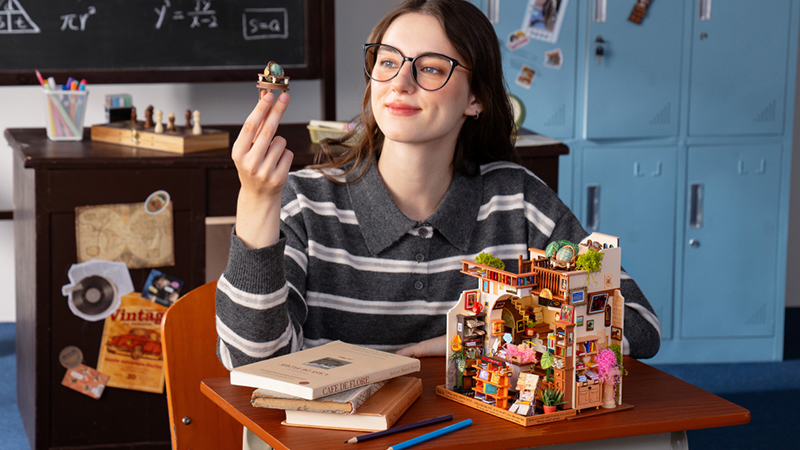
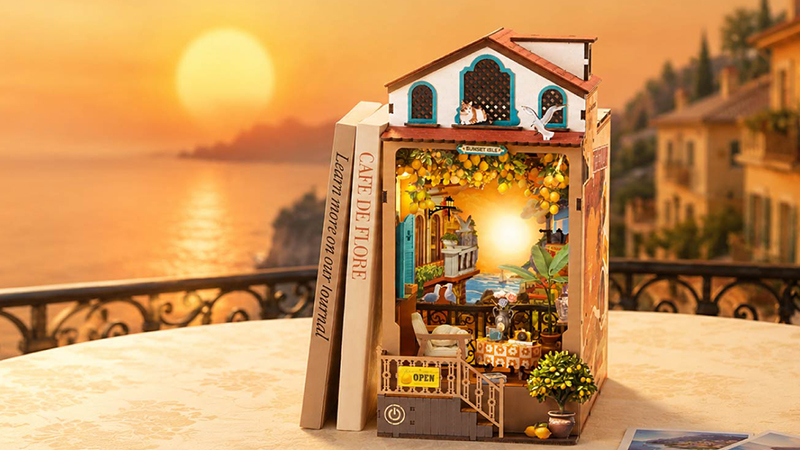
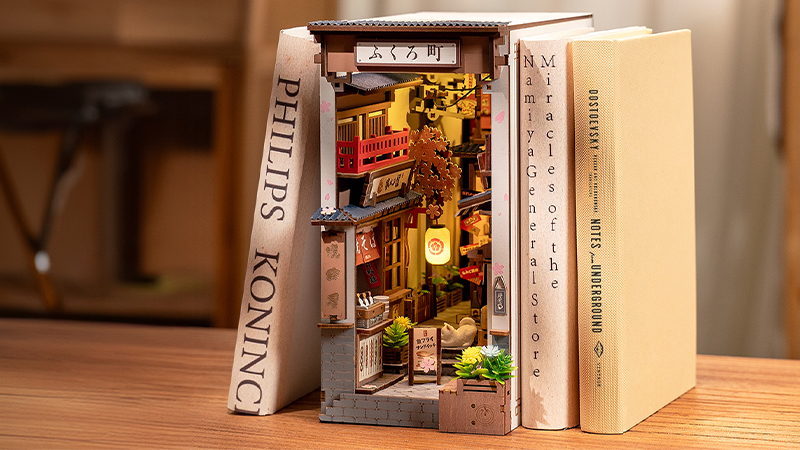
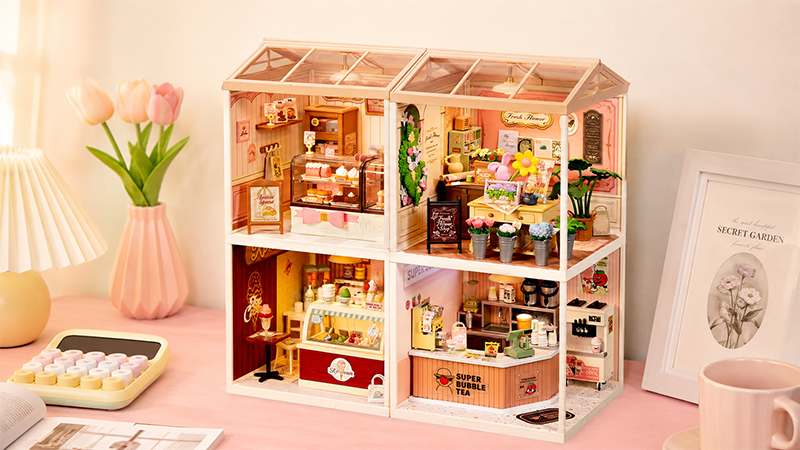
When you start making DIY crafts and projects at home, certain tools, like glue, are essential, especially when using our miniature kits. While we are actively working on a solution, for now, you will need to prepare these items yourself.
To help you find the best glue for your next miniature dollhouse or book nook, we prepared a listing of the available glues in the market and their specific purposes in various DIY projects.
Types of Glue for DIY Projects
The main purpose of adhesives is to make sure a stronghold between pieces and parts. There is a wide range of adhesive products but they differ from various factors, like the kind of surface or materials it will be used for. We have rounded up a few types of the commonly used glues for DIY crafts.
Here is a chart to help you decide which glue is right for your project.
| Types of Glue | Paper | Plastic | Wood | Metal | Fabric | Glass | Styrofoam |
|---|---|---|---|---|---|---|---|
| Polyvinyl Glue | ✔ | ✔ | ✔ | ||||
| Wood Glue | ✔ | ||||||
| Super Glue | ✔ | ✔ | ✔ | ✔ | ✔ | ✔ | |
| Tacky Glue | ✔ | ✔ | ✔ | ✔ | ✔ | ||
| Epoxy | ✔ | ✔ | ✔ | ✔ | |||
| Plastic Glue | ✔ |
Polyvinyl Glue
Polyvinyl Acetate glue, also known as white Latex glue, is the best adhesive for wooden crafts. Some buyers also call this as a carpenter’s glue because of its quality and durability which makes it also a good choice for furniture and other paper or clothing projects. The main reason why it has been widely used as a bonding material is because of its high resistance and cheaper price.
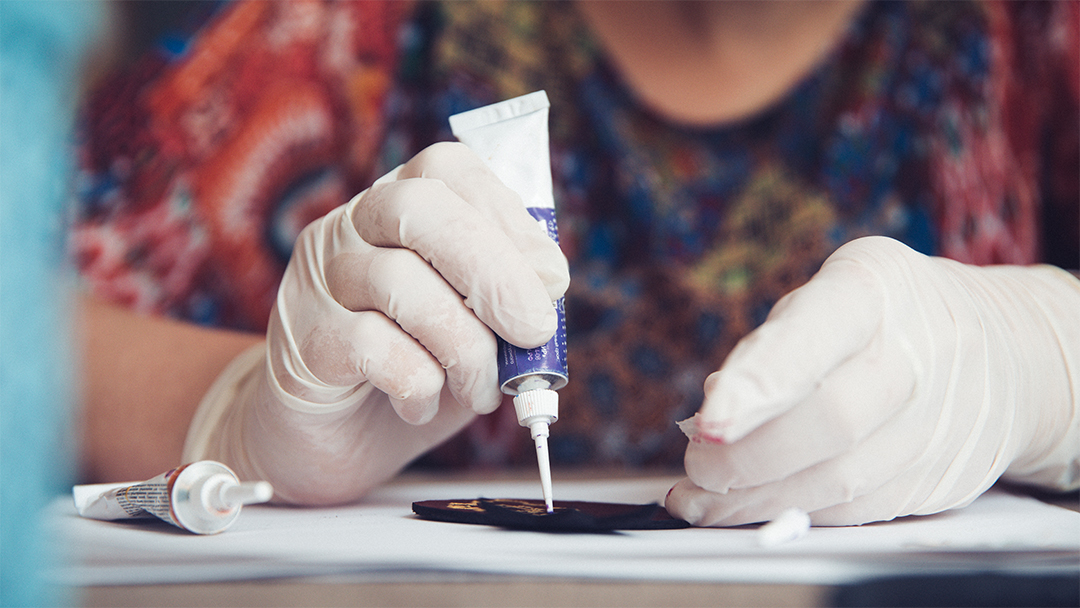
To apply white latex glue, put a thin layer on the pieces you want to glue. You don’t need much glue for bonding parts together. The glue stays flexible for a short while after it has been applied, which is useful if you are gluing together pieces that will expand or contract over time.
Pros of white latex glue
- Non-toxic
- Strong adhesion
- Moderate stickiness
Cons of white latex glue
- Will not bond harder materials
Wood Glue
The name itself emphasizes its specific purpose. This type of glue is a better option for wooden crafts, especially when they are intended to be bonded and solidified. It has a common color of white to light yellow, plus it is paintable which is a good feature for furniture and other projects. You can measure its quality and durability when you use them with wooden pieces as your next DIY project.
Pros of wood glue
- A strong and permanent bond for wooden parts
- Best glue for the main structure of a miniature house
Cons of wood glue
- It dries a yellow color
- Drips that have dried are difficult to remove
Super Glue
The super glue has an industrial and common name of Cyanoacrylate Adhesive, and it has a proven track record of top-notch quality in providing strong and fast bonds. It is usually used in materials like ceramics, leather, rubber, vinyl, and more with almost the same surface.
Pros of super glue
- Bonds most materials, apart from some plastics
- Very strong bonding glue
- Dries almost immediately
- Great for small parts
Cons of super glue
- Difficult to rectify mistakes
- Bond becomes weak over time
Tacky Glue
A tacky glue has a thick texture compared to the usual glues, and is commonly used in photos and can stick them through the walls. But this is not the ideal adhesive material if you are after a strong bond, but it solidifies and dries faster.
Pros of tacky glue
- Bonds most materials
- Dries quickly and clearly
- Doesn’t dry out over time
Cons of tacky glue
- Doesn’t work on thicker wood
Paste
Paste is one of the most popular glues amongst crafters. It is water-based, free of odors, and non-toxic. Paste is the best glue to use for the wallpaper, ceiling paper, carpets, and floors in your miniature house.
Paste has many advantages. It is spreadable and thick, but you can change its consistency by adding a few drops of hot water. It sets slowly so you can reposition the pieces if you make a mistake. Once it is dry, it is transparent. The only disadvantage is that it can get messy when used.
Unlike many glues, you can wash it off your hands with soap and water.
If you are using paste to stick wallpaper on the walls of your miniature house, put on a very thin layer and smooth the paper from the center to the sides. This stops air bubbles from forming.
Pros of paste glue
- Transparent once dry
- Generous drying time so mistakes can be rectified
- Cleans off with water
Cons of paste glue
- It is messy to use
Epoxy
For DIY projects that need permanent and strong bonds, Epoxy glue is the ideal adhesive for them. It is made of resin and epoxy polymer that has the feature of providing robust bonds for projects guaranteed to withstand extreme environments, temperatures, and conditions. Also, it can be used in a wide range of materials such as glass, metal, concrete, and ceramic.
Pros of epoxy glue
- Can withstand extreme temperatures
- Creates a strong bond
Cons of Epoxy glue
- Long curing time
- Strong odor
Plastic Glue
Most of the traditional DIY kits made with polystyrene plastic use this type of glue to bond together the parts and pieces. It is also sometimes considered as a solvent and not a glue, because you can see how it can dissolve or melt the pieces when the plastic glue is applied. You can use this type of glue with our Plastic Miniature Houses.
Pros of plastic glue
- Best glue for plastic
- Dries relatively quickly
- Comes with a precision tip
Cons of plastic glue
- Strong odor
Other Glue
Aside from the mentioned glue products above, there are also more adhesive materials that can be used for DIY kits or projects, like Pellets, Paste, and other adhesives made with liquid.
Tips on Choosing the Right Glue for Your Craft
Different adhesives are introduced in the market with specific features and purposes to make the bonding of materials easier, efficient, and durable. But before deciding which type of glue suits your next DIY craft, make sure that these factors are considered:
Surface
As mentioned, glues differ in their specific purposes and in what application they are most ideal. It would be best to consider the surface, whether it is smooth or rough to make sure that the adhesive will work. Also, the flexibility and porosity of the surfaces are part of the surface preparation before the DIY crafts start.
Materials
Some DIY kits are made with different materials, and there are specific adhesive products for them. If you bought wooden puzzles, there is wood glue that can be used to bond the parts, while there is also plastic glue for miniature houses and other pieces made with plastic.
Temperature
There are DIY kits that can be displayed outdoors, and an appropriate adhesive can withstand the extreme environment and conditions and keep the parts intact for a longer period of time. Choose glue with high-temperature resistance for guaranteed quality and durability.
Strength of Bond
The most important factor to consider is the strength of the adhesive product or glue. Since their main purpose is to keep materials from being intact and bonded, they must not fall down. Some DIY kits are guaranteed to be made with high-quality pieces, but a strong glue makes it even more unbreakable.
Common Glue Issues With Rolife DIY Kits and Their Solutions
- When using white latex glue, be careful that it doesn’t drip, as it is difficult to remove. A solution to this would be to use a precision applicator, which will control the flow of the glue.
- Again, be careful with drips when using wood glue, as it is practically impossible to remove. The best way to remove it is by sanding, but this can damage the wood. Another problem is that it dries yellow, so make sure that the glue isn’t visible.
- Avoid hot glue guns as the glue isn’t strong enough.
- Too much glue can cause wallpaper to bubble or wrinkle. To avoid this, you can use a plastic credit card to spread the glue. Start in the center of the paper and work outwards.
Additional Tips on Choosing the Right Glue
- To control the flow of the adhesive, use precision tips or fine brushes. You will then be able to get to the hard-to-reach areas. It also helps if you have intricate parts to glue together.
- It is a good idea to keep a clean cloth or paper towels on your workbench. You can then immediately clean any glue that has dripped so that it doesn’t set.
- Dry fit the parts first to make sure that they fit properly.
- Consider the surface of what you want to glue so that you can choose the appropriate adhesive. Is the surface rough or smooth? Is it porous? Is it flexible? All these factors will help you to decide which glue to use.
- There are DIY kits that can be displayed outside, so you will need an appropriate adhesive. Choose a glue with high temperature resistance, such as epoxy glue.
Summary of Glue Uses
Here, we’ve summarized the different types of glue used in Rolife DIY kits, with a table highlighting the pros and cons of each. This guide will help you choose the right adhesive for your projects.
| Type of Glue | Suitable Materials | Pros | Cons |
| White Latex Glue | Paper, wood, fabric | Non-Toxic | Doesn’t bond hard materials |
| Strong adhesion | |||
| Moderate stickiness | |||
| Wood Glue | Wood | Strong and permanent hold for wood | Dries yellow, |
| Drips are hard to remove | |||
| Super Glue | Paper, plastic, wood, metal, glass | Almost instantaneous dry time | Bond weakens over time |
| Strong hold | |||
| Tacky Glue | Paper, wood, plastic, fabric, glass | Dries clear quickly | Not suitable for thick wood |
| Bonds most materials | |||
| Paste Glue | Paper | Transparent once dry | Messy |
| Washes off with water | |||
| Generous drying time | |||
| Epoxy Glue | Paper, wood, plastic, glass | Withstands extreme temperatures | Strong odor |
| Strong bond | |||
| Plastic Glue | Plastic | Dries quickly | Strong odor |
| Comes with a precision tip |
Conclusion
Here at Rolife, we are offering a wide range of DIY kits that you can do whether at home, at work, or as an educational tool at your institution. But these products have pieces and parts that need the presence of adhesives. Our miniature houses and book nooks come with hundreds of wooden, plastic, metal, and glass pieces and they can be bonded by using some of the adhesive products mentioned above. Get your next DIY idea turned into reality, and keep the materials intact with one of these glues!