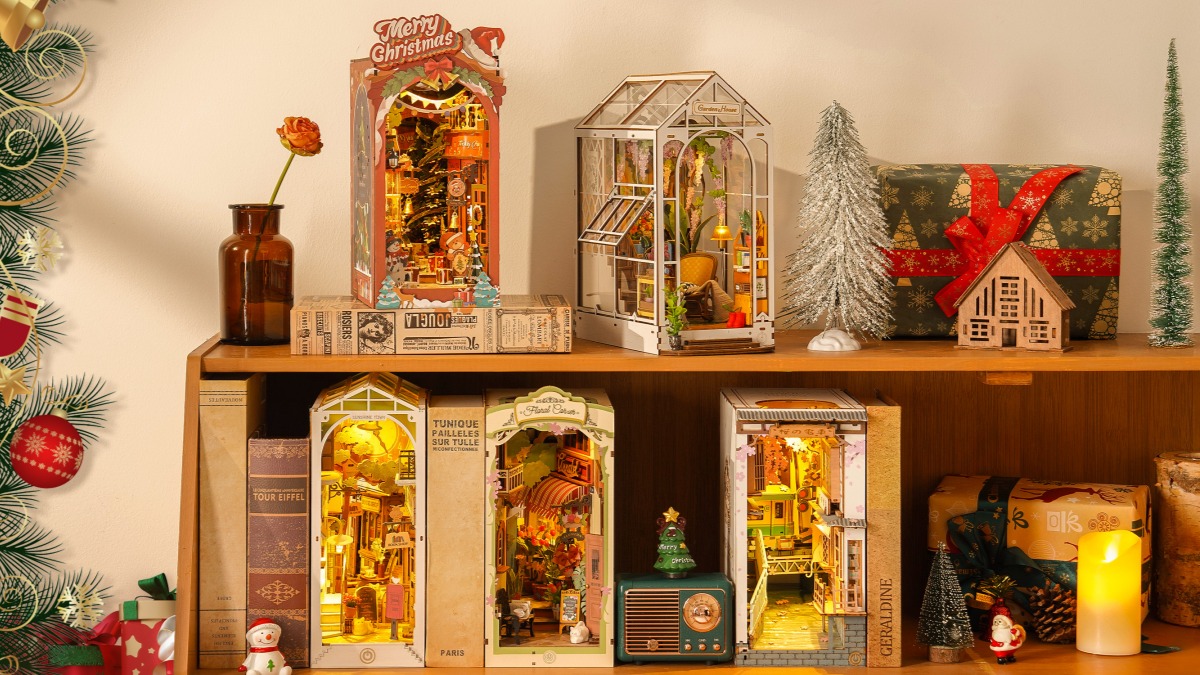

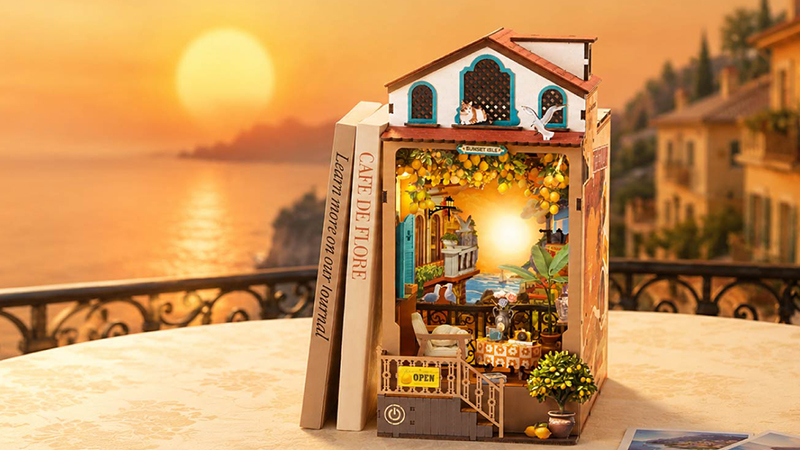
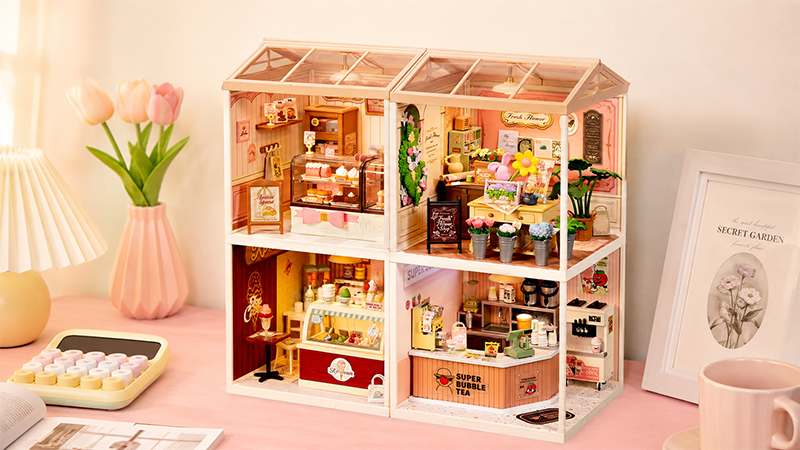
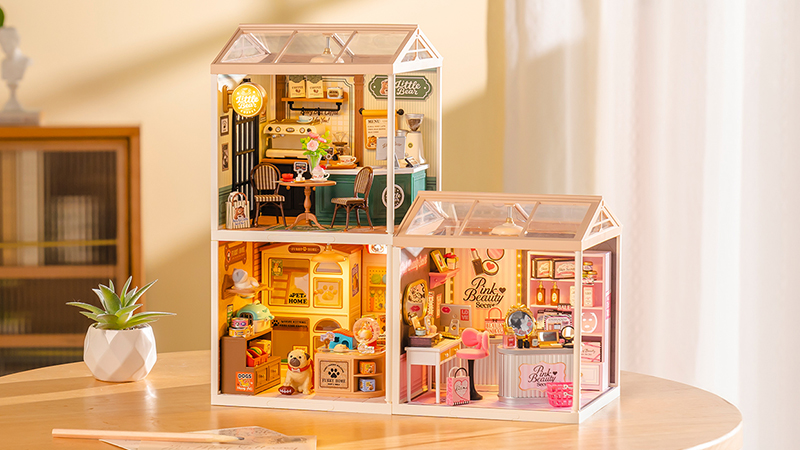

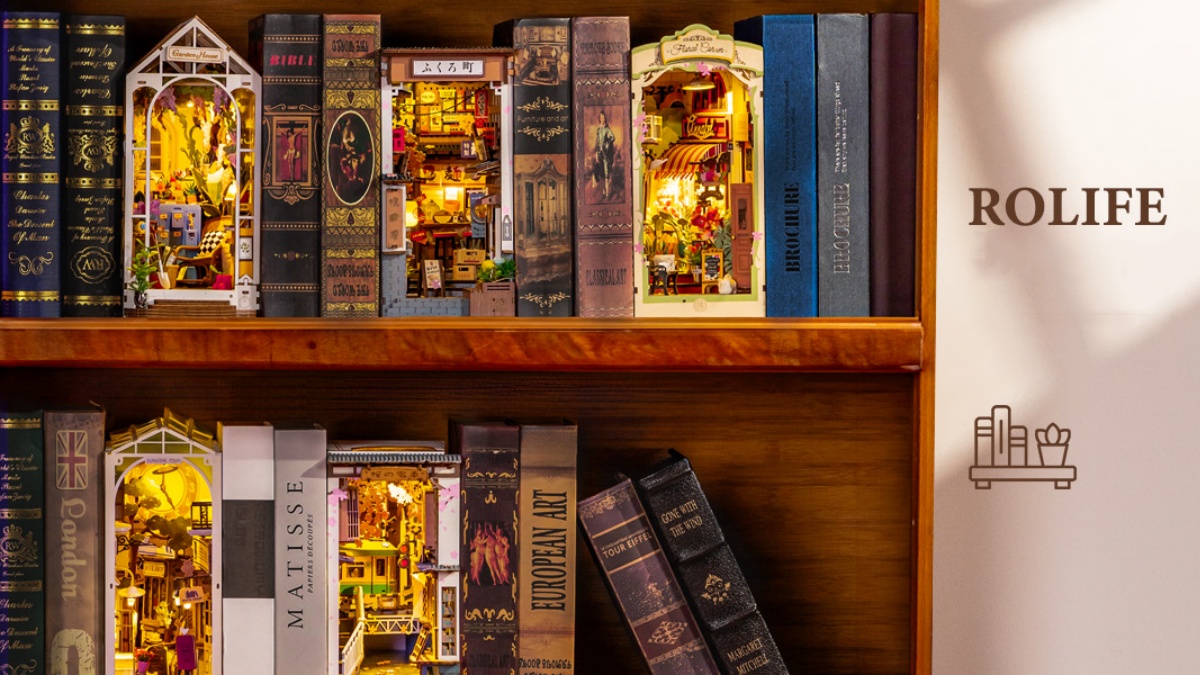
Choose a Rolife book nook by starting with the shelf where it will live, then compare theme, build difficulty, lighting, viewing angle, and the kind of making experience you want. This guide uses six different kits to show how those choices change the final display.
A product photo can tell you which scene you love, but it cannot tell you whether the finished piece will work in your room. Before comparing decorative details, decide where the book nook will sit, which side people will see first, and how much time you want to spend assembling it.
This is an evergreen selection guide rather than a ranking. If you want to browse every current model, start with the Rolife book nook collection. For a narrower comparison of Japanese scenes, see the guide to Japanese-style book nook kits.
Start With the Shelf, Not the Product Photo
Measure the open space before ordering. Record the shelf height, usable width, and depth, and leave a little room for placing, removing, and cleaning the finished model. Product dimensions vary, so confirm the current measurements on the product page rather than assuming that every book nook uses one standard footprint.
- Check the viewing angle: A front-facing nook works well between books, while a wider or horizontal scene needs more open shelf frontage.
- Plan access: Make sure you can reach the light switch or battery compartment after the model is installed.
- Look at the neighboring books: Dark spines can frame a bright garden scene; colorful books may suit a quieter wood-toned study.
- Think beyond the bookshelf: A deep desk, sideboard, or reading table may show side details more clearly than a tightly packed shelf.
Six Rolife Book Nooks Compared
| Kit | Theme and mood | Current difficulty classification | Display strength | Best for |
|---|---|---|---|---|
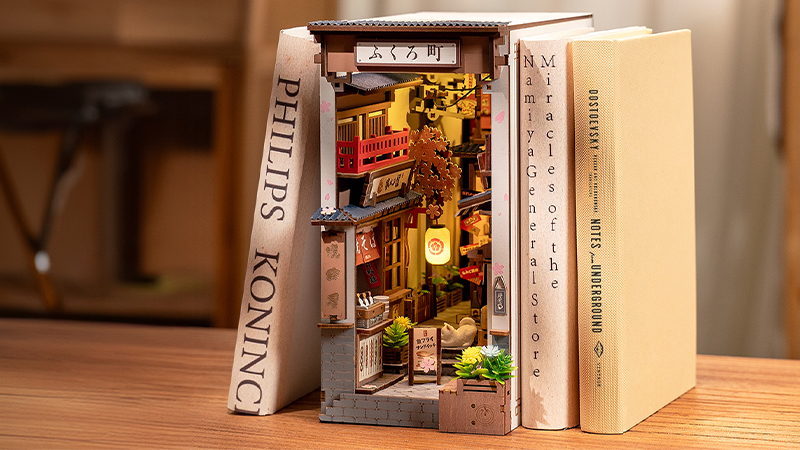
| Sakura Wine Alley TGB11 | Japanese alley, food, and travel nostalgia | Intermediate | Deep street perspective and warm evening color | Travel-scene and Japanese-culture fans |
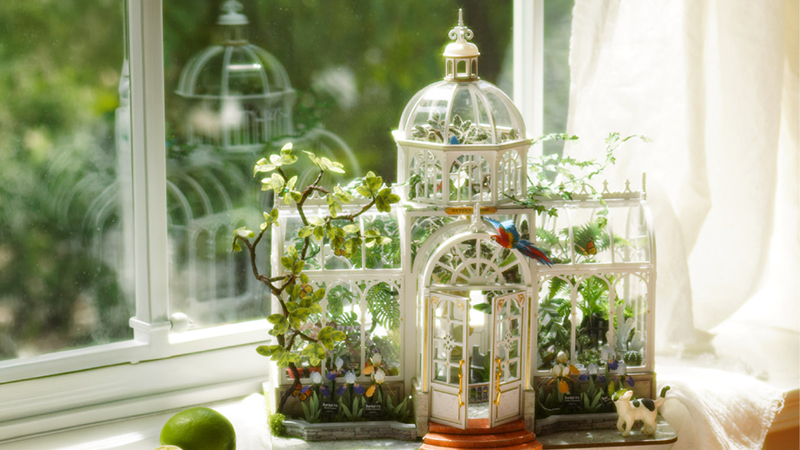
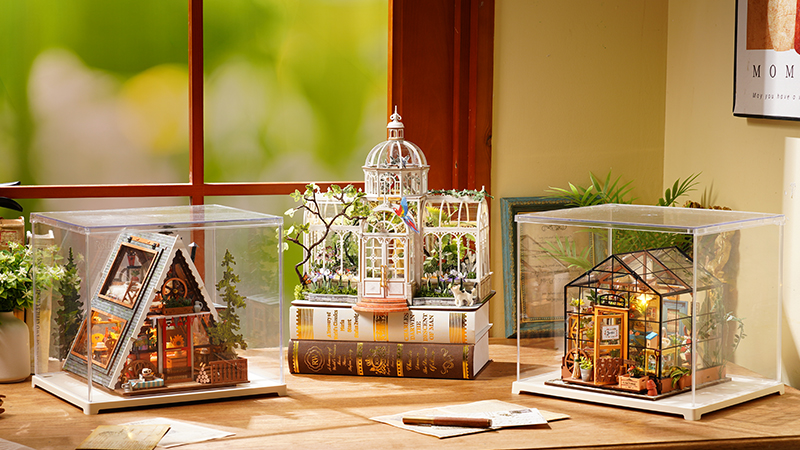
| Holiday Garden House TGB06 | Greenhouse, flowers, and cottage garden | Advanced | Bright foliage and an airy architectural frame | Plant lovers and cottagecore shelves |
| Silent Corner Study TGE02 | Quiet study and bookstore atmosphere | Intermediate | Calm wood tones that blend naturally with books | Readers who want understated shelf decor |
| Library of Wonders TGB16 | Victorian fantasy library | High | Layered interior details and a dramatic literary mood | Fantasy readers and display-focused builders |
| Wisdom Stationery Shop TGB19 | Detailed vintage stationery store | High | A dense shop interior with an opening front window | Experienced builders who enjoy many small details |
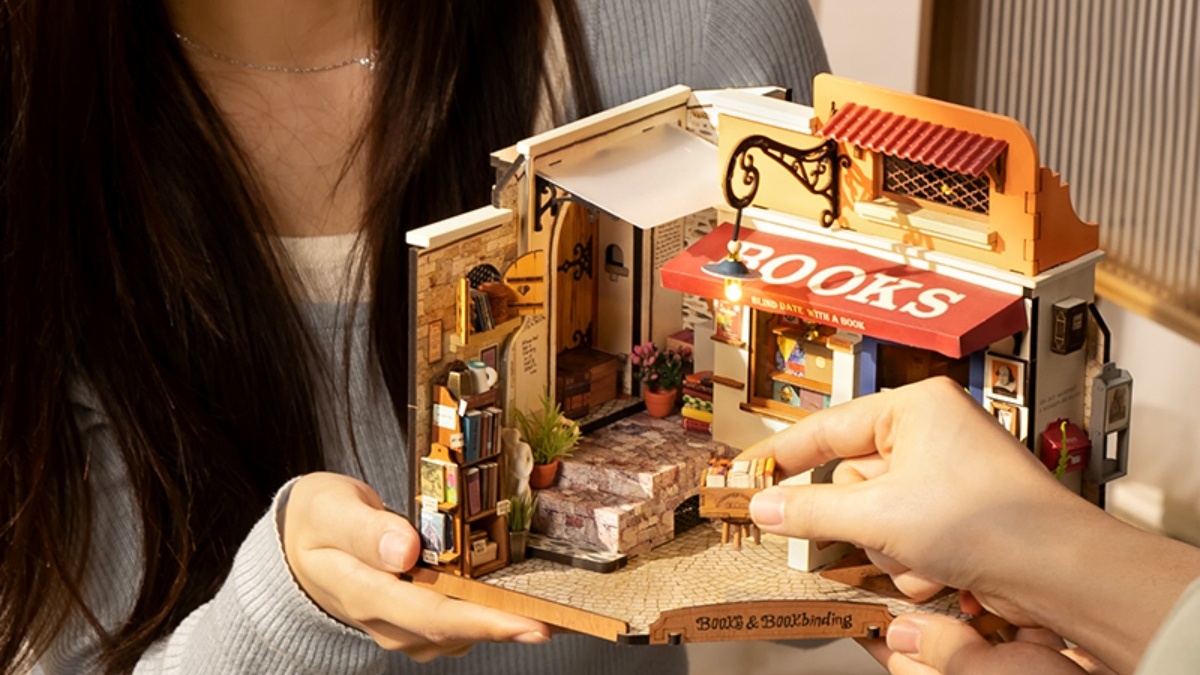
| Nostalgic Corner Shop TGE05 | Showa-era Japanese snack shop | Intermediate | A horizontal storefront with two warm light sources | Collectors with wider shelf space and a love of retro Japan |
Difficulty labels above follow current Rolife product or collection information. Individual pace, experience, and comfort with small parts will still affect how challenging a kit feels. Check the live product page for the latest contents, dimensions, power requirements, and classification before buying.
Choose the World You Want on Your Shelf
For Japanese Streets and Everyday Nostalgia

Sakura Wine Alley TGB11 is the stronger fit when you want a traditional front-facing book nook with a long street perspective. It reads as a travel moment: the viewer looks down an illuminated alley and discovers small signs, storefronts, and dining details.
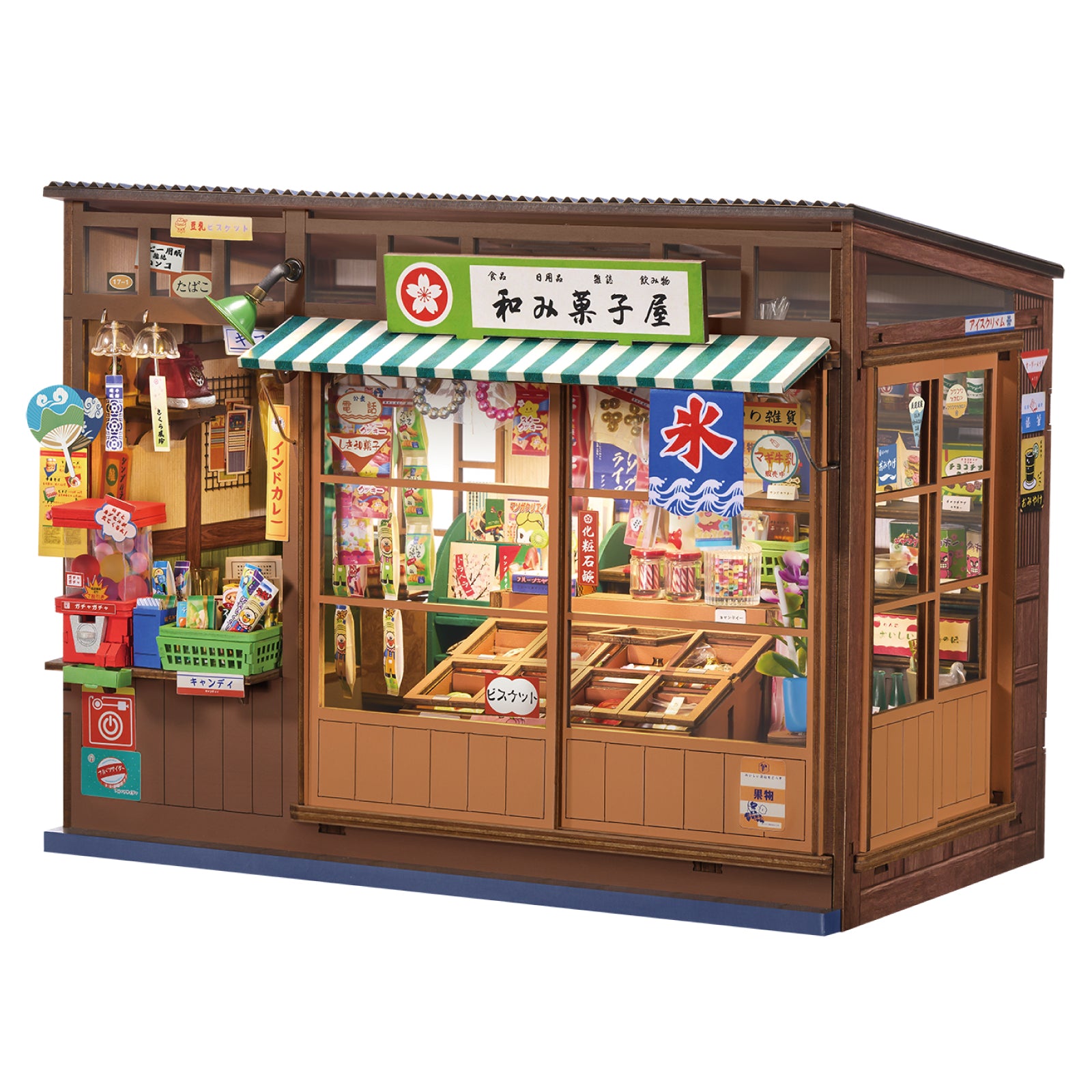
Nostalgic Corner Shop TGE05 is about staying in one place rather than looking down a street. Its 225-piece, snap-fit build recreates a retro neighborhood shop with snack displays, capsule toys, and two warm light sources. The finished size is listed as 246 × 159 × 187 mm, so measure for its horizontal footprint carefully.
For Garden and Cottagecore Decor
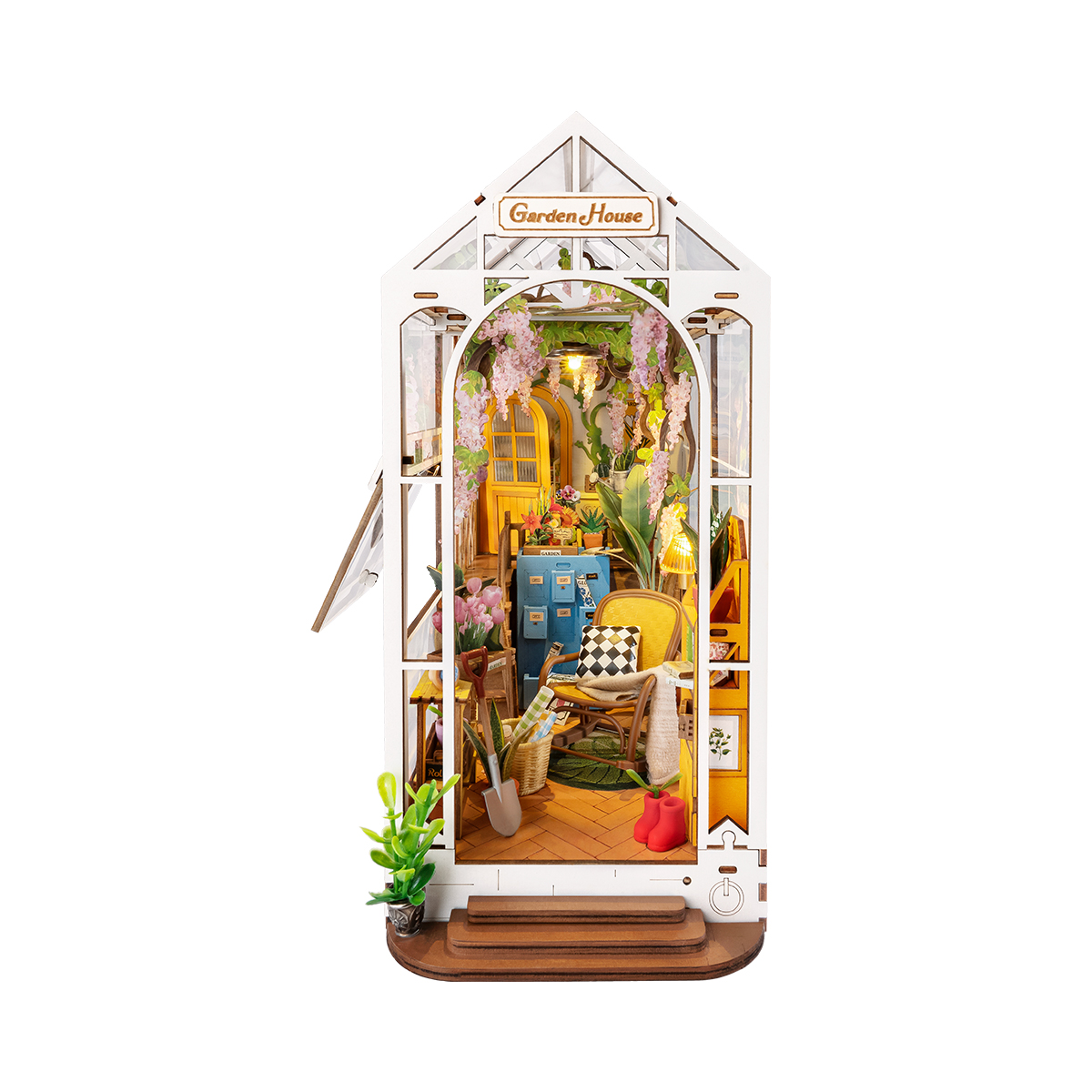
Holiday Garden House TGB06 works best when the room already uses plants, natural wood, floral objects, or light cottage colors. Its advanced classification makes it better for someone who wants the garden-building process as much as the final decor.
For Readers, Studies, and Fantasy Libraries
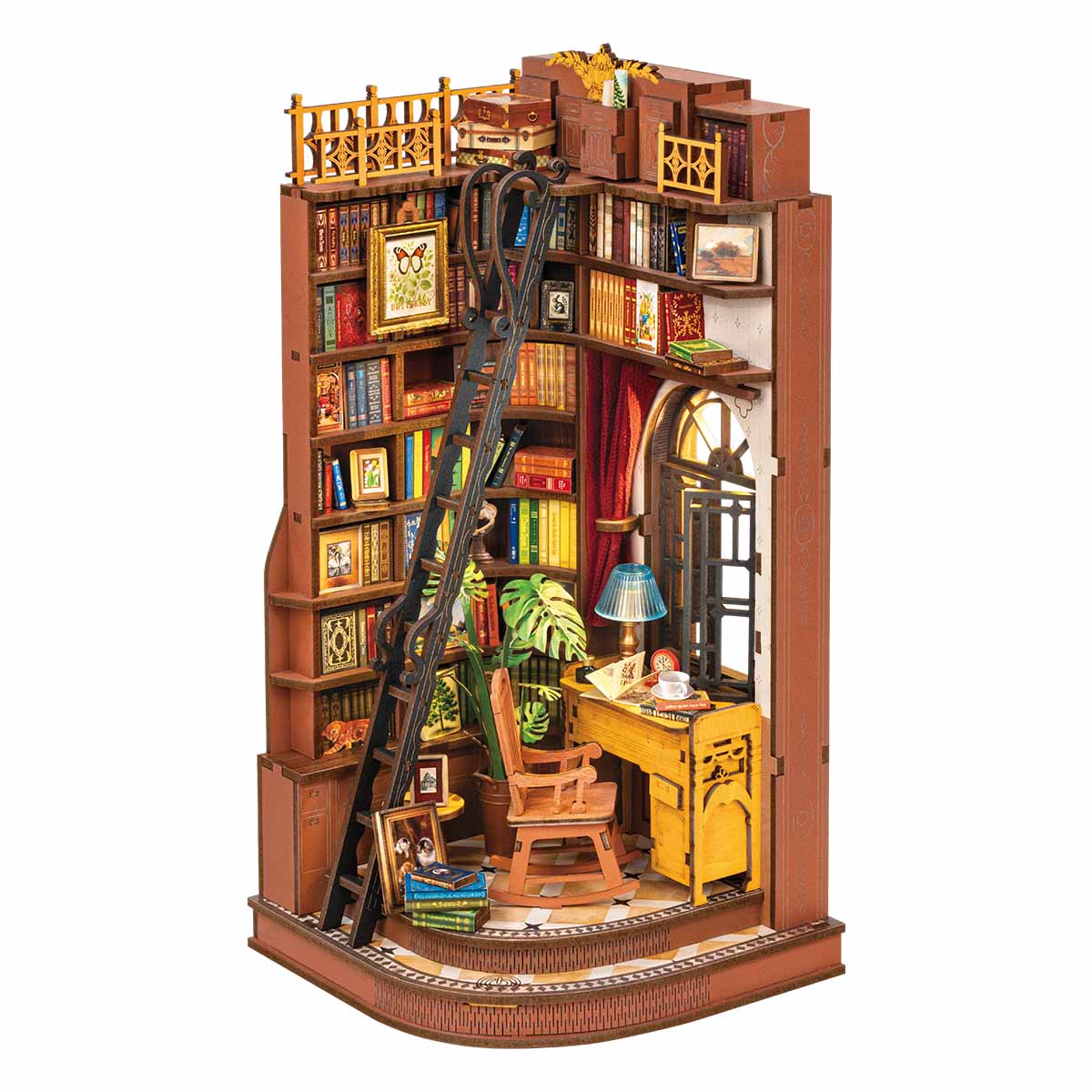
Silent Corner Study TGE02 is the calmer option. Its bookstore-and-study theme does not need bright surrounding decor to make sense, which makes it useful for a work shelf, reading corner, or traditional home library.
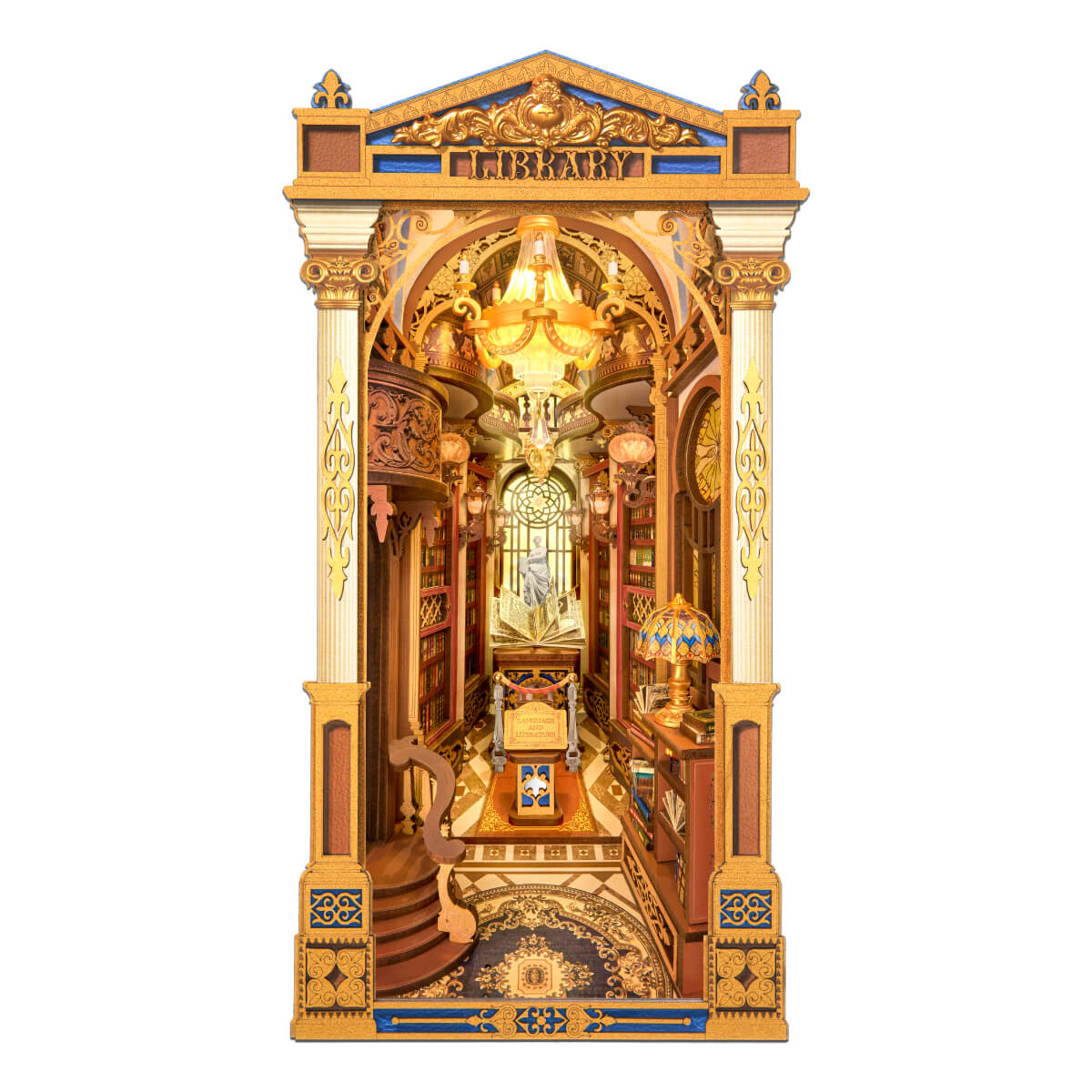
Library of Wonders TGB16 is the more dramatic choice. Choose it when the shelf should look like a portal into an ornate fictional library and when a high-difficulty project feels appealing rather than intimidating.
For a Long, Detail-Rich Shop Build
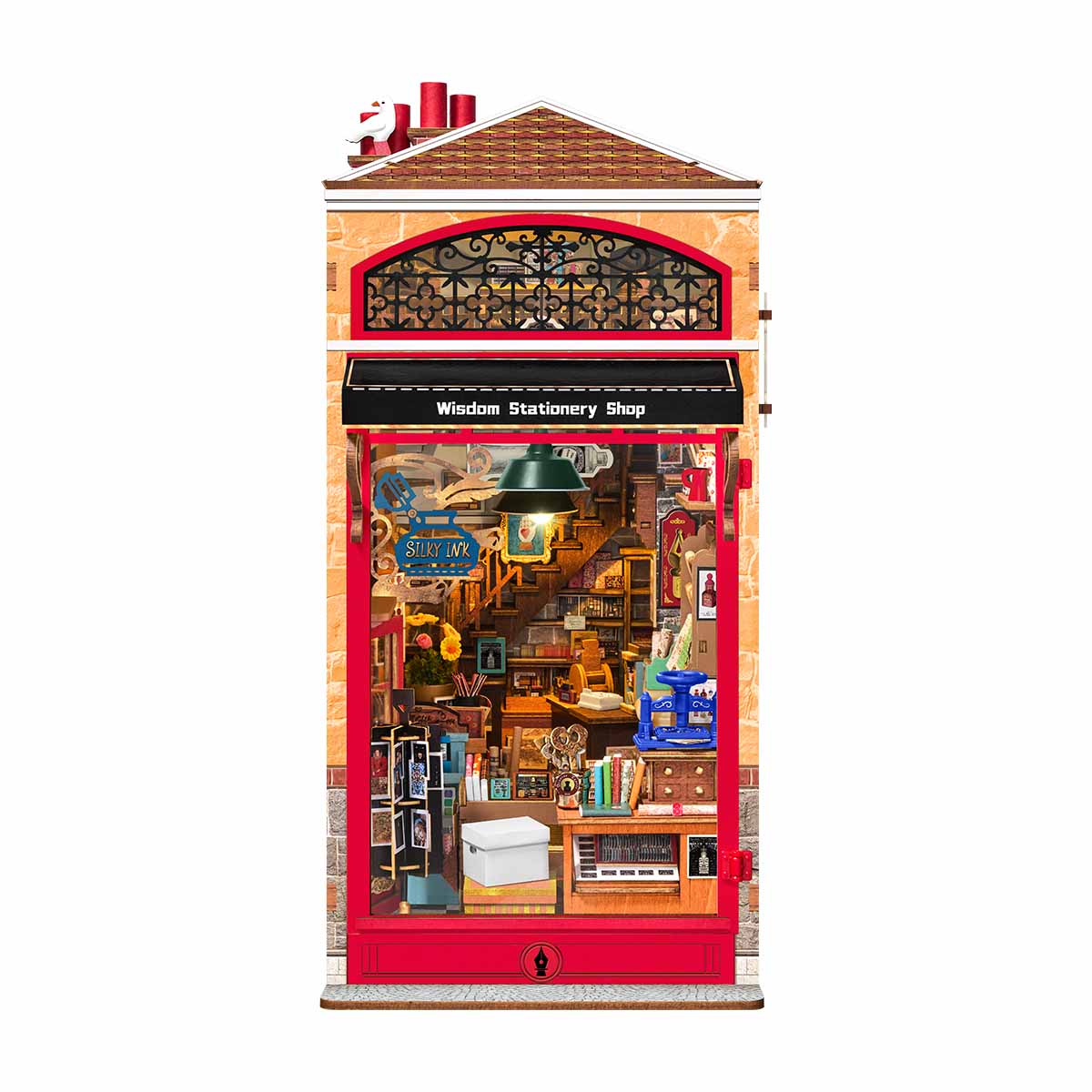
Wisdom Stationery Shop TGB19 is the project-oriented choice in this group. Rolife lists 472 pieces and a high difficulty level, while the detailed product review estimates about eight hours of assembly. Its opening front window and illuminated shop interior make the completed model easy to explore at close range.
Choose the Build Experience, Not Just the Finished Scene
Two products with similar finished dimensions can feel very different to assemble. Decide which kind of attention you enjoy before choosing.
- A balanced first or second project: Intermediate kits such as Sakura Wine Alley, Silent Corner Study, and Nostalgic Corner Shop provide substantial detail without placing them in the highest current difficulty group.
- A more involved architectural build: Holiday Garden House is classified as advanced and suits builders who want the structure and plant details to be the main event.
- A high-detail challenge: Library of Wonders and Wisdom Stationery Shop are better when you enjoy longer sessions, organizing small parts, and checking each step carefully.
If this is your first miniature project, browse the book nook kits for beginners before committing to a high-difficulty model. A simpler first build can teach part handling, lighting installation, and sequence planning without sacrificing the pleasure of the finished display.
Compare Lighting, Access, and Viewing Angle
Lighting is part of the story, but it is also a practical feature. A warm glow can make an alley, garden, or library feel deeper in the evening; poor access can make that same light inconvenient to use.
- Before assembly: Read the current instructions for battery type, wiring, and switch location.
- During assembly: Test the lighting at the recommended stage instead of waiting until every panel is closed.
- For display: Leave enough space to operate the switch and change batteries without moving a full row of books.
- For photography: Turn down harsh room lighting and expose for the miniature's interior glow so that small details remain visible.
Also consider whether the model has a front panel, opening window, or exposed viewing side. Wisdom Stationery Shop invites close inspection through its opening front window, while the horizontal Nostalgic Corner Shop needs more shelf width to reveal its storefront composition.
Match the Kit to Its Display Location
| Location | What matters most | Good directions to explore |
|---|---|---|
| Between novels on a bookshelf | Front view, depth, and a scene that reads from one direction | Sakura Wine Alley, Silent Corner Study, Library of Wonders |
| Wide shelf or sideboard | Frontage, side details, and room around the model | Nostalgic Corner Shop, Wisdom Stationery Shop |
| Plant shelf or cottage room | Color harmony and enough light around foliage details | Holiday Garden House |
| Desk or reading corner | Subtle color, comfortable night lighting, and easy switch access | Silent Corner Study, Sakura Wine Alley |
Book Nook Checklist Before You Buy
- Measure the exact height, width, and depth of the intended display space.
- Check the live product page for finished size, piece count, difficulty, lighting, power requirements, and included materials.
- Choose the theme that fits the room and the books around it.
- Decide whether you prefer a front-facing depth illusion or a wider storefront view.
- Match the difficulty to your patience, dexterity, and previous miniature-building experience.
- Plan where you will build, sort parts, and leave work safely between sessions.
- Confirm that the switch and battery area will remain accessible after display.
Frequently Asked Questions
How do I choose my first book nook?
Start with the space where it will be displayed, then choose a theme you want to look at for a long time. Check the current difficulty level and avoid selecting only by piece count, because part size, construction sequence, and lighting can also affect the build.
Are all Rolife book nooks the same size?
No. Dimensions and orientation vary by model. Nostalgic Corner Shop, for example, uses a wider horizontal format, while many other book nooks are designed as narrower front-facing inserts. Always check the finished dimensions on the current product page.
Which book nook is best for readers?
Silent Corner Study offers a calm study-and-bookstore mood, while Library of Wonders creates a more theatrical fantasy library. Choose based on whether the recipient prefers quiet realism or imaginative drama.
Which model suits Japanese-style decor?
Sakura Wine Alley creates the perspective of an evening alley, while Nostalgic Corner Shop focuses on a Showa-era neighborhood store. The first is better for a deep street view; the second is better for a wider storefront display.
Should a beginner buy an advanced book nook kit?
A patient beginner can complete many detailed kits by following the instructions carefully, but a beginner-classified model is usually a more comfortable introduction. Choose an advanced or high-difficulty kit when the building challenge itself is part of the appeal.
Choose for Both the Shelf and the Builder
The right book nook does two jobs: it creates a world you want to see on the shelf, and it provides a making experience you will enjoy before it gets there. Measure first, choose the mood second, and use difficulty, lighting, and viewing angle to make the final decision.
Explore the full Rolife book nook collection, then open the current product page for your shortlist and verify every practical detail before ordering.