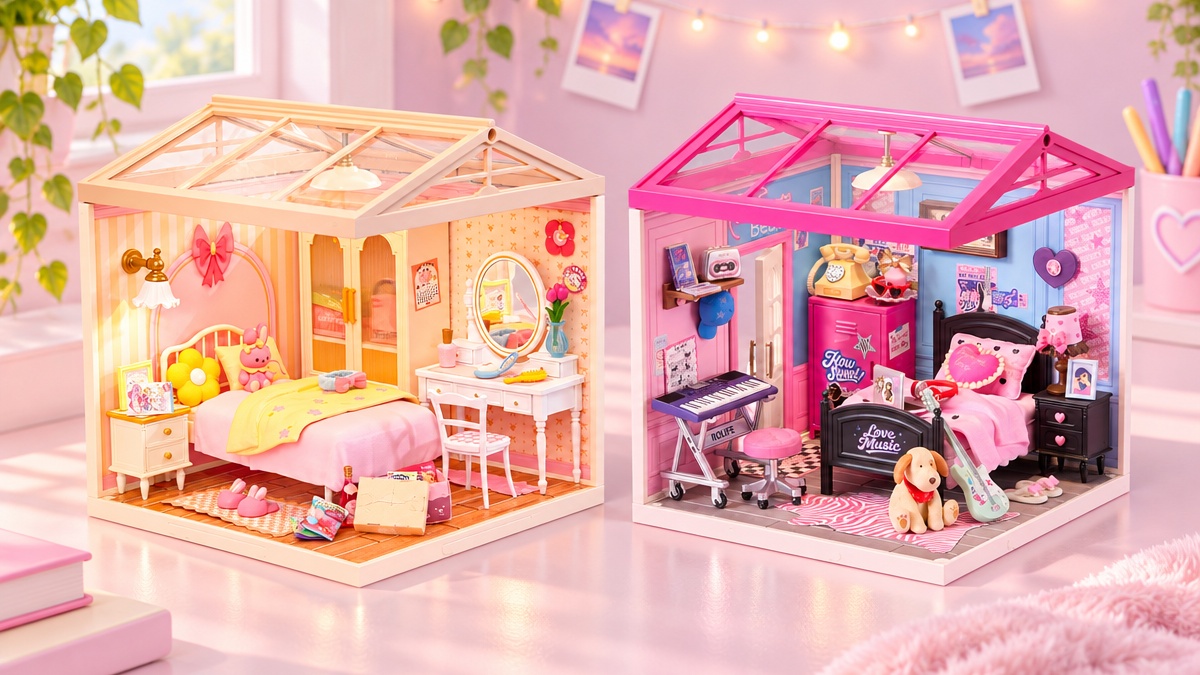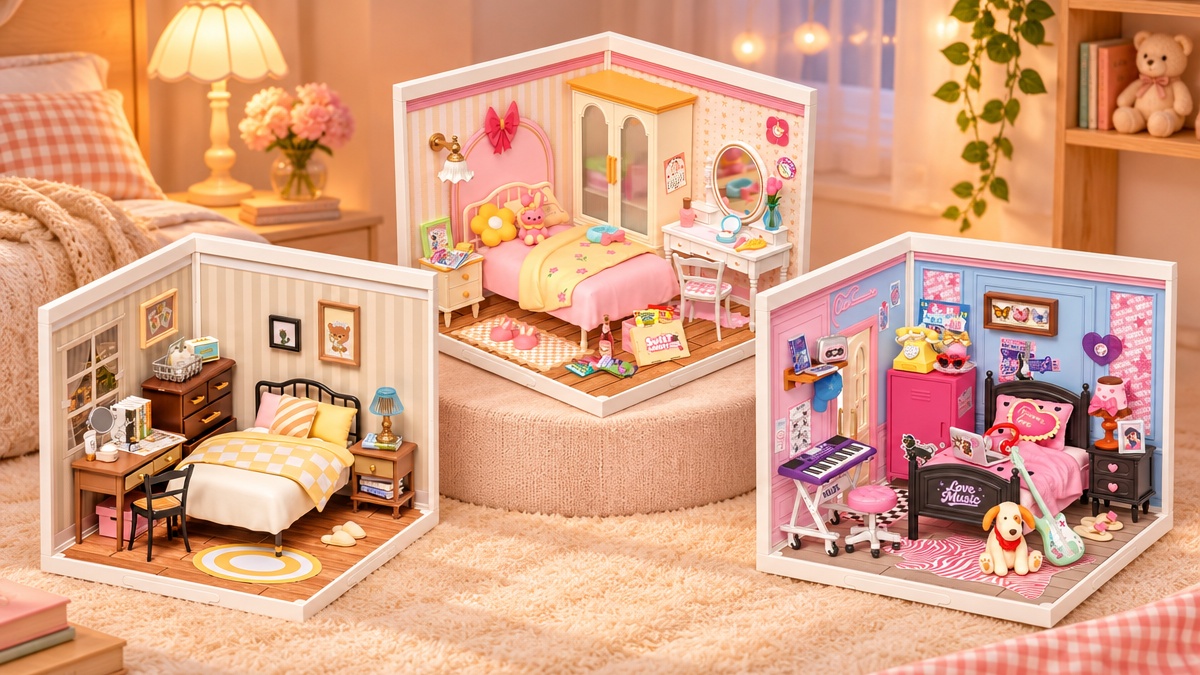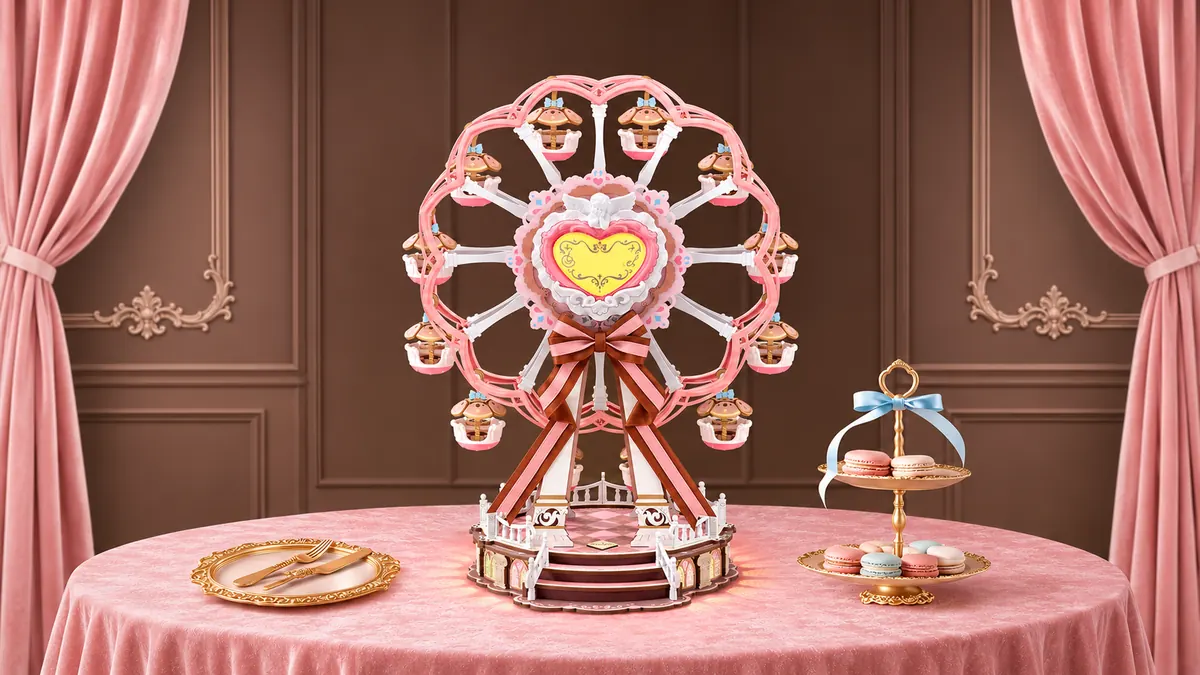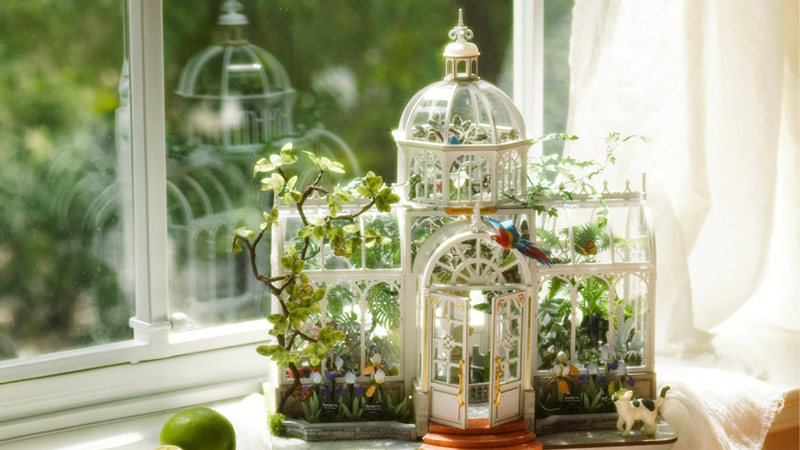
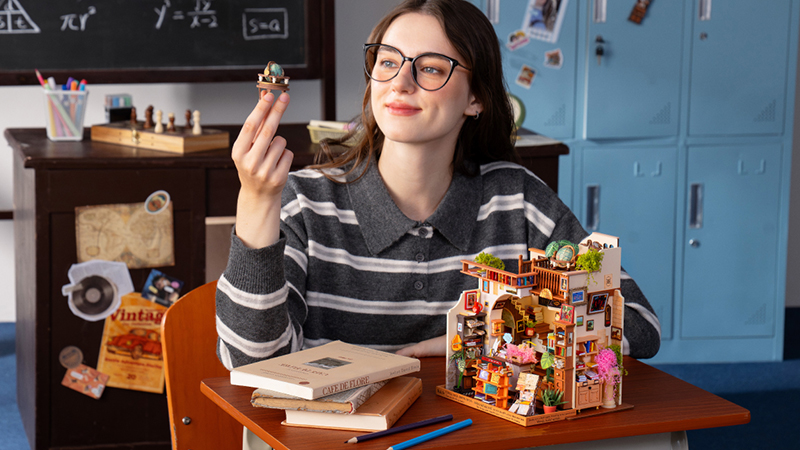
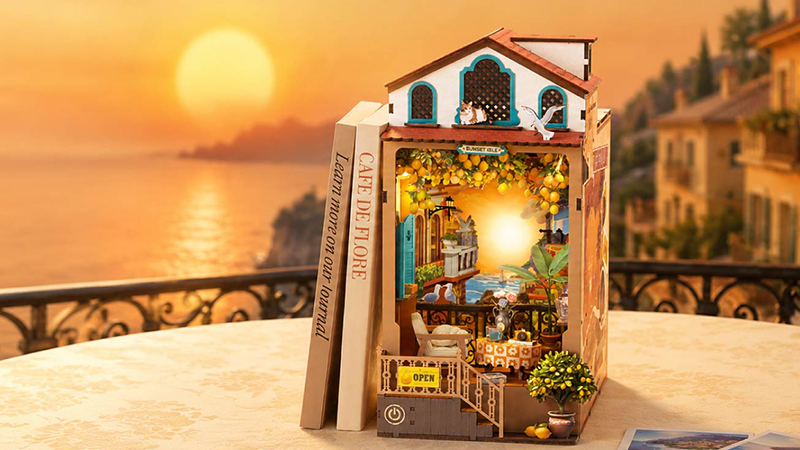
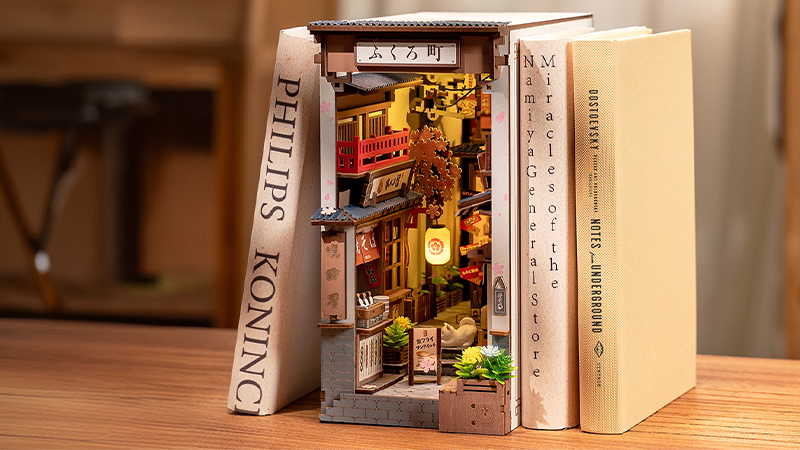
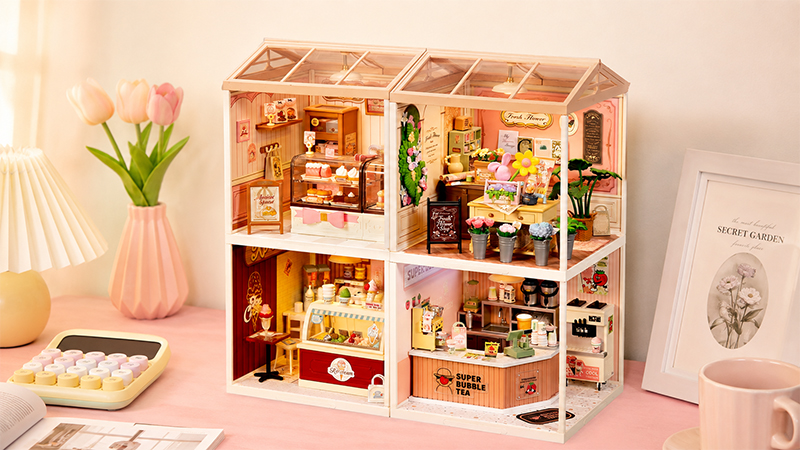
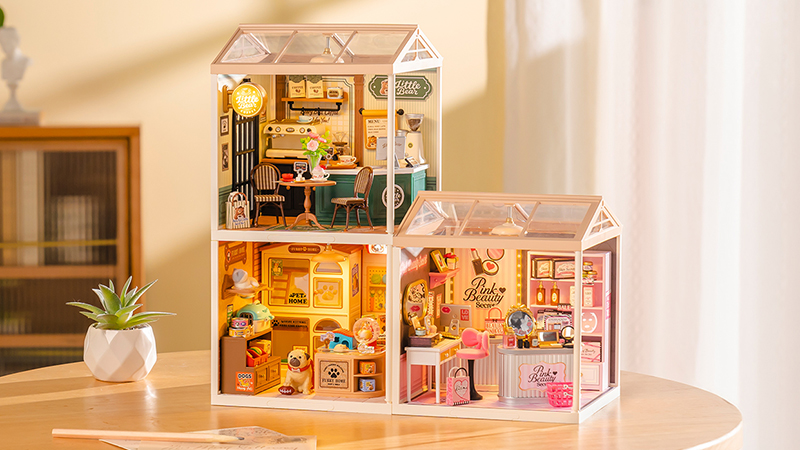
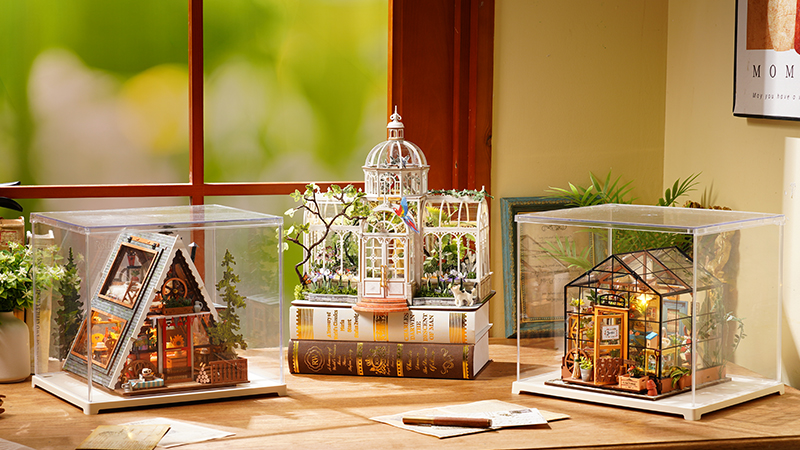
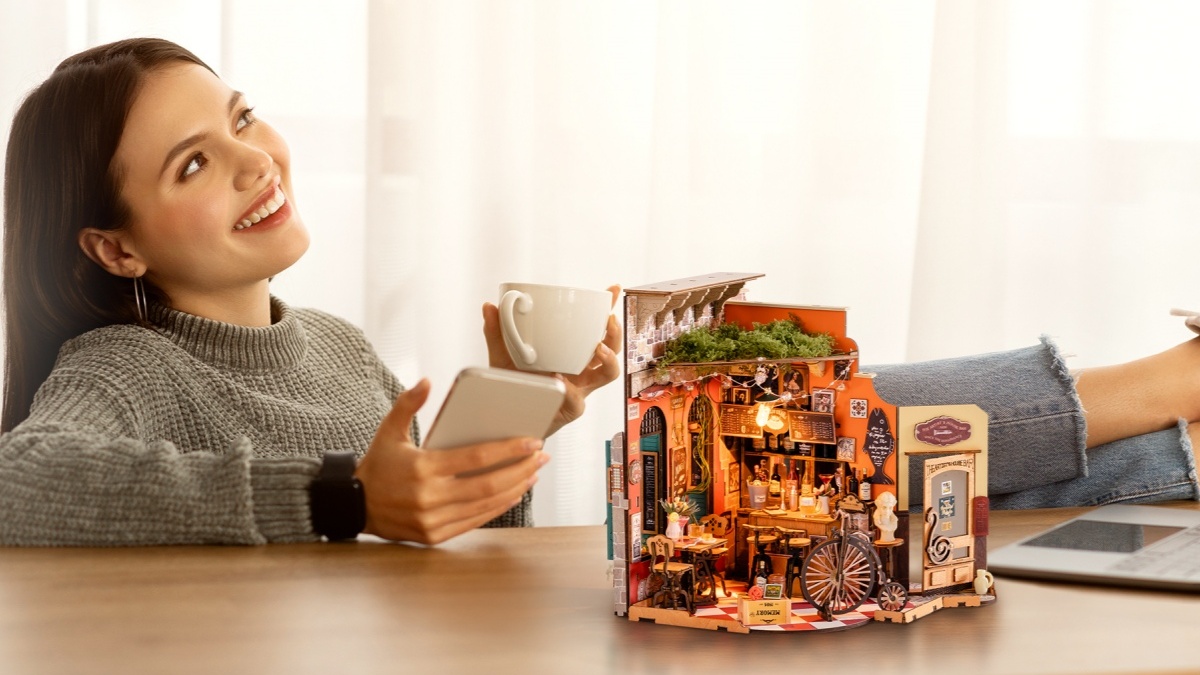
For most adults, miniature kits are a calming, screen-free hobby that supports focus, patience, and mindfulness, especially when the kit matches the builder's skill level.
The key is not the hobby itself, but the cognitive experience it creates while building.
Explore related Rolife categories: DIY miniature dollhouse kits, book nook kits, DIY craft kits, and wooden flower craft kits.

Quick Answer
Miniature kits are usually relaxing when:
- the difficulty matches your skill level
- you build at a slow, comfortable pace
- you focus on the process instead of finishing quickly
They may feel stressful only when the kit is too advanced or when you rush the experience.
Compared to other creative hobbies like LEGO sets or book nook kits, miniature kits tend to offer a slower, more immersive relaxation style.
Why Miniature Kits Feel Relaxing
Miniature building supports relaxation through three core psychological mechanisms:
1. Focused Attention Reduces Mental Noise
Step-by-step assembly gently narrows your attention to a single task, reducing overthinking and mental overload.
2. Small Progress Creates Emotional Stability
Every completed section provides visible progress, which helps create:
- satisfaction
- calm motivation
- a sense of control
3. Hands-On Work Slows Cognitive Pace
Working physically with small components helps shift the brain away from digital stimulation and repetitive thought loops.
This creates a slower, more grounded mental rhythm.
When Miniature Kits Can Feel Stressful

Miniature kits are not always relaxing in every situation.
They may feel stressful when:
1. Difficulty Is Too High
Too many small parts or complex structures can overwhelm beginners.
2. The Process Feels Rushed
Trying to finish quickly removes the calming effect.
3. Lack of Patience With Detail Work
Miniature kits require slow attention rather than speed.
In most cases, stress comes from mismatch between expectation and complexity, not the hobby itself.
How Do You Match the Build to Your Current Energy?
A craft can look calming and still feel demanding on the wrong day. Detailed assembly often helps when you want a clear attentional anchor, but the same fine-motor work can feel frustrating when you are already tired, rushed, physically tense, or sensitive to mistakes.
| How you feel | Better building choice | What to avoid for now |
|---|---|---|
| Restless but able to concentrate | A short, clearly numbered assembly stage that keeps both hands occupied | Open-ended decorating with too many choices |
| Mentally tired | Sorting parts, reading the next steps, or completing one simple repeated task | Precision cutting, wiring, or a stage with irreversible placement |
| Calm and ready for detail | A more immersive section with furniture, paper craft, lighting, or decoration | Rushing to finish several stages in one sitting |
| Frustrated or physically uncomfortable | Pause, write down the next step, and store the parts safely | Forcing a delicate step simply to reach a stopping point |
The goal is not to prove that you can finish a difficult stage in one sitting. Choose a task that matches your available attention, stop before fatigue creates avoidable mistakes, and return when the project feels inviting again. Building can support a relaxing routine, but it is not a substitute for professional care when stress or anxiety is persistent or severe.
If you need to pause, use the unfinished Rolife kit storage checklist so restarting does not require rebuilding your workspace from memory.
The Psychology Behind It
The relaxation effect depends on cognitive load balance:
| Condition | Mental Effect |
|---|---|
| Skill matches difficulty | Calm focus / flow state |
| Too difficult | Cognitive overload |
| Too easy | Low engagement |
| Rushed mindset | Mental tension |
Miniature kits are most effective when they create a flow state, a focused mental state where time feels slower and attention feels stable.
Miniature Kits vs LEGO vs Book Nook (Fair Comparison)
All three hobbies are relaxing in different ways. None is better or worse; they simply support different mental preferences.
LEGO Sets (Structured Relaxation)
LEGO is a system-based building experience with clear instructions and predictable steps.
LEGO is often preferred for:
- fast, satisfying building sessions
- structured step-by-step logic
- immediate visual progress
- short creative breaks
LEGO tends to feel like active, structured relaxation.
Miniature Kits (Immersive Relaxation)
Miniature kits focus on detail, atmosphere, and slow creative immersion.
Miniature kits are often preferred for:
- mindful, slow crafting
- detailed scene building
- longer relaxation sessions
- decorative display creation
They support a more immersive and calming flow experience.
Book Nook Kits (Story-Based Relaxation)
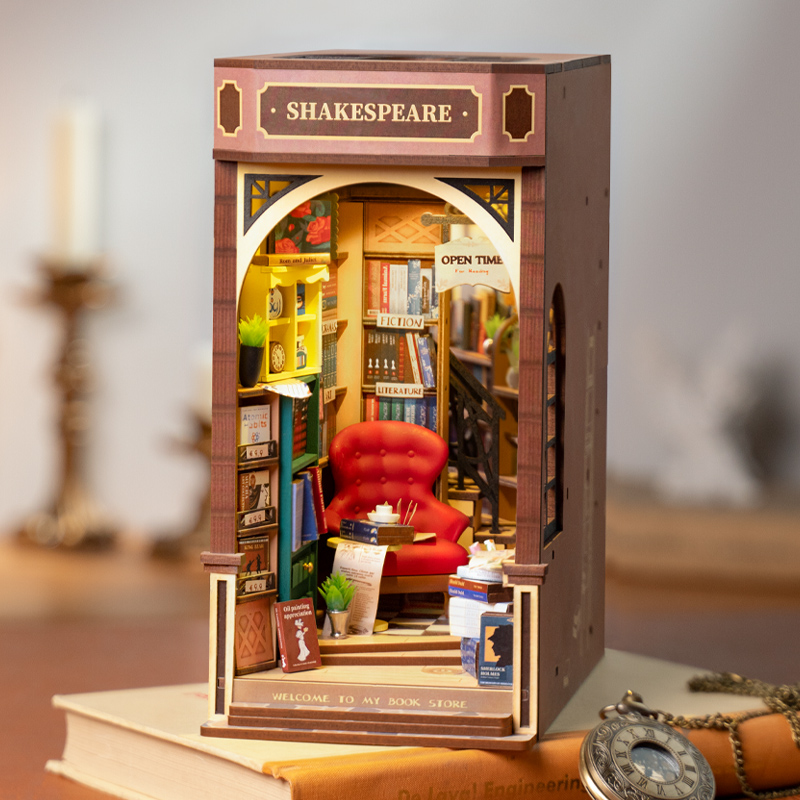
Book nook kits sit between bookshelves and create miniature scenes.
Book nook kits are often preferred for:
- storytelling atmosphere
- cozy evening hobbies
- aesthetic home decor creation
- reading-inspired creativity
They combine imagination, relaxation, and display value.
Neutral Comparison Summary
| Hobby | Speed | Experience | Relaxation Type |
|---|---|---|---|
| LEGO | Fast | Structured building | Quick satisfaction |
| Miniature Kits | Slow | Immersive crafting | Mindful relaxation |
| Book Nook | Medium | Story-driven building | Emotional calm |
Which Hobby Should You Choose?
Your best choice depends on your mental state, not skill level.
Choose LEGO If You Want
- quick creative satisfaction
- structured instructions
- short stress breaks
Choose Miniature Kits If You Want
- deep relaxation after work
- screen-free mindfulness
- slow creative focus
Choose Book Nook Kits If You Want
- cozy emotional experience
- decorative bookshelf pieces
- story-like creative escape
Best Beginner-Friendly Miniature Options
If you are new, start simple:
| Kit Type | Beginner-Friendly Themes | Best For |
|---|---|---|
| Miniature House Kits | Cozy rooms, cafe / bakery scenes, small interior spaces | Deep focus and stress relief routines |
| Book Nook Kits | Library scenes, fantasy corridors, street-style dioramas | Evening relaxation and storytelling mood |
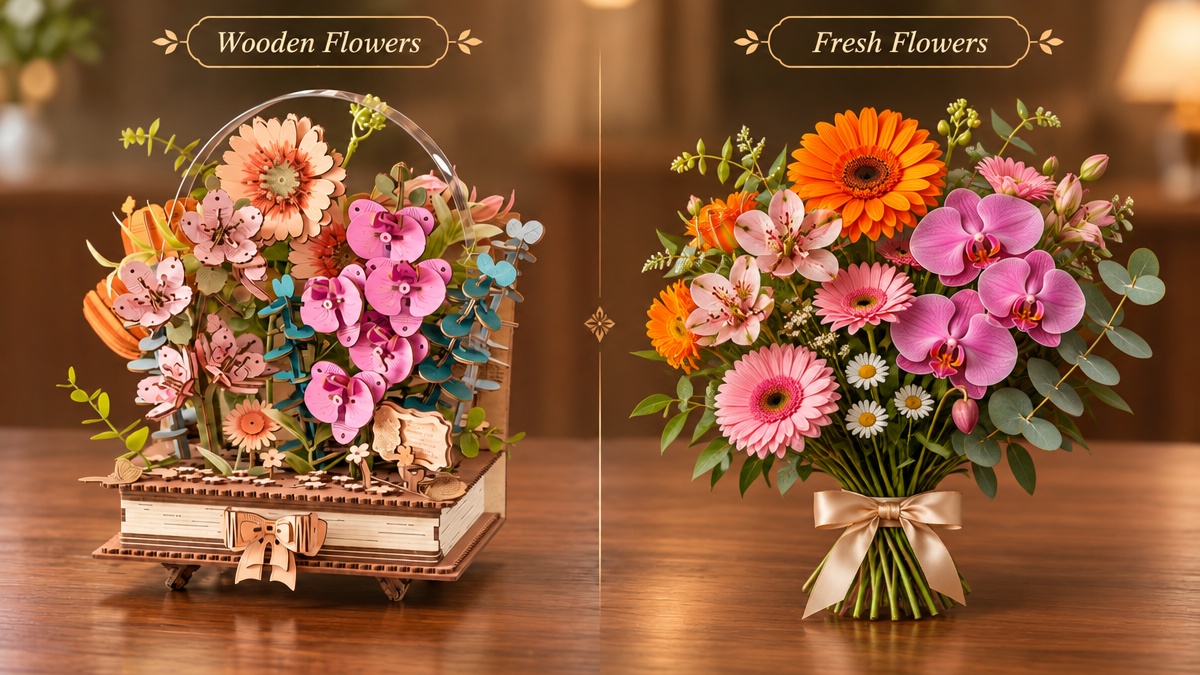
| DIY Craft Kits | Wooden flowers, simple assembly kits, light creative builds | Low-energy relaxation |
Why Miniature Kits Are Effective for Stress Relief
Stress often comes from:
- overstimulation
- constant digital input
- too many decisions
Miniature kits help by introducing structured, physical, slow-paced attention.
This helps the brain shift into a calmer and more stable cognitive rhythm.
Final Thoughts
Miniature kits are not inherently relaxing or stressful. They become what the builder brings into the experience.
When approached at the right difficulty and pace, they are one of the most effective screen-free hobbies for reducing stress and improving focus.
LEGO sets, book nook kits, and miniature kits all offer meaningful relaxation experiences:
- LEGO: structured and fast satisfaction
- Miniature kits: immersive and mindful relaxation
- Book nook kits: cozy and story-driven calm
The best choice depends on how you want your mind to feel, not just what you want to build.
FAQ
Are miniature kits relaxing or stressful?
They are usually relaxing when matched to your skill level, but can feel stressful if the difficulty is too high or if you rush the process.
Are miniature kits good for stress relief?
Yes. They encourage focused, hands-on activity that reduces overthinking and supports mindfulness-like mental states.
Is LEGO or miniature kit more relaxing?
Both are relaxing in different ways. LEGO is more structured and fast-paced, while miniature kits are slower and more immersive.
Why do miniature kits feel calming?
Because they create focused step-by-step engagement that helps slow down mental activity and reduce cognitive overload.