

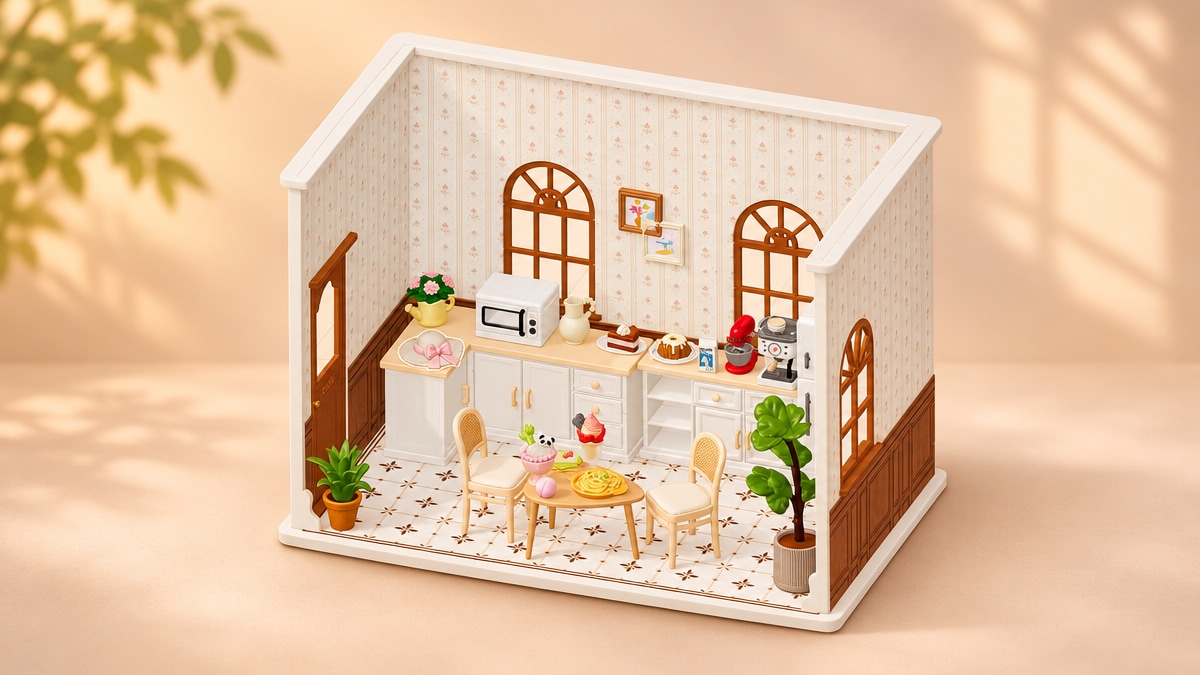
Quick Answer: Give a miniature kitchen or dining area a clear purpose with everyday appliances, neatly arranged dishes and a table close to the counter. These Rolife Community designs were created in the Fun Pieces online designer using furniture and accessories from Fun Pieces, Rolife’s new miniature product range. Every accessory in the designer can be purchased directly from the Rolife website, so you can bring your design to life by assembling and arranging the real pieces at home.
The images below are digital room designs shared in the November 2026 Rolife Community challenge. Any prices visible in screenshots belong to the original design session.
Which everyday routine should your kitchen show?
Before choosing every appliance, decide what is happening in the scene. Is someone making breakfast, preparing coffee, or sitting down to eat? That choice helps you decide which objects need the most visible positions. The first two designs below suggest home-style food and dining spaces. The third is a kitchenware shop, included for its useful approach to displaying dishes.
A small kitchen with home-cooked comfort
Rolife Community maker: Popoleen

Popoleen’s kitchen gathers a coffee machine, mixer and open rice cooker along the counter. A table and chairs sit in front, and a tall plant softens the corner beside the appliances. The room suggests preparing food and eating it without needing separate rooms.
The maker connected the tiny kitchen with the comfort of home cooking. The rice cooker is especially effective as a familiar detail: it gives the scene a specific daily routine rather than a generic row of equipment.
What to try: Choose a few appliances that belong to the same imagined household, then give the meal its own table or surface.
A food-and-drink room with a long counter
Rolife Community maker: Tricia

Tricia’s arrangement uses a long run of pale cabinets for coffee and food-preparation accessories. A table sits in front, creating a second zone where the food could be enjoyed. Plants and wall details keep the room from feeling like a line of equipment alone.
Tricia enjoyed designing a room and its small details. Looking at the arrangement, the long counter provides continuity: the individual appliances read as parts of one food area, while the table gives the foreground a different purpose.
What to try: Let one continuous counter organize the busy objects, and reserve a separate area for dining.
A kitchenware shop with lessons for dish storage
Rolife Community maker: Estelle

Estelle created a kitchen goods store, rather than a home kitchen. Shelves hold dishes and serving pieces, with appliances and cookware gathered around the counter. The repeated pale shelving makes the smaller colors and shapes easier to compare.
Estelle specifically enjoyed hanging an apron and oven mitts on the wall and stacking plates in the game, while noting that neat stacking takes patience. These details offer ideas for a home kitchen too, even though the finished scene is a shop.
What to try: Use shelves and wall space to separate categories of objects instead of covering every part of the counter.
How can you arrange a kitchen without crowding it?
- Place the main cabinets and table first. Check how much floor remains visible between them.
- Group appliances by the routine you want to show, such as coffee or baking.
- Put dishes on shelving where their outlines remain readable.
- Leave one part of the worktop less busy so the important objects stand out.
- Check a second angle before finalizing the plan; a tall appliance may hide a smaller item behind it.
Plan your room and choose the real pieces
For your first version, choose one meal or drink to build the room around. Add the appliances and dishes that make that moment recognizable, then compare the virtual arrangement with the contents of the real Fun Pieces products you plan to buy.
Explore the Fun Pieces furniture and accessories, then try your arrangement in the Fun Pieces online designer. For an introduction to the range, read the story behind Fun Pieces.
Frequently asked questions
Can I combine a miniature kitchen and dining area?
Yes. A table in front of or beside a counter can establish a dining area. Leave enough visible separation for both parts of the scene to be understood.
Should every kitchen accessory go on the counter?
No. Shelves and wall details can hold some of the visual interest, leaving the counter less crowded.
Is the kitchenware shop a home kitchen example?
No. Estelle’s design is a shop. Its dish-stacking and display ideas can inspire a home kitchen, but the original scene should keep its own identity.