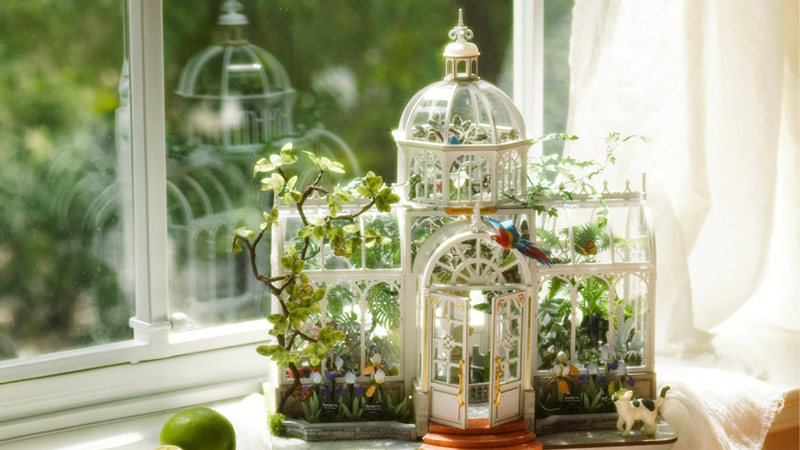
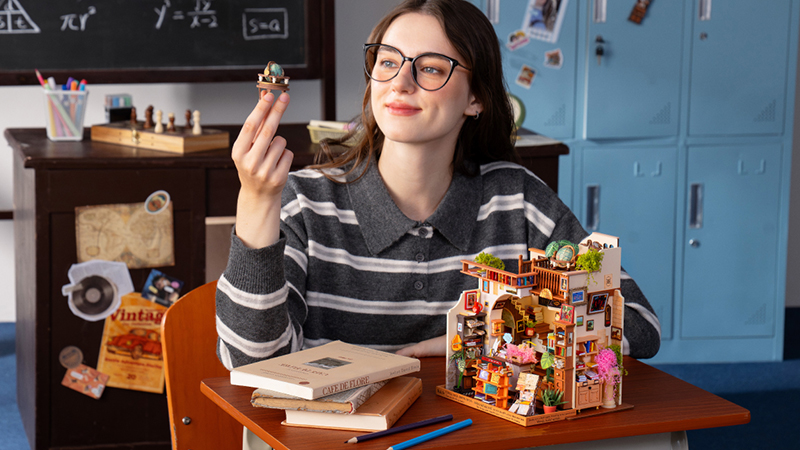
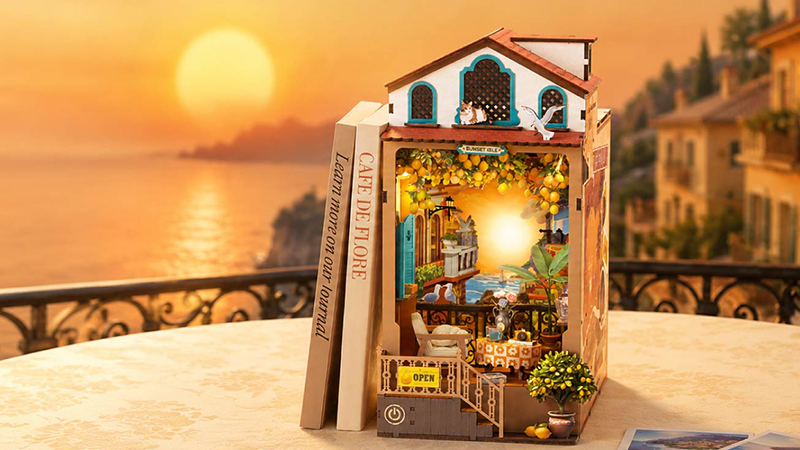
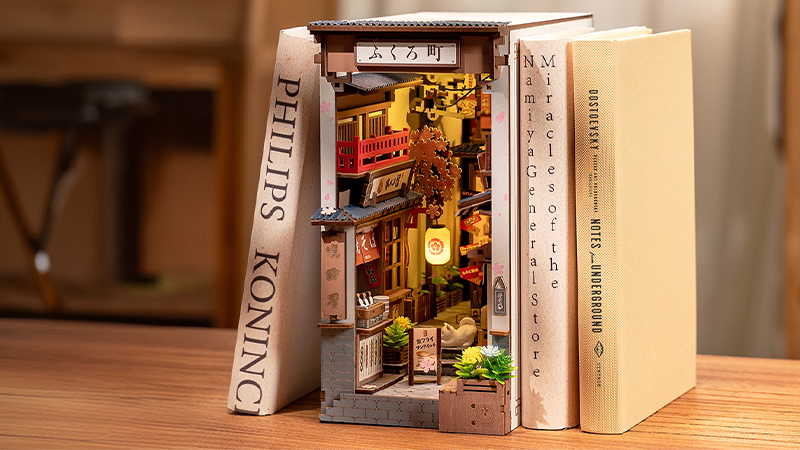

The kit numbers were drawn, boxes changed hands, and a little friendly bargaining began. At Sooke’s second local Robotime gathering, choosing what to build was already part of the fun. Some people knew the kits they hoped to receive; others were seeing the possibilities for the first time.
Jamie Tan hosted the gathering at Sooke Community Hall on July 18, 2026, on a clear, sunny day on Vancouver Island. Returning participants recognized familiar faces, while newcomers arrived curious about the projects waiting for them. Families and close friends joined a group that ranged from young children accompanied by adults to grandparents.
A surprise choice, with room to trade
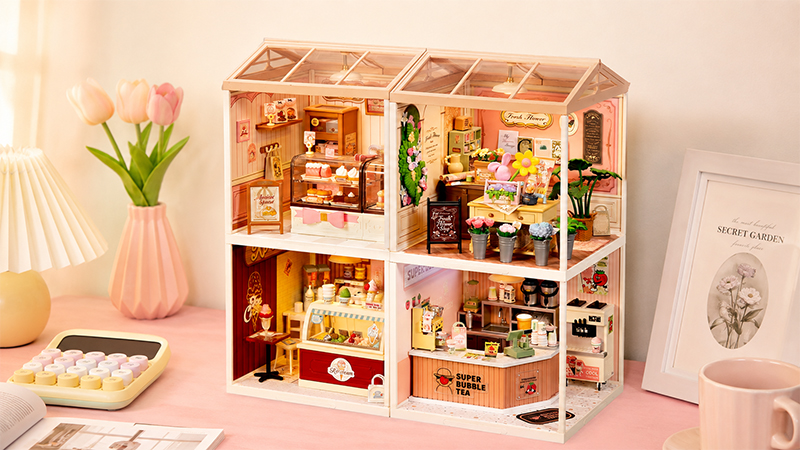
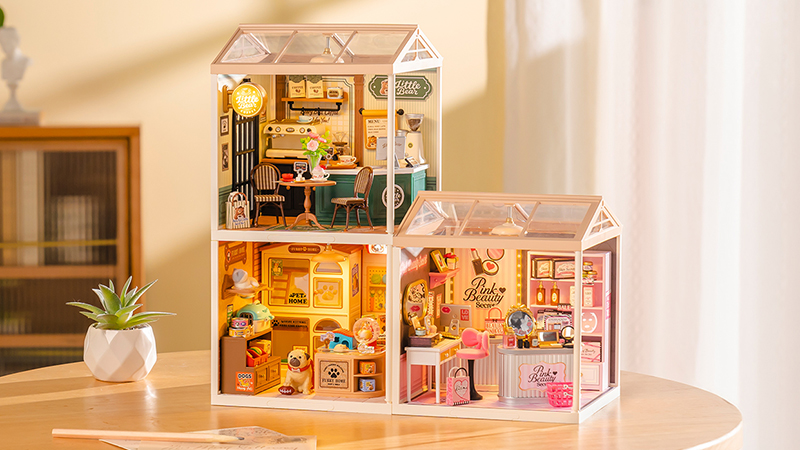
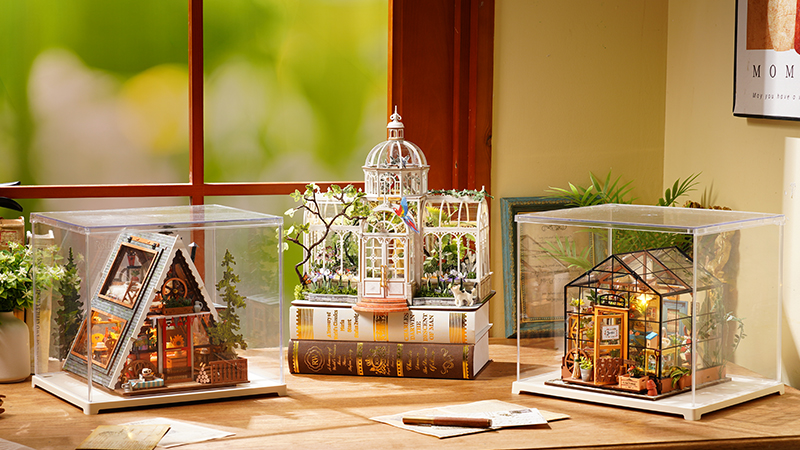
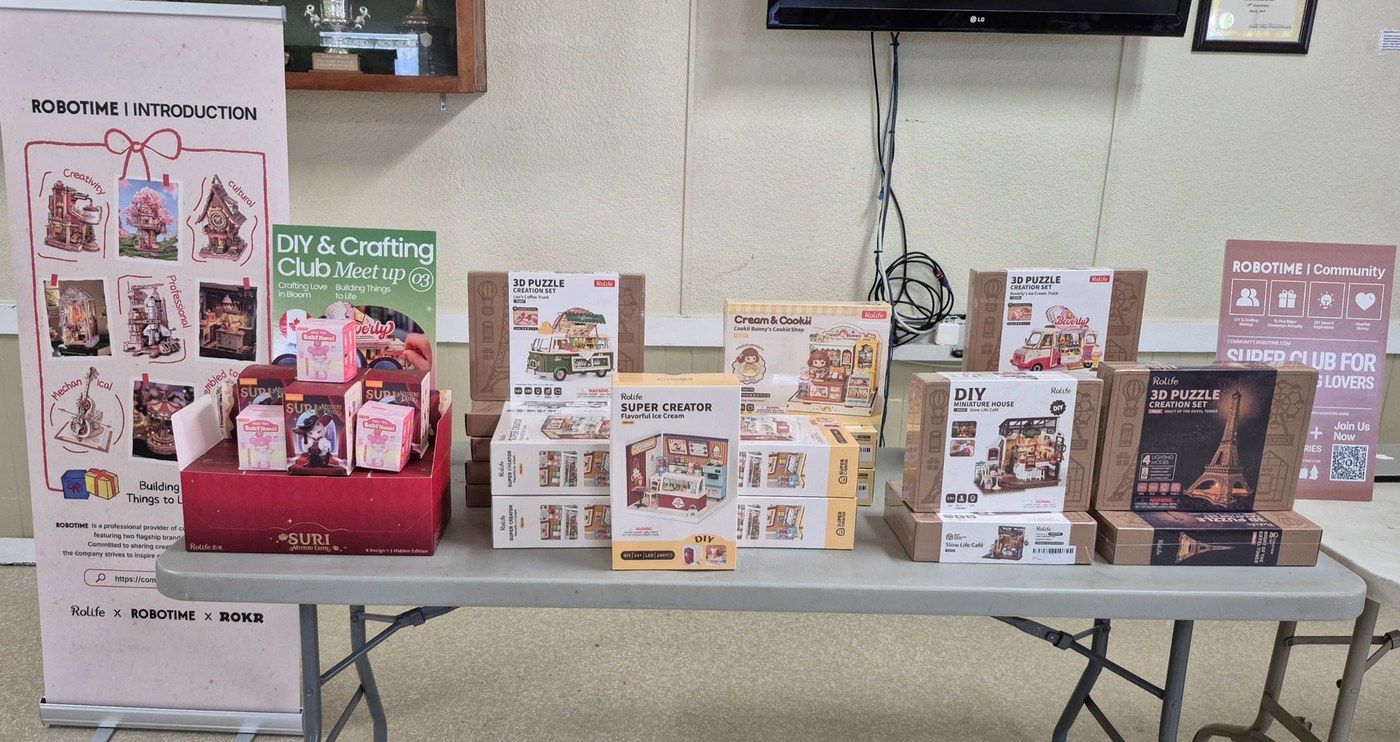
The selection included Leo’s Coffee Truck, Beverly’s Ice Cream Truck, Slow Life Cafe, and an Eiffel Tower build, alongside Flavorful Ice Cream and Cookii Bunny’s Cookie Shop. The variety gave the tables different kinds of work to explore, from small shop scenes to more involved constructions.
Jamie let the children draw their numbers first, steering their choices towards the simpler options she had prepared for the family session. The other participants then drew numbers to discover their kits. Once every box had an owner, people could trade, bringing conversation and negotiation into the room before the building even started.
It was a lively way to get acquainted. Deciding whether to keep a surprise selection or exchange it with someone else gave guests something immediate to talk about. For returning makers, it also offered a chance to recognize a kit they knew and share that familiarity with another person.

Introductions before the first pieces
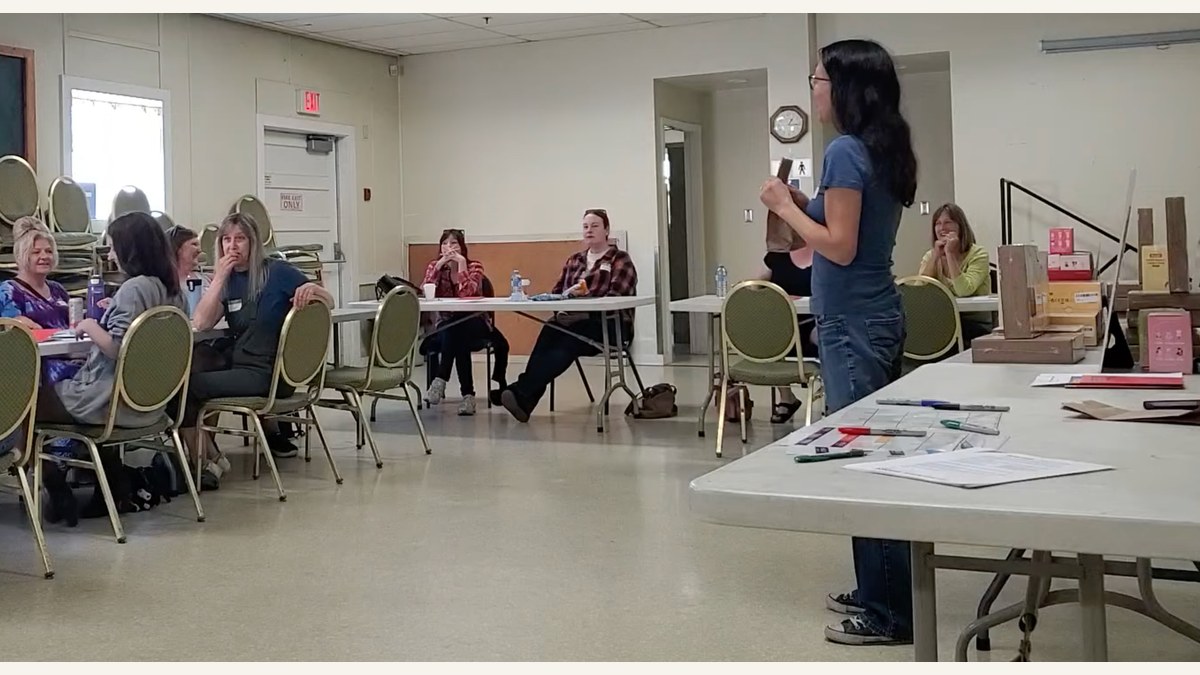
Jamie began the formal welcome by acknowledging Robotime’s sponsorship of the venue, refreshments, kits, and blind boxes. She introduced Robotime and its brands, then made space for the participants to introduce themselves. The session gave people an opportunity to try their skills while spending time with other makers.
The first blind box went to the person whose birthday fell closest to the date of the gathering. With introductions complete and a first prize awarded, attention shifted to the boxes on the tables. The anticipation of receiving a kit became the more absorbing task of figuring out how its pieces fitted together.
Families working side by side
As the afternoon progressed, the room grew noisier with conversation and practical help. People who had experience with a particular kit offered advice, while neighbours working on the same model could compare the step in front of them. Parents helped their children with their builds, making the table a place for shared attention as well as individual progress.
Jamie’s photographs preserve several different scales of participation: a family leaning into a project, makers studying instructions, and small constructions taking shape. Nobody needed to be at the same point for the exchange to work. A person further along could help someone just starting that section, and a question could bring two neighbouring projects into the same conversation.
The gathering had the continuity of a returning group without being limited to those who already knew it. Familiar faces could pick up an earlier connection; new guests could begin one through the kit they had drawn. Jamie described the mixture of experience and ages as one of the pleasures of the day.
Quick games for builders who wanted to keep going
Two more blind boxes were given away through short games. One involved finding a sticker inside the crafting magazine; another asked participants to draw a card and look for a Joker. The activities were deliberately quick because people were already deeply involved in their kits and did not want to lose their progress.
That balance let the prizes interrupt the concentration without taking over the afternoon. A search through a magazine or a single card draw brought a moment of shared anticipation, then everyone could return to the small work waiting on the table.
One prize led to Jamie’s most memorable story. Eight-year-old James won a blind box and offered it to another participant. He did not ask for anything in exchange. Among the kit swaps and giveaways, this was a gift entirely of his own making, and Jamie remembered the gesture with particular affection.
Leaving with plans to return
The group gathered for a photograph as the session came to an end. Jamie described people leaving upbeat and relaxed, saying how much they had enjoyed themselves and asking about another gathering. The finished project pictured in her recap sat alongside the larger achievement of the afternoon: people finding a way to make together.
There were several reasons to remember this sunny day in Sooke. Children had received help from parents, neighbours had shared knowledge, and the surprise of a drawn number had become the satisfaction of building. James’s small act of generosity added one more connection to a room already full of them.
For more photographs and moments, visit Jamie’s Rolife Community recap. The DIY Crafting Club brings together other stories of local makers meeting around a shared table.