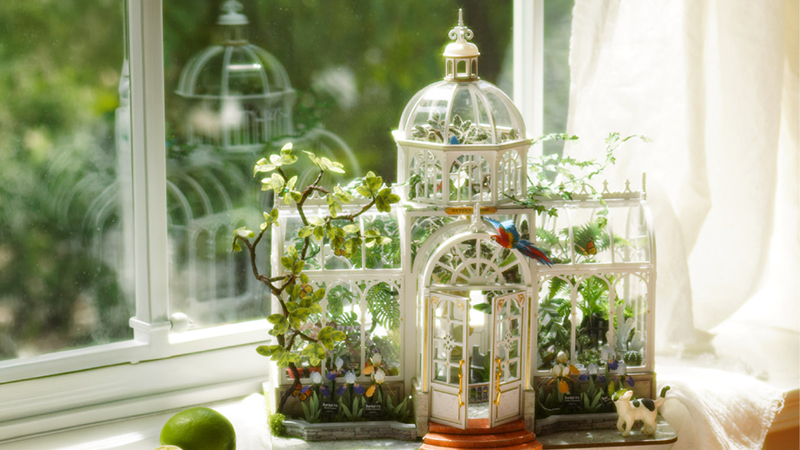


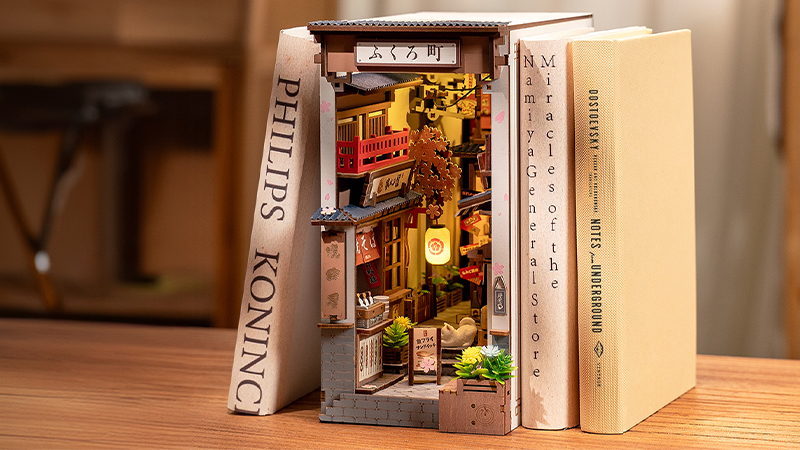
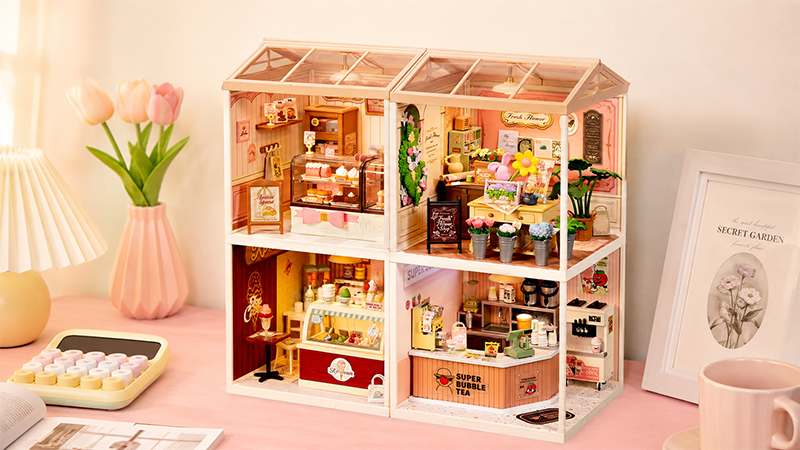
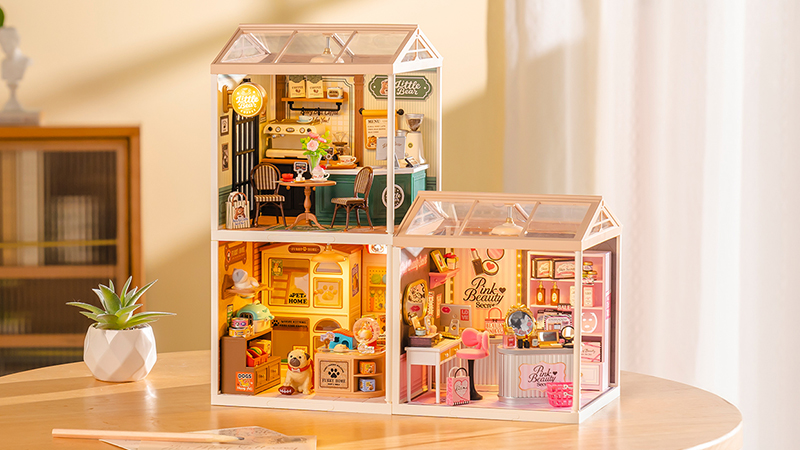

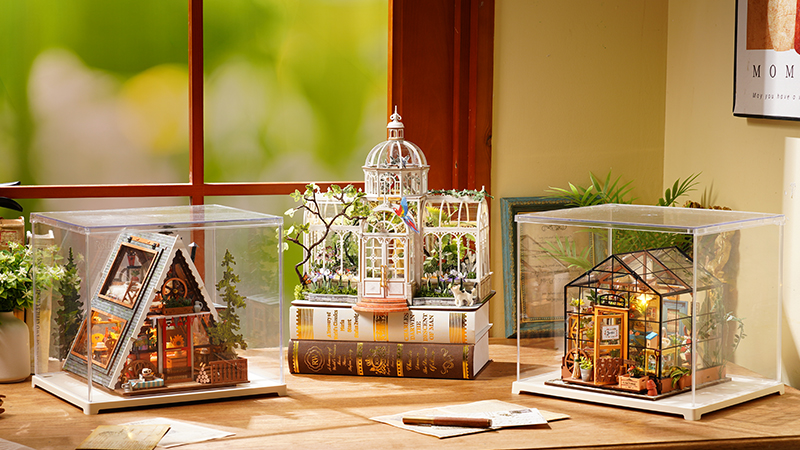
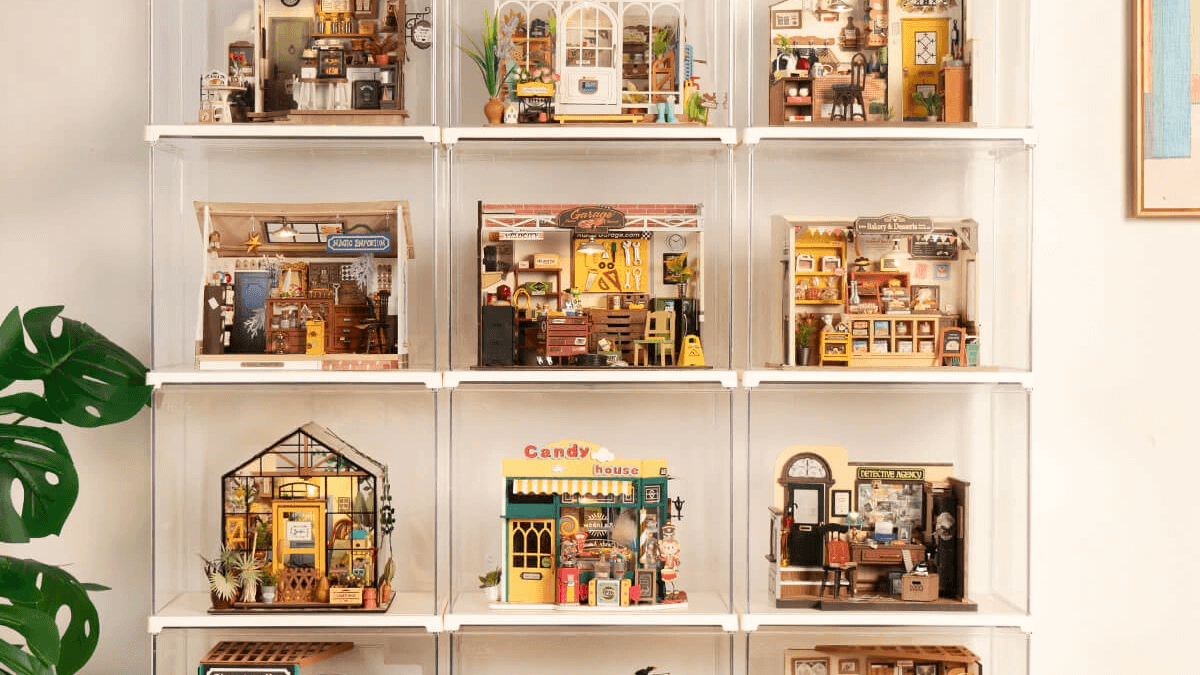
Protect a finished miniature by managing four things: dust, direct light, moisture, and physical movement. If space is limited, keep a smaller edited display visible and rotate the rest from labeled, protected storage.
Finishing a miniature house creates a new question: where should it live now? The safest answer is not always a sealed box, and the prettiest answer is not always an open shelf. A good plan balances visibility, protection, access, and the amount of space you actually have.
This guide helps you choose between open display, a clear case, cabinet display, and protected storage. It also explains how to rotate a growing collection without treating finished builds like clutter.
Four Risks to Check Before You Choose a Display Spot
Walk through the room before you move the model. A location that looks attractive for a photograph may expose the miniature to strong afternoon sun, airflow, moisture, or frequent bumps during everyday use.
| Risk | What to look for | Safer response | Check again |
|---|---|---|---|
| Dust and residue | Open windows, fans, vents, fabric fibers, pets, cooking areas | Move away from airflow or use a clear cover | When shelf dust becomes visible |
| Direct light and heat | Sun patches that move across the shelf, hot lamps, radiators | Choose indirect room light and cooler fixtures | At a different time of day |
| Moisture and temperature swings | Damp walls, bathrooms, basements, attics, condensation | Use a dry interior room with steadier conditions | During seasonal weather changes |
| Physical contact | Narrow shelves, high traffic, pets, children, unstable furniture | Use a deeper stable shelf, cabinet, or fitted case | Whenever the room layout changes |
Should You Use Open Display, a Case, a Cabinet, or Storage?
The right format depends on how often you want to touch the scene and how exposed the location is. Measure the finished model and the usable shelf space before buying a case; product families vary in shape, height, and access points.
| Option | Best for | Main advantage | Main tradeoff |
|---|---|---|---|
| Open shelf | Frequently restyled scenes in a low-dust area | Easy access and natural room styling | Needs more frequent gentle dusting |
| Clear display case | Delicate details, pets, active rooms, long-term display | Reduces dust and accidental contact while keeping the model visible | Requires careful size and door-clearance checks |
| Glass cabinet | Several models displayed together | Creates one protected collection zone | May need shelf-height and lighting adjustments |
| Protected storage | Seasonal pieces and collections larger than the available display area | Preserves space and supports rotation | The model is not continuously visible |
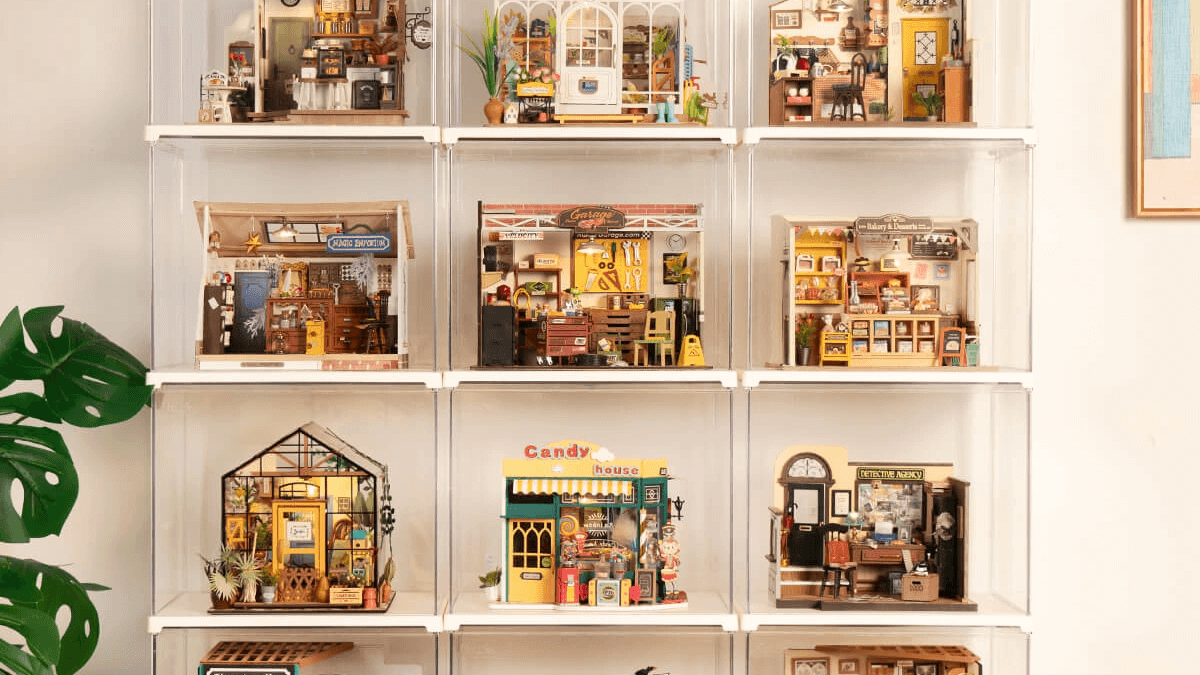
If your main problem is routine dust rather than storage planning, use the focused Help guide How Do I Keep Open-Display Miniatures Dust-Free?. This article goes further by covering sunlight, space, moving, and collection rotation.
How to Choose a Display Case That Actually Fits
Do not choose a case from the product category name alone. Two miniature houses can have very different footprints, roof heights, doors, wires, or removable sections.
- Measure the model at its widest, deepest, and highest finished points, including signs, roof pieces, plants, and other projections.
- Add working clearance so the model can enter the case without scraping delicate details.
- Check how the case opens. A front door may be more practical than lifting a cover over a tall model.
- Plan cable or switch access if the miniature has lighting.
- Confirm the shelf can support the combined footprint and weight of the model, case, and any stacked units.
- Leave enough room to clean around the outside of the case without moving the entire display.
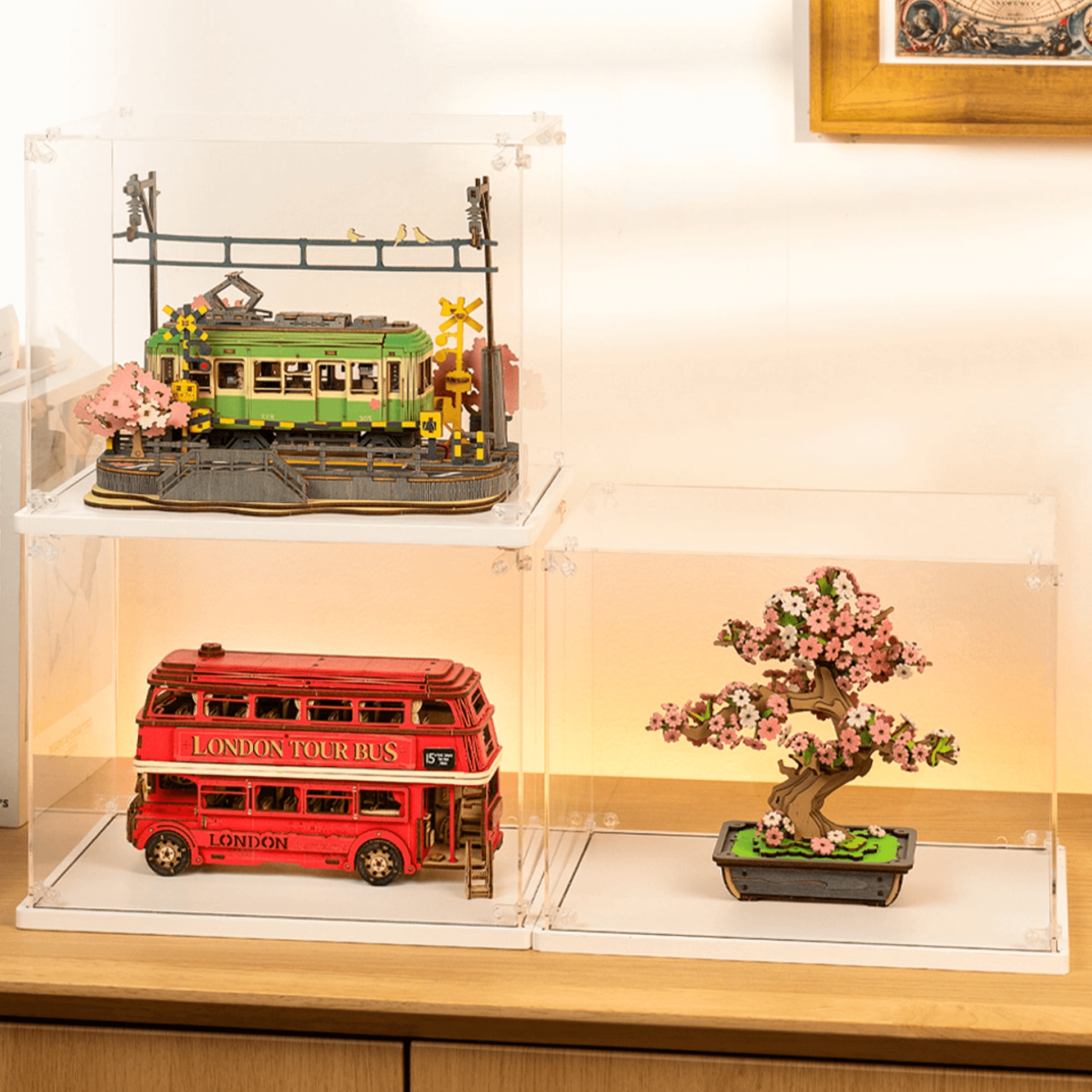
Browse the Rolife display box collection only after recording those measurements. A fitted case should protect the scene without pressing against rooflines, side details, or switches.
Display Box Options for Different Models
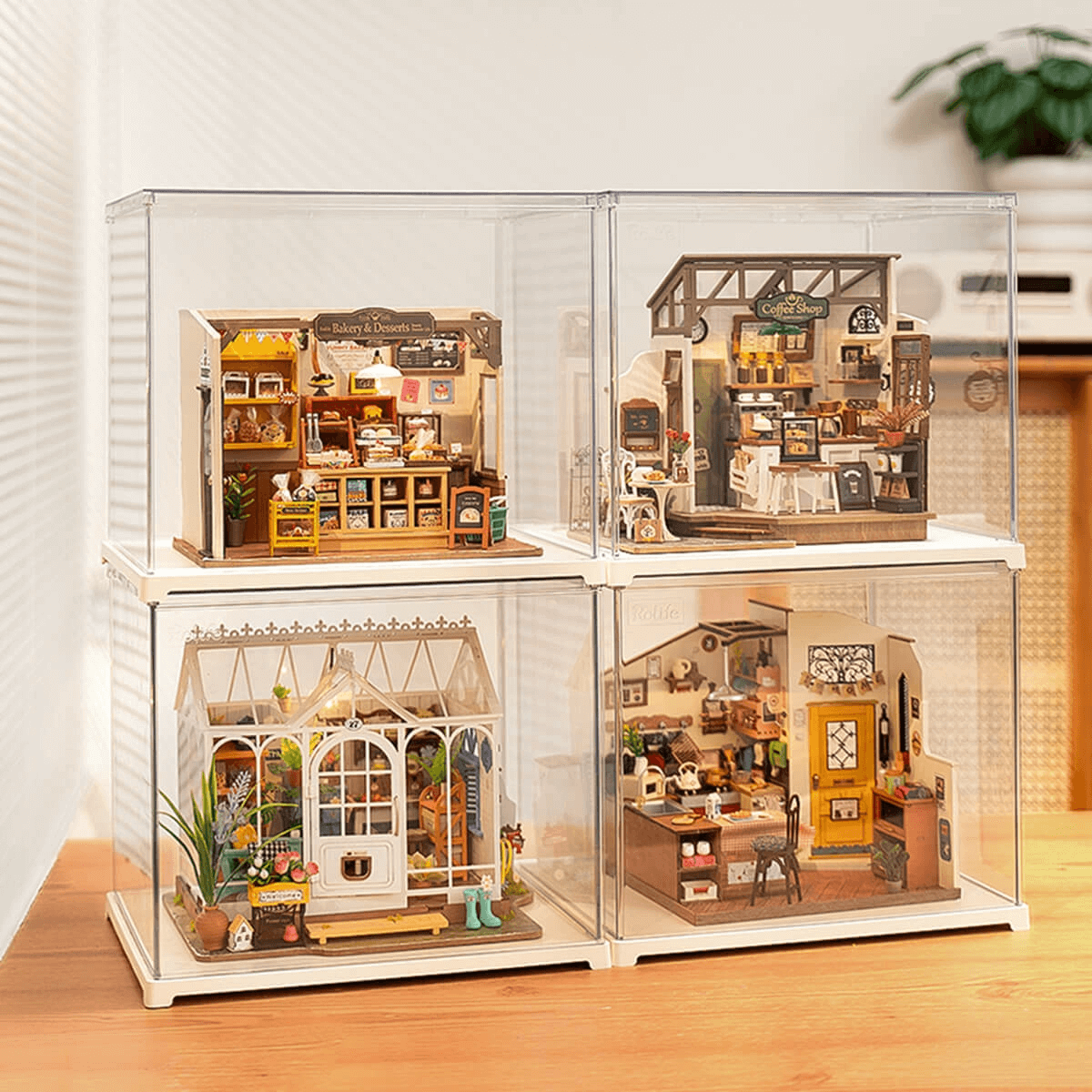
For book nooks, some models include a front dust cover while others need a separate solution. The guide to book nooks with dust covers explains that product-specific choice.
Small-Space Display Plans That Stay Practical
A small home does not require a small collection; it requires a clear display limit. Decide how much visible space the hobby can use, then let that boundary determine how many models stay out at once.
| Available space | Display approach | Storage approach | Useful rule |
|---|---|---|---|
| One desk corner | One hero model with clear space around it | Store alternatives in individual labeled boxes | Rotate when the desk theme or season changes |
| One bookshelf bay | One book nook or one compact house per visual zone | Keep the next rotation together by theme | Preserve access to books and switches |
| One cabinet | Group models by theme, color, or story | Reserve one shelf or bin for off-display pieces | Leave visual breathing room between groups |
| Several rooms | Assign each room one collection story | Keep overflow and seasonal models in one central archive | Avoid scattering unprotected models across high-traffic surfaces |
Use a simple capacity rule: when every display zone already has a hero scene and enough empty space to see it clearly, the next model should replace an existing display rather than squeeze beside it. This protects the builds and keeps the room calm.
How to Store Finished Miniature Houses
Storage should support the structure, not only cover it. Before packing, photograph the model from several angles so you have a reference if a small part shifts later.
- Switch off the lighting and disconnect any removable power lead.
- Follow the kit instructions for long-term battery care. If replaceable batteries can be removed safely, take them out before extended storage.
- Secure or separately bag loose accessories, and label the bag with the model name.
- Lift the miniature from its base or strongest structural area rather than by the roof, handle, sign, or decorative edge.
- Place it in a rigid container with space around fragile projections. Use soft, clean support material where needed, without pressing against paper details or painted surfaces.
- Label the outside with the model name, orientation, lighting notes, and a photo of the packed arrangement.
- Store the container in a dry interior space away from direct sun, heat sources, and heavy items that could crush it.
How to Move a Miniature Without Damaging It
Most accidents happen during short moves because the model feels light enough to carry casually. Clear the route and destination before you lift it.
- Remove loose figures, furniture, and accessories first.
- Use two hands under the base and keep the model level.
- Ask for help with tall or awkward models rather than holding them against your body.
- Do not carry the model by a clear cover unless the cover and base are designed to lock together.
- For transport outside the room, use a rigid container and prevent the model from sliding.
- After moving, inspect wires, switches, doors, roof pieces, and accessories before turning the lights on.
Light and Battery Care for Displayed Miniatures
Built-in lighting can make a miniature feel alive, but it should not be left on simply because the model is on display. Use the light when you are enjoying or photographing the scene, then switch it off according to the product instructions.
- Keep switches and battery compartments accessible.
- Do not place hot lamps close to paper, wood, plastic, or fabric details.
- Use indirect room lighting when you want the miniature visible for long periods.
- Check batteries and contacts before a seasonal model returns to storage.
- Never force a cable through a case opening or under a base where it can be pinched.
A Simple Collection Rotation Plan
Rotation lets you enjoy more models without filling every surface. It also creates a natural moment to inspect, clean, and photograph each build.
- Choose a rotation trigger: season, room theme, new build, or every few months.
- Select one hero model for each display zone.
- Photograph the outgoing arrangement so you can recreate it later.
- Dust the model gently and inspect loose details before packing.
- Update the storage label with the date and any repair note.
- Bring out the next model and check its lights, base, and accessories before display.
Keep the rotation list simple: model name, storage location, last displayed date, and any maintenance needed. That is enough to prevent forgotten pieces and repeated unpacking.
Miniature House Maintenance Schedule
| Timing | What to check | Action |
|---|---|---|
| Quick weekly glance | New dust, sun exposure, shelf movement, leaning parts | Adjust the location before the issue grows |
| When visible dust appears | Horizontal surfaces, corners, rooflines, clear panels | Use gentle dry-cleaning methods appropriate for the materials |
| At each rotation | Loose parts, wires, switches, batteries, storage label | Clean, photograph, pack, and note repairs |
| After moving furniture | Shelf stability, clearance, airflow, direct light | Repeat the four-risk location check |
| Seasonally | Humidity changes, condensation, heat, sunlight angle | Move the display if room conditions have changed |
Miniature Display and Storage Checklist
- The shelf is stable, deep enough, and outside normal traffic paths.
- Direct sunlight does not cross the model during the day.
- The scene is away from vents, fans, cooking residue, and damp areas.
- The case or cabinet has enough interior and door clearance.
- Lights, switches, and power connections remain accessible.
- Loose accessories are secured before moving or storing.
- Stored models have rigid protection, a label, and a packing photo.
- The visible collection fits the room without crowding every surface.
- A rotation date gives off-display models a clear path back into view.
Frequently Asked Questions
What is the best way to display a miniature house?
Use a stable shelf away from direct sunlight, moisture, strong airflow, and accidental contact. Choose open display for easy access in a calm room, or a fitted clear case when dust and bumps are more likely.
How do I keep a miniature house from getting dusty?
Place it away from windows, vents, fans, fabric fibers, and cooking areas. Dust gently before buildup becomes heavy, or use a clear cover that fits without touching delicate parts.
Can I store a finished miniature house in a box?
Yes, if the box is rigid, dry, large enough for fragile projections, and stored where it will not be crushed. Support the base, secure loose pieces, label the box, and include a photo of the packed arrangement.
Should I remove batteries before storage?
Follow the instructions for the specific kit. For extended storage, remove replaceable batteries when the design allows it safely, and keep the battery compartment accessible for inspection.
How many miniatures should I display in a small space?
Display only what fits inside a defined zone with enough empty space for each scene to read clearly. Keep the rest in labeled protected storage and rotate them by season, theme, or new build.
Protect the Build and Enjoy the Display
A finished miniature should be easy to enjoy, not difficult to maintain. Choose a stable location, match the protection to the room, record how the model is packed, and rotate the collection before the display becomes crowded.
For more compatible protection options, explore Rolife display boxes. For broader product and building guidance, visit the DIY Miniature House Guide.